Nepali Language for Trekkers: A Practical Guide for the Himalayas
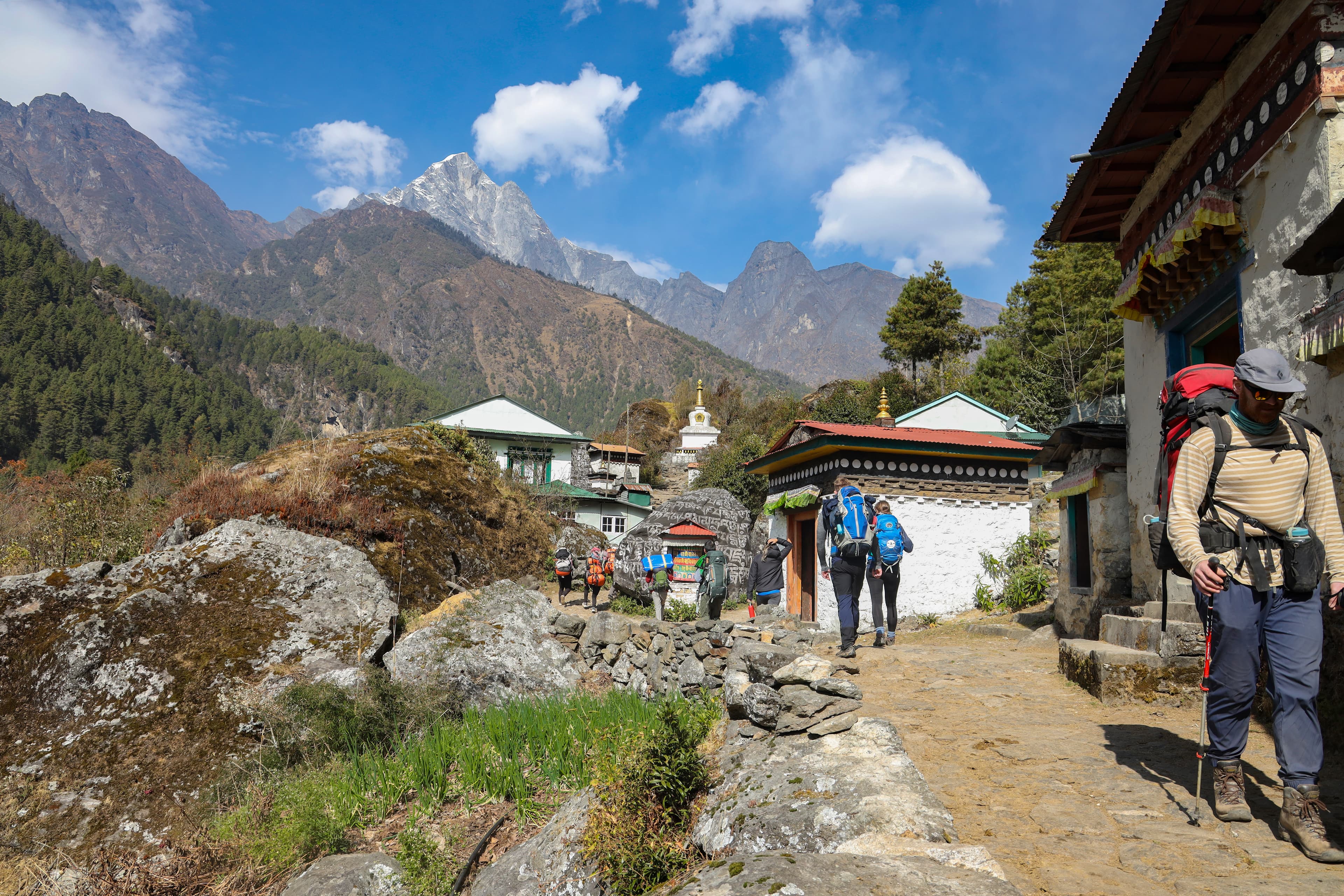
Trekking in Nepal is not only about mountains—it is about people, culture, and connection. As highlighted in A Guide to Trekking in Nepal by Stephen Bezruchka, learning even a few words of Nepali can transform your trekking experience. A simple greeting in Nepali can open doors, build trust with porters and guides, and help you navigate villages with confidence.
While many trekking guides speak English, local shopkeepers, porters, and villagers often appreciate (and sometimes rely on) basic Nepali communication. This short guide introduces pronunciation, useful phrases, and essential expressions for trekking.
Pronunciation Basics
Nepali is written in the Devanagari script, but most trekkers use transliteration (Roman letters). Pronunciation is generally phonetic—words are spoken as written.
Vowels Letter Sound Example a like “u” in but namaste aa long “a” khaana (food) i short “i” mitho ee long “e” chiya u short “oo” pukar oo long “oo” dhoop e like “ay” mero o like “o” in go roti
Tip: Long vowels (aa, ee, oo) are slightly stretched.
Consonants
Nepali has aspirated and non-aspirated sounds:
k / kh
g / gh
t / th
d / dh
p / ph
Example:
kal ≠ khal
pal ≠ phal
The “th” in Nepali is NOT like English “this” — it is a strong “t” with air.
Stress
Unlike English, Nepali does not strongly stress syllables. Words are generally spoken evenly:
na-MAS-te ❌
NA-ma-ste ✔ (balanced tone)
Practice Before You Go
As Bezruchka suggests, practicing basic phrases before arrival helps immensely. Try:
Listening to Nepali audio clips
Practicing greetings aloud
Memorizing trekking-specific vocabulary
Even 15–20 phrases will greatly enhance your experience.
Talking to Porters
Porters are the backbone of trekking in Nepal. Showing respect in Nepali builds rapport.
Greetings
Namaste – Hello
Tapaĩlai kasto chha? – How are you?
Sanchai chhu – I am fine
Useful Phrases
Bistari, bistari – Slowly, slowly
Thakai lagyo? – Are you tired?
Pani chahincha? – Do you need water?
Dhanyabad – Thank you
Dherai ramro – Very good
Ask and You Will Not Get Lost
Navigation becomes easier when you ask locals.
Yo bato kaha janchha? – Where does this road go?
___ samma kati tadha chha? – How far is it to ___?
Malai madat garnus – Please help me
Gaaun kaha chha? – Where is the village?
Locals are generally helpful—asking politely prevents unnecessary detours.
Finding a Place to Eat or Stay
In trekking regions, you’ll find teahouses and lodges.
Accommodation
Basna milchha? – Can I stay here?
Kothaa chha? – Is there a room?
Kati paisa? – How much?
Ek raat – One night
Food
Khana chha? – Is there food?
Menu chha? – Is there a menu?
Mitho chha – It’s tasty
Pani umaleko ho? – Is the water boiled?
Ordering Food
Dal bhat dinus – Please give dal bhat
Chiya dinus – Tea please
Coffee chha? – Do you have coffee?
Masu chha? – Is there meat?
Shakahari ho? – Is it vegetarian?
Dal bhat (rice, lentils, vegetables) is the trekking staple—“Dal bhat power, 24 hour” as many guides joke.
Paying
Kati bhayo? – How much is it?
Mahango chha – It’s expensive
Sasto garnus – Please make it cheaper
Yo thik chha – This is fine
Getting Someone’s Attention
Dai – Older brother (to a man)
Didi – Older sister (to a woman)
Bhai – Younger brother
Bahini – Younger sister
Hajur – Yes?/Excuse me?
Using kinship terms shows warmth and cultural awareness.
Talking About Time
Aaja – Today
Bholi – Tomorrow
Hijo – Yesterday
Kati baje? – What time is it?
Chado – Early
Dhilo – Late
Emergencies
Madat! – Help!
Doctor kaha chha? – Where is the doctor?
Hospital kaha chha? – Where is the hospital?
Malai birami lagyo – I feel sick
Police kaha chha? – Where is the police?
Other Basic Nepali for Travel
Politeness
Kripaya – Please
Maaf garnus – Sorry
Dhanyabad – Thank you
Swagat chha – Welcome
Numbers (1–5)
Ek – One
Dui – Two
Tin – Three
Char – Four
Paanch – Five
Final Thoughts
Learning Nepali is not about fluency—it is about respect. As emphasized in A Guide to Trekking in Nepal, communication fosters connection. When you greet villagers with “Namaste,” thank your porter in Nepali, or ask for directions politely, you step beyond being just a visitor—you become part of the Himalayan journey. The mountains of Nepal, language is more than words—it is a bridge.