Loading your adventure...
Everest Base Camp Trek 14 Days
4.5(0 reviews)
Overview
Everest Base Camp Trek
Among Himalayan adventures, the Everest Base Camp Trek offers one of the world's most rewarding walking journeys. Starting with a breathtaking flight to Lukla (2860m), it goes through the Dudh Koshi Valley and slowly rises toward Everest Base Camp at 5364m. The route winds along ancient Sherpa trails, passing through the iconic villages, as is the case with Namche Bazaar (3440m), while the vistas include the likes of Everest 8848m, Lhotse 8516m, Ama Dablam 6812m, and Pumori 7161m. This trek rewards the hiker with dramatic landscapes, rich culture, and unforgettable mountain panoramas.
Furthermore, the route brings trekkers through the Sherpa homeland, where people live among monasteries, chortens, and prayer flags. Tengboche Monastery at 3860 meters above sea level stands as the spiritual heart of Khumbu and lets one gaze among peaceful views toward Ama Dablam. Villages such as Dingboche (4410 meters) and Lobuche (4910 meters) sit among glaciers and ridges that showcase the region's beauty for its ruggedness. The trail reaches Gorak Shep at 5140 meters, the last settlement before Everest Base Camp.
Furthermore, altitude is an enormous factor in the Everest Base Camp Trek and requires careful acclimatization. The first place of acclimatization is Namche Bazaar itself, where the hikers go up to Hotel Everest View at 3880m and then return to sleep lower. Dingboche offers another acclimatization day with a hike to Nangkartshang Peak at 5083m. These planned ascents reduce the risk of Acute Mountain Sickness and help trekkers progress safely.
Because of that, the weather dictates the best seasons for trekking, and spring and autumn remain the best times. Spring months of March to May offer rhododendron blooms and mild temperatures at around 12°C at Namche. Autumn, from September to November, delivers the clearest skies and consistent visibility across the highest peaks. Winter brings cold air with it, while summer is greatly affected by heavy monsoon rain and reduced mountain views.
Daily walking distances involved are between 8km and 15km, which depend on elevation and acclimatization needs. The trail comprises pathways from forest paths to rocky moraines and glacier edges. Whereas the trek does not involve any technical climbing skills, it does require a good level of fitness, mental preparedness, and judicious pacing. Trekkers usually walk upwards of five to seven hours each day.
Basic rooms, shared dining areas, and minimal facilities are what one can expect regarding accommodation in the Everest region. The use of hot showers, charging facilities, and Wi-Fi are extra and get progressively expensive with ascending altitudes. Meals are dal bhat, soups, potatoes, pasta, and Sherpa specialties. Safe drinking water is obtained by filtration, purification tablets, or buying boiled water up in lodges.
The average cost of an Everest Base Camp Trek package, concerning services, guides, permits, meals, and domestic flights, can vary in the range of $1200-$1800. The Sagarmatha National Park Permit and Khumbu Pasang Lhamu Municipality Permit are required. A licensed guide can increase safety, navigation, and the cultural value during the journey. Ultimately, the Everest Base Camp Trek remains one of those bucket-list adventures that stitches together natural beauty, cultural depth, and physical challenge with world-class mountain views. The trek suits dedicated hikers who seek a life-changing Himalayan experience. With proper preparation, acclimatization, and guidance, the journey to the foot of Everest becomes a safe and unforgettable achievement. The entire trail delivers a powerful connection with Nepal's mountains, people, and high-altitude wilderness.
Everest Base Camp Trek Nepal
So far as iconic Himalayan adventures are concerned, Everest Base Camp Trek Nepal is one of the most popular high-altitude journeys in the world. The trek starts with a flight from Kathmandu (1400m) to Lukla (2860m), from where it starts to follow historic Sherpa trails up to Everest Base Camp (5364m). The route goes along Namche Bazaar (3440m), Tengboche (3860m), Dingboche (4410m), and Lobuche (4910m), opening vistas of Everest (8848m), Lhotse (8516m), Nuptse (7861m), and Ama Dablam (6812m). Trekkers witness dramatic landscapes, deep valleys, and glacier-filled highlands that define Nepal's Khumbu region.
The cultural importance of the Everest region makes the entire journey more enriching. Sherpa communities in the area retain monasteries, chortens, prayer flags, and traditions to make up its identity. Tengboche Monastery (3860m) is a spiritual landmark where trekkers observe the daily rituals and mountain blessings. Villages such as Khumjung (3780m), Pangboche (3930m), and Phortse (3840m) display antique ways of life along with warm Himalayan hospitality.
Additionally, altitude management is still crucial in order to complete the Everest Base Camp Trek Nepal safely. First, Namche Bazaar presents an acclimatization stop where trekkers hike to Khunde (3840m) or Hotel Everest View (3880m). Then comes Dingboche, the second acclimatization stop with a hike up to Nangkartshang Peak 5083m, which builds up the body's acclimatization. This scheduled stoppage decreases the risk of altitude sickness and aids trekkers to move confidently toward the attainment of high-altitude destinations.
Therefore, weather dictates the best trekking seasons, and spring and autumn are regarded as the finest conditions. Spring, starting from March to May, offers mild temperatures, blooming rhododendrons, and clear morning views. In Autumn, starting from September to November, the weather remains stable, with sharp mountain visibility and comfortable daytime temperatures. Winter brings heavy snow at higher altitudes, while monsoon reduces visibility and heightens challenges on the trails.
Moreover, the Everest Base Camp Trek Nepal requires steady physical preparation. The trekkers walk five to seven hours daily on varied terrain: forest paths, stone stairs, ridges, and glacial moraines. Fitness training with cardio, strengthening of the legs, and endurance will help trekkers prepare for long days at altitude. Mental resilience also contributes to safe and enjoyable trekking.
Basic rooms, shared dining halls, and warm food are available for accommodation in teahouses throughout the Everest region. Hot showers, device charging, and Wi-Fi come for an extra fee, which also increases with altitude gain. Dal bhat, noodles, soups, potatoes, eggs, and Tibetan bread are common meals one finds. Trekkers generally use water purification tablets or buy boiled water for hydration.
Regarding the cost, the Everest Base Camp Trek in Nepal generally ranges from USD 1200 to USD 1800 or more, according to services, season, and group size. All trekkers must have a Sagarmatha National Park Permit and a Khumbu Pasang Lhamu Municipality Permit. Engaging the services of a licensed guide further improves safety, cultural awareness, and navigation through the remote high-altitude landscapes.
Ultimately, the Everest Base Camp Trek Nepal offers a complete Himalayan adventure that consists of nature, culture, and physical achievement. Trekkers discover breathtaking panoramas, authentic Sherpa traditions, and dramatic high-altitude terrain. It remains an experience of one's lifetime, guiding travelers for several years. Preparation with proper acclimatization ensures a safe and rewarding accomplishment.
EBC Trek
The EBC Trek represents one of the most rewarding journeys for an adventurer looking to achieve high altitude, as far as Himalayan trekking challenges go. The trek starts in Lukla at 2860m, heading along the Dudh Koshi River toward Phakding at 2610m, then up to Namche Bazaar at 3440m. The trail goes further via Tengboche (3860m), Dingboche (4410m), Lobuche (4910m), and Gorak Shep (5140m), to Everest Base Camp at 5364m. It covers steady elevation gain, glacier landscapes, and close-up views of Everest 8848m, Lhotse 8516m, and Ama Dablam at 6812m.
The EBC Trek also initiates trekkers into the cultural richness of the Khumbu region. The Sherpa people have monasteries, prayer wheels, and carved stone houses-a reflection of traditions standing the tests of time. Tengboche Monastery (3860m) is one important center for Buddhist rituals and the spirituality of the Himalayas. These cultural insights are complementary to the grandeur of nature on the trek.
Besides, acclimatization is very crucial for finishing the EBC Trek in safety. First of all, trekkers will acclimatize in Namche Bazaar with a hike either to Everest View Hotel (3880m) or Khumjung (3780m). While in Dingboche, they hike to Nangkartshang Peak (5083m) during the second day of acclimatization, allowing their bodies to get prepared for high altitudes. These gradual ascents reduce risks of altitude sickness and contribute to responsible trekking.
Thus, weather conditions mark the ideal seasons for the EBC Trek. The spring months feature blooming forests, stable temperatures, and bright views of Everest and its neighboring peaks. For Autumn, the crisp air, clear skies, and excellent trail conditions are ideal for photography. Summer monsoon and winter snow create additional problems, so neither is nearly as ideal for the majority of trekkers.
Secondly, it also requires regular physical preparation for the EBC Trek. The trekkers have to walk five to seven hours daily across forest paths, suspension bridges, steep climbs, and rock terrain. The steady gain in altitude tests one's stamina, breathing, and endurance. Training for several weeks helps improve fitness and confidence. In terms of accommodation, teahouses located along the EBC Trek offer accommodation with meals. Simple beds and blankets with shared dining areas have heaters fueled with yak dung. Menu options include dal bhat, noodles, soups, eggs, potatoes, and Tibetan bread. Drinking water needs to be purified or boiled water bought from teahouses. The cost for the EBC Trek ranges from USD 1200 to USD 1800 depending on services and season. The cost, in general, covers permits, domestic flights, guide support, food, and accommodation. The Sagarmatha National Park Permit and the Khumbu Municipality Permit remain compulsory for all trekkers. Hiring a licensed guide ensures not only safer navigation but also cultural insight. Ultimately, the EBC Trek combines natural beauty, physical challenge, and depth of culture within one unforgettable journey. Trekkers enjoy views at iconic viewpoints, including Kala Patthar (5545m), with its stunning sunrise over Everest and surrounding peaks. The whole route feels like a transformative adventure through the greatest mountain landscapes of Nepal. With proper acclimatization and preparation, the EBC Trek becomes a life-changing achievement.
Everest Base Camp Trek Itinerary
The Everest Base Camp Trek itinerary, as far as planning goes, helps trekkers understand the route, elevation, and daily walking structure. Starting with a standard itinerary, the flight will be from Kathmandu (1400m) to Lukla (2860m), after which trekkers will take a short trek to Phakding (2610m). On the second day, it continues with a steep climb to Namche Bazaar (3440m), the main gateway to the Everest region. This makes for a structured start by which the body can adjust to the rising altitude over time.
Additionally, the schedule allows for an acclimatization day in Namche Bazaar to support safe adaptation. Trekkers hike to either Everest View Hotel (3880m), Khumjung (3780m), or Khunde (3840m) and then sleep lower. This tried-and-true approach readies the body for the upcoming sections of the trek. Namche also has shops, cafés, and gear stores for any last-minute supplies.
The journey then goes further to Tengboche (3860m), a more spiritual and scenic part of the trek. In the heart of the region lies the Tengboche Monastery, with the majestic view of Ama Dablam (6812m), Everest (8848m), and Lhotse (8516m). The next course is Dingboche (4410m), where the second acclimatization day will take place. Trekkers generally ascend to Nangkartshang Peak (5083m) for strengthening their altitude adaptation.
Thus, the schedule proceeds from Dingboche to Lobuche via Thukla Memorial at an altitude of 4620m, and finally Lobuche at 4910m. This stage gets more strenuous with falling oxygen levels and rockier terrain. Lobuche has basic teahouse accommodation facilities and is near the glacial zone of the upper Khumbu region. The progressive climb aids in avoiding altitude sickness problems.
Apart from that, the path from Lobuche to Gorak Shep at 5140m is made of glacial moraines with rough terrain. Gorak Shep is the last village before heading up to Everest Base Camp, which is at an altitude of 5364m. After having a brief rest period, one continues towards the base camp using rocky trails aside from the Khumbu Glacier. The experience delivers dramatic views of icefalls, ridges, and surrounding peaks.
Regarding Kala Patthar (5545m), the plan usually involves an early morning hike from Gorak Shep. Kala Patthar provides the best close-up sunrise view of Everest, Nuptse (7861m), and Pumori (7161m). This viewpoint remains a highlight for most trekkers because Everest is not directly visible from the base camp. The return then starts with a descent to Pheriche (4371m) or Dingboche.
The return route is the same down to Namche Bazaar and then to Lukla. The descent is easier on the breathing and the going is faster over the well-known ground. The last night at Lukla is one of celebration of having completed the journey in good health. The next morning’s flight returns trekkers to Kathmandu.
Ultimately, the Everest Base Camp Trek itinerary incorporates acclimatization, scenic viewpoints, and cultural highlights into one well-structured format. This regular 12-to-14-day itinerary provides a safe and realistic pace for the majority of trekkers. If planned accordingly, the itinerary maximizes safety while adding more value to the overall Himalayan experience. The route becomes both a physical challenge and an unforgettable adventure through the heart of the Everest region.
Everest Base Camp Trek Package
Selection of the right Everest Base Camp Trek package significantly helps trekkers ensure a safe and well-managed Himalayan adventure. Most packages include airport transfers, domestic flights, trekking permits, licensed guides, and teahouse accommodations. The standard package starts with flight exposure to Lukla at 2860 meters and proceeds toward Everest Base Camp at 5364 meters. The services offered in a package differ but all are united in their resolve to offer comfort and safety across the high-altitude journey.
Also, the package includes full board trek meals, including breakfast, lunch, and dinner in teahouses. Meals include dal bhat, noodle dishes, potatoes, soups, eggs, and Sherpa specialties. Most of the packages do not include other extra services like hot showers, Wi-Fi, and charging, as these services are more expensive at higher elevations. These minor expenses support the local community and help to maintain the economy of this region.
The Everest Base Camp Trek package includes in its composition an acclimatization day in Namche Bazaar (3440m) and Dingboche (4410m). This will help reduce altitude sickness and support responsible trekking. The package ensures that there are experienced guides to monitor the condition of trekkers and maintain the safety pace of trekkers. These guiding services remain especially valuable for first-time high-altitude trekkers.
Consequently, the package cost generally ranges from USD 1200 to USD 1800 depending on season, duration, guide support, and lodging quality. The budget packages include basic rooms with group guides; premium packages will have upgraded lodges and far more personal service. Helicopter return options significantly raise the cost but save time and reduce fatigue. Trekkers are able to select packages that match their needs for comfort and budget.
Moreover, the package includes all necessary trek permits. These include the Sagarmatha National Park Permit and the Khumbu Pasang Lhamu Municipality Permit. Some packages also cover arrangements related to verification of travel insurance, gear checklists, and rentals. Professional agencies make sure that all legal compliance and safety requirements are met during the entire trekking period.
About transportation, it is always included in the package: round-trip flights from Kathmandu, 1400m, to Lukla, 2860m. Flight reliability depends on weather conditions, and good operators plan buffer days for possible delays. A few packages provide helicopter upgrades to avoid flight cancellations during peak seasons. These options give flexibility and reduce travel stress.
Accommodation: The package includes clean rooms in teahouses, with basic bedding. The dining areas are warmed up by yak-dung heaters, especially at higher locations such as Lobuche (4910m) and Gorak Shep (5140m). Accommodation becomes more basic as the altitude rises, with the hospitality across the region maintaining consistency. Packages help secure reliable rooms during crowded seasons.
In the end, it gets quite easy to plan an Everest Base Camp Trek package to make sure trekkers have a safe and comfortable, well-managed experience. The services included in the package decrease the logistical stress and give trekkers the ability to enjoy the journey itself. With professional guides, structured itineraries, and essential support, the package transforms the adventure into a rewarding achievement. The right package will ensure both safety and enjoyment throughout the entire Himalayan journey.
Cost of Everest Base Camp Trek
Understanding the cost of the Everest Base Camp Trek helps trekkers to better plan a realistic, stress-free Himalayan journey as far as budgeting is concerned. The full costs generally range from USD 1200 to USD 1800 for a standard package. Prices vary based on season, accommodation level, guide services, and transportation. Careful planning ensures that trekkers are not met with unexpected expenses along the route.
Besides, permit fees also become an important component of the overall cost. For trekkers, both the Sagarmatha National Park Permit and the Khumbu Pasang Lhamu Municipality Permit are required. These permits support conservation programs and local development in the Everest region. The combined cost normally stays between USD 50 and USD 70.
Domestic flights are another major cost factor. The round-trip flight between Kathmandu (1400m) and Lukla (2860m) can be around 350-450 USD. Weather affects availability, and prices are higher during peak times of the year. Some trekkers opt for helicopter flights; these are more reliable but more expensive. Thus, it can be said that guide and porter fees add to the cost of trekking but, in turn, provide essential safety and comfort. A licensed guide costs roughly USD 25-35 per day, while a porter costs roughly USD 20-25 per day, including their food, lodging, and insurance. Hiring support improves safety and enriches the cultural experience. Moreover, the price for food and accommodation depends on the altitude. The meal prices start from USD 5 to USD 10 in lower villages and increase to USD 8-15 in the higher places, such as Lobuche (4910m). Accordingly, the teahouse rooms cost from USD 5 to 12 depending on the altitude and season. The regular increase in costs shows the hardships of carrying goods to far-flung areas. Extra services that trekkers need to account for include hot showers, Wi-Fi, and charging devices. Hot showers range from USD 3 to USD 7 per shower, depending on the village. Charging one's devices costs anywhere between USD 2 and USD 5 per hour at a higher elevation. Wi-Fi varies according to the system on Everest Link and is usually available from USD 10 to USD 20 per package. As for equipment, some trekkers buy new gear while some rent. Rental costs are modest: down jackets cost between USD 1 to 2 per day, and sleeping bags from USD 2 to USD 3 per day. Buying your personal layers, socks, gloves, and small essentials will add a further USD 100 to USD 200 to the budget. Preparing your gear in advance helps reduce the overall expenses. The cost for the Everest Base Camp Trek in the end all depends upon the travel style, comfort needs, and the season of the year. The budget trekkers spend less by staying in basic teahouses and limiting extra expenses. Mid-range trekkers balance comfort and affordability with guided packages and reliable services. Proper budgeting ensures a smooth and enjoyable trek without unexpected financial challenges.
Everest Base Camp Trek Difficulty
It is factual that high-altitude adventure, Everest Base Camp Trek difficulty, relies on body fitness, acclimatization, topography, and weather. The altitude gain for the trek ranges from Lukla at 2860m to Everest Base Camp at 5364m, where the level of oxygen becomes pretty low. Even though the trail does not involve technical climbing skills, it does involve walking for long hours every day. The cold temperature, low air pressure, and steep ascents add more challenges.
Further, the continuous altitude gains along the Dudh Koshi Valley and the Khumbu region are part of the trail. Trekkers must make steep ascents to reach Namche Bazaar (3440m), Tengboche (3860m), and Dingboche (4410m). The long walk from Lobuche (4910m) up to Gorak Shep (5140m) gets exhausting due to thin air. This variation in altitude makes the trek exhausting for amateur trekkers.
Additionally, the process of acclimatization is a major contributor to reducing hardship during the trek. The route includes rest days in Namche Bazaar and Dingboche for the sake of acclimatization of the body to reduced oxygen levels. Generally, trekkers hike to Everest View Hotel (3880m) and Nangkartshang Peak (5083m) and return lower to sleep. This strengthens the lungs and reduces the risk of Acute Mountain Sickness.
Due to this, altitude sickness is a major obstacle even for experienced trekkers. Symptoms may include headaches, dizziness, nausea, and fatigue at altitudes above 4000m. Proper hydration, slow walking, and steady breathing support safe acclimatization. If the symptoms worsen, trekkers must make an immediate descent.
Besides, the difficulty of the terrain changes along the route: from the forest paths, suspension bridges, and stone steps at the lower level-especially near Namche Bazaar-to the higher sections of rocky moraines, glacial paths, and rugged surfaces near Lobuche and Gorak Shep. These sections necessitate careful placement of feet and sure balance.
In terms of daily walking demands, trekkers usually walk five to seven hours each day, covering 10–15km depending on altitude. It will take patience, energy, and strong endurance to make the long day to Everest Base Camp. Adding to the challenge is the freezing temperature in the early morning hike to Kala Patthar (5545m); consistent pacing becomes important at this stage.
Weather difficulty: Temperatures fluctuate rapidly across the elevations. Spring and autumn give the most stable conditions, but even then, the mornings and nights are cold above Dingboche. Winter adds snow and ice trails, while the monsoon season introduces heavy rain and slippery surfaces. Preparing for such temperature fluctuations helps keep trekkers safe and comfortable.
At the end, difficulty related to Everest Base Camp Trek remains moderate to challenging-as your preparation and personal fitness may allow. The trek becomes achievable for anyone who has good stamina, strength of mind, and proper acclimatization. Training hikes, cardio workouts, and altitude awareness reduce the difficulty level by a significant amount. With the right mindset, gear, and guidance, the journey is an inspiring feat to undertake for trekkers of any background.
Everest Base Camp Trek Distance
As far as route planning goes, the Everest Base Camp Trek distance helps trekkers estimate the required stamina for each day. The standard round-trip distance from Lukla (2860m) to Everest Base Camp (5364m) covers roughly 130km. Trekkers walk about 65km on the ascent and another 65km on the descent. These distances spread across 12 to 14 trekking days.
Additionally, the daily walking distances include variation according to elevation gain and trail difficulty. Early days from Lukla to Phakding (2610m) and Namche Bazaar (3440m) are 6-10km. These shorter distances support gradual acclimatization and allow the trekkers to get used to rising elevations. The trail includes river crossings, stone stairways, and forest paths.
Middle section: The trek goes from Namche Bazaar to Tengboche (3860m) and further to Dingboche (4410m). These stretches are 9-12km per day with regular uphill and open ridges. The acclimatization day in Dingboche involves a short hike of 3-5km to Nangkartshang Peak, which is 5083m. This acclimatization walk helps in preparing for the challenging upper route.
Hence, it becomes exhausting toward the upper parts to Lobuche 4910m, Gorak Shep 5140m, and to Everest Base Camp. Here, trekkers walk 8-10km each day with thinner air, allowing one to breathe slower and deeper. Normally, the last walk to Everest Base Camp 5364m is 3km each way from Gorak Shep. Though short in distance, it requires high energy due to the rocky and glacial terrains.
Additionally, the hike to Kala Patthar is 5545m high, requiring an extra 3–4 km of round-trip walking. This early morning trek offers a panoramic sunrise view of Everest-8848m, Nuptse-7861m, and Pumori-7161m. Although short in distance, steep climbs make this one of the most exhausting parts of the trek. Trekkers complete it slowly just to conserve energy.
Regarding the return route, the distances remain similar but are easier in terms of elevation descent. Normally, trekkers walk from Gorak Shep down to Pheriche at 4371m or Dingboche down to Namche Bazaar. These sections cover 12–22km depending on the stops chosen. The final walk from Namche Bazaar to Lukla normally takes 18km over steep descents and ascents.
About the average pace: Trekkers usually walk at the pace of 3–4km per hour, up to an altitude of. Higher altitudes reduce the walking speed immensely, especially over 4500m. Guides monitor pace to prevent exhaustion and minimize altitude-related risks. The aim is to maintain regular, sustainable movement rather than to strive for speed.
Ultimately, the Everest Base Camp Trek distance suits trekkers with moderate fitness, patience, and steady endurance. The well-structured itinerary spreads the distance across manageable daily segments. Trekkers, with proper preparation, complete the route comfortably and safely. A proper understanding of the total distance supports effective planning and contributes to a successful Himalayan adventure.
Everest Base Camp Trek Elevation
Understand the complete Everest Base Camp Trek elevation profile, including altitude gains, stops for acclimatization, risks, viewpoints, and safe height-management strategies.
The Everest Base Camp Trek elevation profile, in regard to altitude awareness, remains an essential part of the entire journey. The trek begins at Lukla (2860m) and reaches its highest point at Kala Patthar (5545m). Everest Base Camp sits at an elevation of 5364m beside the Khumbu Glacier. These elevations require gradual ascent and planned acclimatization.
Then, the route from Lukla goes downhill for some time to Phakding (2610m) before ascending to Namche Bazaar at 3440m. This early descent helps ease the first day's demands and prepares trekkers for the steep climb ahead to Namche. Namche becomes the first stop for acclimatization and provides optional hikes to Everest View Hotel at 3880 meters. Proper adaptation at this stage means much safety for the rest of the journey ahead.
The elevation continues to increase up to Tengboche (3860m), which is home to the famous Tengboche Monastery, followed by Dingboche at 4410 meters, which is where the second acclimatization day is held. Trekkers usually hike to Nangkartshang Peak at 5083 meters to train the body for higher elevations. The result of structured acclimatization is reduced risks of altitude sickness. Thus, trekkers head to Lobuche, at 4910 meters, where breathing is significantly more difficult. From Thukla, at an elevation of 4620 meters, the climb up to the memorial ridge is physically and emotionally intense. There is thin air at this stage, and a slow pace is necessary. Lobuche's high altitude prepares the trekkers for the final upward push. In addition, the trail to Gorak Shep (5140m) becomes one of the most demanding sections. From here, trekkers head to Everest Base Camp (5364m) via rocky moraines and glacial paths. The more regulated elevation here tests one's balance, stamina, and energy levels. Reaching to the base camp forms a magical experience. Kala Patthar, at 5545m, is the highest point reached by most trekkers. The early morning climb usually presents a clear view of Everest (8848m), Lhotse (8516m), and Nuptse (7861m). It is an extreme altitude and demands slow steps, warm clothing, and deep breathing. The panorama makes it worth the challenging climb. As for the descent, the drop in altitude increases breathability and pace. Trekkers generally descend down to Pheriche (4371m) or Dingboche before returning to Namche Bazaar. The trek down minimizes altitude risks as a whole while the body recuperates. The low air pressure gradually normalizes. Ultimately, respect, patience, and proper acclimatization are required by the Everest Base Camp Trek elevation profile. Hydration, slow walking, and steady breathing are safe ascent strategies. With structured height management, trekkers can make use of the route without complications in altitude. Elevation knowledge is very important for a successful and safe Himalayan adventure.
Everest Base Camp Trek Map
Everest Base Camp Trek Map shows the route with elevation, villages, and mountain highlights accurately. The trek starts from Lukla (2860m) and goes up to Everest Base Camp (5364m), the overall distance being around 130–140km round trip. The main way points include Phakding (2610m), Namche Bazaar (3440m), Tengboche (3860m), Dingboche (4410m), Lobuche (4910m), and Gorak Shep (5140m). Understanding the map allows for good route planning of daily stages, accommodation, and acclimatization.
The route also follows the Dudh Koshi River in the lower parts and moves along suspension bridges, forests, and small villages. In the middle, the route uphill goes through Sherpa villages and monasteries for cultural and scenic variation. It shows both routes of ascent and descent, important for daily planning and energy management.
The map also points out optional side treks and viewpoints. Trekkers can add on Kala Patthar (5545m) for panoramic Everest views or the Gokyo Lakes (4790m) if they extend the journey. Elevation details provide an understanding to trekkers of steep sections and acclimatization needs. In this way, gradual climbs reduce risks of altitude sickness and fatigue.
Consequently, this map displays distance approximations by day. Example:
Day\tRoute\tDistance (km)\tElevation (m)
1 Lukla → Phakding 8–10 2860 → 2610
2 Phakding → Namche Bazaar 10–12 2610 → 3440
3 Acclimatization at Namche 5–6 3440 → 3880 (optional hike)
4 Namche Bazaar → Tengboche 10–12 3440 → 3860
5 Tengboche → Dingboche 10–12 3860 → 4410
6 Acclimatization at Dingboche 5–7 4410 → 4790 (optional hike)
7 Dingboche → Lobuche 10–12 4410 → 4910
8 Lobuche → Gorak Shep → Everest Base Camp 12–14 4910 → 5140 → 5364
9 Gorak Shep → Kala Patthar → Pheriche 12–14 5140 → 5545 → 4240
10 Pheriche → Namche Bazaar 15–17 4240 → 3440
11 Namche Bazaar → Lukla 10–12 3440 → 2860
The map is also very important for the identification of topography. The lower parts are forested and mild, mid parts have rocky and steep trails, and higher places have moraine tracks with glacial landscapes. Water resources, teahouses, as well as emergency exit routes can be marked by trekkers for safety.
As technology helps in navigation, GPS-enabled maps and trekking apps are recommended. Offline maps help whenever there is a weak network at high-altitude villages. Maps also help identify stops for rest, viewpoints, and alternative paths in events of landslides or bad weather conditions. Additionally, the map directs cultural exploration: villages such as Khumjung-3780m, Pangboche-3985m, and other monasteries along the way are easily located for planned visits. This will ensure that trekkers balance adventure, culture, and acclimatization. Ultimately, the Everest Base Camp Trek map acts as your primary tool for route planning and safety, as well as scenic enjoyment. It provides information about distance, elevation, villages, mountains, and optional side trips. Using this map will let you have a well-organized, safe, and memorable Himalayan trek. Understanding the map enhances both preparation and confidence on the trail.
Everest Region Trekking
Everest Region Trekking provides one of the most dramatic mountain journeys in Nepal, and travelers admire its unmatched scenery. From Lukla (2860m) to Everest Base Camp (5364m), even up to valleys like Gokyo (4790m), this region stretches. The trail opens onto Sherpa culture, Buddhist monasteries, and towering Himalayan peaks. Many trekkers consider it a complete Himalayan experience.
In addition, the trek commences with an exciting flight to Lukla, which serves as an entryway to the Khumbu Region. The trail gradually progresses uphill through Phakding at 2610 meters and Namche Bazaar at 3440 meters, the commercial center of the region. Namche provides a facility for acclimatization, shopping, bakeries, and comfortable lodges. Many trekkers appreciate its mountain-friendly environment.
Moreover, the route presents travelers with sights of scenic viewpoints like the Everest View Hotel at 3880 meters, which has views of Everest at 8848 meters, Lhotse at 8516 meters, and Ama Dablam at 6812 meters. Heading to EBC, trekkers pass by Tengboche Monastery at 3860 meters, a spiritual center with panoramic surroundings. The journey continues through Dingboche at 4410 meters and Lobuche at 4910 meters before reaching EBC. Many trekkers justify the effort because of the views.
Therefore, the Everest Region Trekking is suitable for moderately fit adventurers who plan moderate acclimatization. The trail is well-marked, supported by teahouses providing meals, Wi-Fi, charging, and warm accommodation. The standard itinerary runs for 12–16 days. Many trekkers extend the route with side trips to Gokyo Lakes.
Additionally, trekkers explore rich Sherpa culture on the walk. Places like Khumjung (3780m), Pangboche (3985m), and Phortse villages (3800m) retain Buddhist traditions, farming life, and stone-built homes. Prayer wheels and mani walls flank the route. Added to this are the complete cultural components.
Spring and autumn are chosen by the trekkers because the weather is vital. Spring brings rhododendron forests, clear mornings, and stable temperatures. Autumn gives crisp skies and ideal trekking conditions after the monsoon. These two seasons guarantee the best visibility.
Similarly, in order to prevent acute mountain sickness, trekkers have to observe guidelines concerning altitude. They need to ascend slowly, drink water regularly, and take acclimatization days at Namche and Dingboche. Diamox can support prevention if applied correctly. Safety remains the first concern.
Besides, the Everest Region Trekking costs between USD 1300–2000, depending on guides, flights, and duration. The daily budget in general comprises meals, accommodation, permits, and tea breaks. Hiring guides and porters increases comfort and safety. Many trekkers consider it a valuable investment.
Finally, the Everest Region Trekking offers incomparable Himalayan rewards combined with variety in landscapes and cultural experiences. The trekkers return home with lifelong memories of the world's highest mountains. It remains one of Nepal's signature trekking areas. Many travelers dream of returning again.
Khumbu Valley Trek
Khumbu Valley Trek introduces the trekkers to one of the most beautiful valleys in the Himalayas. The valley stretches from Lukla (2860m) to Gorakshep (5164m) while passing high Sherpa settlements. Its trail offers views of Everest (8848m), Nuptse (7861m), and Ama Dablam (6812m). Many trekkers regard the valley as a natural treasure.
Further on, the trek commences with a gentle walk to Phakding (2610m) and proceeds upwards along the Dudh Koshi River. Suspension bridges, pine forests, and chortens decorate the route. The trail rises steeply up to Namche Bazaar-3440m, the gateway to the upper Khumbu. Most trekkers find this an excellent spot for acclimatization.
Khumbu Valley is also a place of dynamic Sherpa culture. Places like Khumjung (3780m), Thame (3800m), and Pangboche (3985m) retain monasteries, prayer wheels, and yak pastures. Trekkers witness mountain agriculture and local hospitality, too. These cultural aspects make the trek enriching.
While trekking, with every ascent, the landscape starts turning into alpine terrain from forested areas. The trail crosses Dingboche at 4410m and Thukla at 4620m before finally meeting Lobuche at 4910m. Thukla Pass is home to memorials to the climbers. Several trekkers find the site emotional.
Since safety is a top priority, acclimatization is an essential element for this trek. Trekkers will spend extra days in Namche or Dingboche acclimatizing to the altitude. Slow pacing and proper hydration reduce the risk of AMS. Most guides assist with proper altitude management.
Besides, Khumbu Valley Trek is good for moderately fit trekkers. The route demands 5-7 hours of walking uphill each day. Teahouses offer hot food, Wi-Fi, charging, and basic rooms. Most trekkers enjoy the comfortable trail infrastructure.
The cost of the Khumbu Valley Trek ranges from USD 1200–1900 depending on services and trip duration. Major expenses include Lukla flights, permits, meals, and guides. Hiring porters increases comfort and reduces physical strain. Many trekkers find this is well worth the extra cost.
Finally, dramatic landscapes, Himalayan panoramas, and unique Sherpa culture are the rewards of Khumbu Valley Trek to its visitors. They experience adventure along with knowledge regarding the highland traditions. The valley remains an essential part of any Everest region journey. Many travelers return to explore additional routes.
Everest Base Camp Trek
The trek to Everest Base Camp is one of the most iconic treks in the world. The trek takes adventurers from Lukla (2860m) all the way up to Everest Base Camp, which rests at 5364m through the stunning Khumbu Valley. It offers a view of Everest-8848m, Lhotse-8516m, and Makalu-8463m. Many trekkers dream of doing this legendary trail.
Furthermore, the trek starts with an energetic walk towards Phakding (2610m), continuing to Namche Bazaar (3440m). Namche is a major acclimatization stop with viewpoints and Sherpa culture. Trekkers explore markets, bakeries, and museums here. Most visitors enjoy the vibrant atmosphere. Continuing on, the trail passes through Tengboche, at 3860 meters, with its monastery and backdrop of mountain peaks. The path then rises through Dingboche at 4410 meters and Lobuche at 4910 meters up onto the glacier flats. The final push takes one up to Gorakshep, at 5164 meters, and then EBC. Many trekkers celebrate their arrival at this historic site. Because altitude poses a challenge, it is essential for trekkers to follow proper schedules for acclimatization. Recommended days for acclimatization occur at Namche and Dingboche. Hydration, slow pacing, and balanced meals support safe travel. Many guides help monitor altitude conditions. Besides, the trek is ideal for moderately fit trekkers and those well-prepared. It involves daily walking hours of 5-7 hours on well-established trails. The teahouses offer meals, charging, Wi-Fi, and warm accommodation. Many trekkers enjoy the dependability of hospitality while traveling in the Himalayas. The price of the Everest Base Camp Trek usually ranges between USD 1300–2000. Permits, flights, guides, meals, and accommodation are included in the cost. If needed, helicopter returns add additional costs. For many travellers, the experience is priceless. Finally, and above all, the Trek to Everest Base Camp presents incredible Himalayan views, adventure, and deep cultural insights into trekkers passing by historic climbing routes and Sherpa traditions. The memories of the journey are unforgettable, creating deep respect for the way of life at high mountains. Many of the trekkers consider it a bucket-list adventure
EBC Trek with Guide
EBC Trek with Guide guarantees safety, cultural insight, and smooth navigation in the Khumbu region. Locals escort trekkers on routes that range from Lukla, at 2860 meters, to Everest Base Camp, at 5364 meters. Guides offer detailed knowledge in the trails, weather, and Sherpa culture. The majority of trekkers treat their expertise as invaluable for both safety and enrichment.
Furthermore, guides help plan acclimatization. They recommend proper pacing and hydration, including rest at Namche Bazaar (3440m) and Dingboche (4410m). Optional hikes to either Everest View Hotel at 3880m or Nangkartshang Peak at 5083m are helpful in altitude adaptation. This approach minimizes the possibility of acute mountain sickness.
Additionally, cultural insight is given through guides along the route. Guides explain traditions in villages like Khumjung 3780m, Pangboche 3985m, and Phortse 3800m. Trekkers learn about Buddhist monasteries, prayer wheels, and Mani walls. These exchanges make the trek more enriching.
As such, guides improve safety on technical sections. The trek from Lobuche (4910m) to Gorak Shep (5140m) and further on to EBC crosses over rocky moraines and glacial trails. Guides help in navigation, assessing fatigue, and recommending strategies to cope with altitudes. This support instills more confidence under challenging conditions.
Guides also facilitate logistics, such as arrangements for accommodations, meals, and permits. To wit, they handle Sagarmatha National Park Permit and Khumbu Pasang Lhamu Municipality Permit. They also assist trekkers in selecting teahouses and in arranging porter services. This reduces stress and allows focus on trekking.
Because weather affects the trek, guides recommend seasons. Spring starts in March and goes to May, with clear skies, blooming rhododendrons. It is cool in autumn from September to November, thus providing excellent mountain scenery. Guides adjust the schedule according to sudden changes in the weather.
Besides that, hiring a guide is an investment in local communities. Guides are often trained Sherpa climbers from the Everest area, and families benefit greatly from their income through sustainable tourism. In this way, trekkers get the most genuine knowledge while helping the local economy.
A guided EBC Trek costs from USD 25-35 per day for a licensed guide. Porter fees are from USD 20-25 per day, inclusive of meals and lodging. Combined with permits and accommodation, the packages range generally between USD 1300-2000, depending on service levels.
Ultimately, the EBC Trek with a guide is transforming the journey into a safe, informative, and culturally enriching experience. The trekkers enjoy expert advice, route safety, and deep understanding of Sherpa traditions. With guides, the trek becomes accessible for beginners and rewarding for experienced adventurers. This approach maximizes enjoyment and reduces risks.
Everest Base Camp Trek for Beginners
Everest Base Camp Trek for Beginners allows a comparably easy Himalayan adventure with proper preparation and planning. Starting from Lukla at 2860m, it gradually takes trekkers to Everest Base Camp at 5364m. This route includes Namche Bazaar at 3440m and Dingboche at 4410m, where beginners will experience safe acclimatization. The trail is cultural, scenic, and moderately physically demanding.
Beginners find well-regimented schedules more helpful, usually over 12–14 days. Daily walks in the Everest region are about 5–7 hours, covering approximately 10–15km. The short distances and lower altitude allow acclimatization. Two rest days at Namche and Dingboche ensure progress in safety.
Additionally, it exposes novices to the culture of the Himalayas. Places like Khumjung (3780m), Pangboche (3985m), and Phortse (3800m) are small villages hosting monasteries, prayer wheels, and stone houses. Guides explain local rituals, festivals, and the Sherpa way of life. The cultural exposure elevates your experience.
Acclimatization, therefore, becomes of essence for a novice trekker. Trekking to Everest View Hotel (3880m) or Nangkartshang Peak (5083m) and descending reduces the risk of AMS. Guides use oxygen level, walking pace, and symptom checks. Slow walking and hydration are also paramount.
Besides this, novices have to get ready physically; cardio and endurance exercises are expected. Training helps walk uphill, carrying backpacks, and maintaining energy. Trekking poles, layered clothing, and quality boots reduce strain. Mental preparedness supports consistent pacing and resilience.
As weather conditions affect trekking difficulties, spring and autumn are optimal. Spring-from March to May-offers flowering rhododendrons and moderate temperatures. Similarly, autumn-from September to November-comes with clear skies and dry trails. These seasons make the trek much safer and more enjoyable for novices.
Accommodation in teahouses includes basic amenities like meals and bedding. Food consists of dal bhat, noodles, soups, and potatoes. Wi-Fi and charging facilities are available at extra cost in higher villages. Similarly, guides and porters reduce the luggage burden, making the trek more accessible.
In terms of the cost, the beginner package generally includes a guide, permits, and teahouse accommodations for USD 1200–1800. Hiring a guide ensures safety, cultural understanding, and itinerary management. Beginners benefit the most from organized support.
Ultimately, the Everest Base Camp Trek for beginners merges adventure, culture, and nature into one safe, rewarding journey. With proper preparation, pacing, and acclimatization, beginners confidently complete the trek. The experience turns into a memorable initiation to high-altitude Himalayan trekking and remains a life-changing achievement for first-time trekkers.
Everest Base Camp Trek Duration
Duration of Everest Base Camp Trek depends on factors such as itinerary, fitness of trekkers, acclimatization, and trekking pace. The standard route usually takes 12–14 days. Starting from Lukla (2860m), the hike reaches Everest Base Camp (5364m), following proper gradual ascents. Daily walks are from 5–7 hours with 10–15km of distance covered. Duration of trek allows safe acclimatization at Namche Bazaar (3440m) and Dingboche (4410m).
Others even stretch the trek to 15–16 days by adding side trips. A visit to Gokyo Lakes (4790m) or extra rest days will improve adaptation and reduce fatigue. Longer itineraries allow exploration of monasteries and high-altitude viewpoints. This flexible approach suits varying fitness levels. The itinerary further ascends from Lukla to Namche Bazaar at an altitude of 3440m and rests one day. Then it proceeds to Tengboche at 3860m, Dingboche at 4410m, goes on for a second acclimatization day, and proceeds to Lobuche at 4910m and Gorak Shep at 5140m. These stops distribute elevation gain, ensuring safety. It follows that the hike from Gorak Shep to Everest Base Camp 5364 meters and back is typically done in a single day each way. Early morning hikes to Kala Patthar 5545 meters offer sunrise views of Everest 8848 meters. The immediate descent after that reduces exposure to high altitude. Careful timing maintains safety. Moreover, daily walking duration depends upon the topography and weather conditions. The lower stretches consist of forest paths and suspension bridges, while the upper reaches consist of rocky moraines and glaciers. Guides temper the walking hours and rest stops according to the condition of the trekkers. For safety at high altitude, a slow pace is crucial. Flights to Lukla may require buffer days because the weather could affect the duration. In spring and autumn, the sky is usually stable, though winter or the monsoon increases delays. Many itineraries plan 1–2 extra days for flexibility. Weather contingency ensures the trek is completed safely. Moreover, longer durations allow cultural and scenic exploration: villages such as Khumjung-3780m, Pangboche-3985m, and Tengboche Monastery-3860m can be visited in detail. Optional hikes provide additional viewpoints and photography opportunities. Extended time enhances the overall experience. Ultimately, Everest Base Camp Trek duration ranges between 12–16 days, depending on route, fitness, and weather. Structured itineraries with acclimatization days optimize safety and enjoyment. Trekkers experience mountains, culture, and high-altitude landscapes efficiently. The journey becomes a rewarding Himalayan adventure with careful planning.
Everest Base Camp Trek Packing List
The Everest Base Camp Trek Packing List ensures safety, comfort, and preparedness for high-altitude trekking. Clothing like layers, high ankle hiking boots, trekking poles, and sleeping bags suitable for sub-zero temperatures are important. The trek starts from Lukla, which is 2860m above sea level, to Everest Base Camp, at 5364m, presenting cold, wind, and changing weather conditions. Proper packing will mean enjoying the journey in comfort.
Besides, clothing should be based on a layering system: thermal shirts and leggings as base layers, fleece jackets are the mid-layers, and waterproof/windproof jackets and pants are outer layers. Warm hats, gloves, and socks are absolutely needed. Nighttime temperatures at higher altitudes-like Gorak Shep at 5140m-can fall below -15°C.
Furthermore, trekking boots should be hardy, waterproof, and worn in before the trek. A pair of lightweight sneakers or sandals is handy in teahouses. Trekking poles help with balance on uneven terrain, including rocky paths near Lobuche (4910m) and glacier moraines to Everest Base Camp (5364m). Comfort and durability prevent fatigue and injuries.
Therefore, accessories like sunglasses, sunscreen, headlamps, and water bottles enhance the safety factor. Sunglasses prevent snow blindness at high altitudes and sunscreen prevents sunburn. A headlamp with extra batteries is quite important for early morning climbs in Kala Patthar (5545m). Hydration maintains energy and helps acclimatization.
Other highly recommended equipment includes sleeping bags rated for -20°C, down jackets, and insulated mats. These keep you warm in teahouses at Gorak Shep (5140m) and Lobuche (4910m). Dry bags keep your electronics and clothing dry. It is also advisable to bring spare batteries and power banks because of the limited availability of electricity at higher altitudes.
Trekkers carry toiletries, medications, and small first-aid kits because these are personal items that improve convenience. Medications for altitude sickness, painkillers, and rehydration salts can remedy symptoms. Trekking insurance and permits, including but not limited to the Sagarmatha National Park Permit, must be within reach. Such preparations prevent the scale of emergencies.
Optional equipment includes cameras, binoculars, and guidebooks. Photography captures Himalayan landscapes, including Everest-8848m, Lhotse-8516m, and Ama Dablam-6812m. Binoculars allow observation of wildlife in lower forests and valleys. Small souvenirs or journals enhance the personal experience.
Ultimately, comfort, safety, and efficiency are assured with a structured Everest Base Camp Trek packing list. It will protect trekkers against altitude, cold, and rugged terrain with the help of layered clothing, reliable footwear, trekking gear, and accessories. Preparation reduces stress and allows focus on the scenic and cultural aspects of the journey. Proper packing will contribute to making your Himalayan adventure memorable.
Everest Base Camp Trek Weather
Everest Base Camp Trek Weather: Safety, comfort, and trekking experience are severely affected by weather conditions. Temperatures are extremely cold, with strong winds that may be accompanied by snowfall at times. The temperatures faced during the trek from Lukla (2860m) to Gorak Shep (5140m) vary from -5 to 20°C. Prior knowledge of the weather is thus crucial for planning and preparation.
Spring is also one of the best seasons; it ranges from March to May. The forests of rhododendron blossom, the skies are mostly clear, and the temperatures in Namche Bazaar at 3440 meters range from 5 to 18 degrees Celsius. At this time, there is very good visibility of Everest at 8848 meters above sea level and other surrounding peaks. Moderate conditions minimize risks during acclimatization hikes.
Besides, the autumn period-September to November-offers crisp skies, stable weather, and dry trails. The afternoon temperatures at Dingboche (4410m) lie within 5–12°C, although it is cold at night. Strong winds and sudden falls of snow are uncommon but do occur above higher elevations. Clear mornings offer ideal conditions for sunrise views from Kala Patthar (5545m).
Consequently, heavy rain and slippery trails come with the monsoon season that starts in June and ends in August. Dense fog further reduces visibility, while river crossings are fraught with more danger. Trekkers have to cross along muddy paths at Phakding at 2610 meters above sea level and lower valleys. Most agencies do not schedule treks during this period due to these hazards.
Apart from this, winter (December–February) provides low crowds but very cold temperatures. Nights at Gorak Shep (5140m) may reach -20°C, while daytime temperatures are around -5°C. Heavy snow and ice conditions at high sections near Lobuche (4910m) and EBC (5364m) make it difficult to trek in these regions. Only those trekkers who have enough experience and proper equipment thus attempt the climb in winter.
Because the weather is highly changeable at altitude, trekkers should check the forecast every day. Layers of clothing are needed, as well as waterproof jackets and windproof pants. Early morning starts help trekkers avoid afternoon wind and snow. Guides will adjust the itinerary according to conditions for the safety of their clients.
Furthermore, acclimatization schedules will also be influenced by trekking weather. On bright and sunny days, one can absorb more oxygen from the atmosphere at higher altitudes. In cold or windy conditions, with slow progress, longer rest periods might be required at Dingboche (4410m) or Namche Bazaar (3440m). It is important that trek plans remain flexible.
This makes the understanding of Everest Base Camp Trek weather ideals for safety and good, enjoyable experiences. While spring and autumn provide the best conditions, winter and monsoon mean additional challenges. Proper clothing, daily monitoring, and flexible planning enable any trekker to adapt accordingly. Knowledge of weather patterns contributes to a memorable and safe Himalayan journey.
Everest Base Camp Trek Food
Food is very crucial during the Everest Base Camp Trek because it helps maintain energy and aids acclimatization. Many teahouses line up the trail from Lukla at 2860m to Gorak Shep at 5140m, serving meals. Staples include dal bhat, noodles, soups, potatoes, eggs, and vegetables. Proper nutrition helps trekkers manage their energy levels and reduce fatigue.
Breakfast consists of porridge, eggs, bread, and sometimes momo dumplings. Lunch is noodles, fried rice, or dal bhat. Dinner often consists of the same as lunch, though soup and tea are optional. Hydration with tea, coffee, or water is paramount to keeping energy high at altitude. Additionally, most tea houses have vegetarian and vegan food options. Most of the calorie intake can be sustained with lentils, vegetables, tofu, and grains. For high trekking endurances, high-protein foods are recommended. Snacks of nuts, chocolate, or energy bars supplement meals on particularly long walking days. Therefore, at higher elevations, calorie intake has to increase accordingly. At Dingboche and Lobuche, 4410m and 4910m, respectively, trekkers require 3000–4000 calories a day. Warmer, high-energy foods prevent fatigue and support acclimatization. Guides advise frequent small meals rather than large portions. Adding to this, local Sherpa specialties enhance the trekking experience. Momo, thukpa, and yak cheese are widely available. Food remains simple, nutritious, and hearty enough to resist cold conditions. Teahouses prepare meals with fresh local ingredients whenever possible. Food expenses start to grow once higher altitude gains are reached. For Gorak Shep at 5140m, meals range from USD 8–15, lower villages being cheaper at USD 5–10. Extra expenses can be made for hot beverages, snacks, and charging. Long days on trek are better accommodated with your own snacks. It is also very crucial to have clean drinking water. Boiled water or water medicated with iodine or filters averts illness. Many trekkers carry reusable bottles to reduce plastic use. Proper hydration also aids acclimatization and energy levels at Everest Base Camp 5364m. Ultimately, food at Everest Base Camp Trek offers nutrition and cultural experience. Balanced meals, high-energy snacks, and proper hydration support trekking endurance. Sampling the local cuisine enhances the adventure while maintaining health. A mindful approach to food ensures a safe and enjoyable Himalayan journey.
Cost of Everest Base Camp Trek
The Cost of Everest Base Camp Trek depends on factors such as itinerary, guide service, flights, and personal expenses. The trek commences at Lukla (2,860m) and touches Everest Base Camp (5,364m). Major expenses include flights to Lukla, permits, teahouse accommodation and meals, and guide or porter fees. Understanding these costs will help trekkers plan efficiently.
The flights from Kathmandu (1400m) to Lukla (2860m) cost between USD 160–200 one way. This can increase during peak seasons, and if weather conditions or changes in plans require returning to Lukla. However, flights really help one save time and begin the trek in safety. Budgeting for possible delays is wise.
It also includes Sagarmatha National Park Permit, which is USD 30, and Khumbu Pasang Lhamu Rural Municipality Permit, which is USD 20. Accommodation in a teahouse ranges from USD 5-15 depending upon the altitude and services, whereas hot shower or use of Wi-Fi normally includes extra charges. Meals cost between USD 5-15 per serving.
Consequently, it costs about USD 25–35 per day to hire a guide, while porters will charge about USD 20–25 per day with food and lodging. Usually packages including guide, porter, and permits cost in the range of USD 1300–2000 for 12–14 days. Group treks can lower individual costs. Private treks provide comfort at higher prices.
It is also highly recommended that you get trekking insurance. Policies for high-altitude trekking, evacuation, and medical emergencies start from USD 50–150. Proper insurance will cover accidents, altitude sickness, and evacuation expenses. Most trekkers believe it's money well invested.
Since miscellaneous expenses do crop up, trekkers should budget for snacks, hot drinks, souvenirs, and charging electronics. Extra cash is what assures comfort at higher villages like Gorak Shep (5140m) and Lobuche (4910m). Exchange facilities exist only in lower settlements like Namche Bazaar (3440m).
Moreover, seasonality affects the cost: peak trekking seasons-spring from March to May and autumn from September to November-increase the prices of flights and guides. Off-season treks are cheaper, but the weather is harsher. Planning and booking in advance optimizes budget management.
Ultimately, the cost of the Everest Base Camp Trek depends upon personal choices and services used, as well as itinerary length. Typical budgets vary from USD 1300–2000, including flights, permits, accommodation, food, and guidance. Trekkers with effective planning can maximize experience while keeping expenses controlled. Understanding the costs assures a smoother and enjoyable adventure.
Safety on Everest Base Camp Trek
Everest Base Camp Trek Safety is very important to avoid altitude sickness, injuries, and accidents. The trek goes from Lukla-2860m to Everest Base Camp-5364m; thus, high-altitude exposure needs careful attention. Following guidelines, experienced guides, and observation of one's health assure safety for the journey. In fact, this factor of safety has always remained at the top of the lists for every trekker.
Risk factors include altitude sickness above all else. Symptoms such as headaches, nausea, dizziness, and fatigue occur above 3500 m. Acclimatization days at Namche Bazaar 3440 m and Dingboche 4410 m help prevent severe sickness. Trekkers must descend in case of worsening symptoms.
Further, attention is needed regarding weather hazards. Rapid snowstorms and strong winds or rain can make trails slippery, particularly around Lobuche at 4910 meters and Gorak Shep at 5140 meters. Early morning treks reduce wind exposure. Active Guides reschedule the itinerary based on the weather.
Accordingly, it makes trekking with a licensed guide much safer. Guides check oxygen saturation and advise resting, besides managing complex terrain. Porters minimize loads of luggage to reduce fatigue and injury risk. Taken together, guides and porters facilitate safe progression.
Additionally, proper gear supports protection: insulated attire, strong boots, gloves, and sunglasses prevent cold, frostbite, and snow blindness. The trekking poles maintain balance on bumpy areas. Emergency equipment like a first-aid kit is crucial.
As the food and water impact safety, trekkers should intake nutritious meals and drink 3-4 liters of water per day. Similarly, hot beverages, soup, and electrolyte drinks help maintain energy. Snacks consisting of nuts and energy bars assist in supplementing daily calories. Proper nutrition helps in acclimatization and endurance.
Besides, trekkers must purchase comprehensive insurance that covers evacuation, medical emergencies, and high-altitude trekking. Helicopter evacuation is expensive but sometimes needed. Policies minimize risks and give one peace of mind. Safety planning goes hand-in-hand with trekking enjoyment.
Ultimately, preparation, acclimatization, guides, weather awareness, and gear make up the Everest Base Camp Trek's safety. The risk can be reduced by following expert recommendations on monitoring health and pacing properly. Fulfilling and secure Himalayan adventure is ensured through these safety measures. Awareness is the key to success.
Everest Base Camp Trek Accommodation
Accommodations on the Everest Base Camp Trek are primarily teahouses, guesthouses, and lodges. These span from Lukla at 2860m up to Gorak Shep at 5140m, providing meals, bedding, and basic facilities. The availability of accommodations increases as trekkers move further down to the low villages and becomes limited at high altitudes. Planning ahead ensures comfort.
Furthermore, teahouses differ in quality and amenities. Lower villages like Phakding (2610m) and Namche Bazaar (3440m) provide rooms with a bed, blankets, Wi-Fi, and hot showers. Higher villages, such as Dingboche (4410m) and Lobuche (4910m), offer simpler accommodations with shared bathrooms. Electricity is often limited at high altitude.
Besides, the rooms generally share two to three trekkers with a mattress, pillow, and blankets. Almost all the teahouses now have private charging outlets or solar power. Travelers may carry sleeping liners or light sleeping bags for extra warmth. Proper preparations will assure a warm night. Thus, meals are available in teahouses, and the cost often covers the room rate, too. Dal bhat, noodles, soups, potatoes, and momos are popular dishes. Tea, coffee, and cocoa also help provide energy for cold evenings. Proper nutrition boosts energy for trekking and acclimatization. Furthermore, accommodation expenses increase with height. From USD 5–15 per night in the lower villages to USD 8–20 in Gorak Shep (5140m), prices vary. Hot showers or Wi-Fi are extra. During peak seasons, spring and autumn, booking in advance is highly recommended to ensure rooms. Planning stops is important because teahouse availability is limited at higher elevations. The popular nights include Namche Bazaar, Dingboche, and Gorak Shep. Early arrival guarantees better rooms and better facility availability. Advanced planning improves overall comfort in trekking. Besides, cleanliness, ventilation, and heating differ. Many lodges use either wood or gas stoves for heating rooms. Cold evenings at Gorak Shep (5140m) or Everest Base Camp (5364m) make insulation a must. Trekking in layers, bringing extra blankets, enhances safety and comfort. Ultimately, accommodation facilities at the Everest Base Camp Trek provide functional, basic, and reliable lodging. Teahouses offer meals, beds, and warmth while supporting trekking logistics. With careful planning, early arrival, and preparation for higher altitude conditions, a journey to the Himalayas will be comfortable. Accommodations complement trekking experience.
Everest Base Camp Trek Best Season
Everest Base Camp Trek Best Season determines all about visibility, safety, and comfort throughout the journey. It starts from Lukla (2860m) and goes up to Everest Base Camp, lying at an altitude of 5364m, via high-altitude villages and glaciers. The right season enhances scenic views, cultural exploration, and trekking safety. Many travelers prefer spring or autumn for optimal conditions.
Spring-March to May-offers warm temperatures, clear skies, and rhododendron forests in bloom. Daytime temperatures at Namche Bazaar, 3440m: range between 5-18°C. On the lower trails, snow is melting, thereby making travel easier. Mountain sights such as Everest 8848m, Lhotse 8516m, and Ama Dablam 6812m are ordinarily clear of clouds.
Besides, during autumn (September–November), the air is brisk, skies are stable, and there is little or no rainfall. The daytime temperature in Dingboche is around 5–12 degrees centigrade. This is an ideal trekking season for beginners and experienced adventurers alike. Kala Patthar at 5545 meters has stunning views of sunrises, which further enhance the photography opportunities.
Therefore, winter, which runs from December to February, has fewer visitors due to its extremely low temperatures. Nighttime temperatures at Gorak Shep, which is 5140 meters above sea level, can fall as low as -20°C, and most of the higher trails are covered with snow and ice. To make such a journey under those conditions requires previous experience and good equipment. Mainly experienced trekkers take on EBC in the winter due to its hostile conditions.
Additionally, during the monsoon season that starts in June and lasts until August, heavy rainfall makes the trails slippery, and one needs to cross rivers. Heavy fog reduces visibility, making Phakding at 2610m and many mid-altitude villages hazardous to trek. Because of these conditions, trek agencies never schedule a trek during this time. Thus, it would be better to plan for spring or autumn.
Because the weather affects acclimatization, the best season minimizes the altitude sickness risks. The clear skies and moderate temperatures support gradual progression from Namche Bazaar (3440m) to Dingboche (4410m). Treading slowly and steadily reduces the stress on the body. Selection of season becomes a factor in safety and enjoyment.
Scenic advantages include panoramic mountain views, the blooming of rhododendrons in spring, and crisp autumn skies. Birds, wildlife, and local cultural events add to the experience. Peak seasons offer optimal photography opportunities along the trail. Timing the trek enhances Himalayan immersion.
Ultimately, the Everest Base Camp Trek best season is spring-March to May-and autumn-September to November. These periods provide ideal weather, visibility, and trail conditions. Trips planned during these months ensure safety, comfort, and memorable landscapes. Trekkers maximize experience while choosing the right season.
Everest Base Camp Trek Distance
The distance to Everest Base Camp is approximately 130–140km round trip from Lukla (2860m) to Everest Base Camp (5364m) and back. The route passes several villages, including Namche Bazaar at 3440m, Dingboche at 4410m, and Lobuche at 4910m. Daily hiking distances vary from 10–15 km based on elevation gain, nature of the terrain, and acclimatization needs. Proper planning helps one maintain energy and stay safe.
Further, the first day from Lukla (2860m) to Phakding (2610m) covers about 8–10km, relatively easy and along river valleys; the following day ascends to Namche Bazaar (3440m) for 10 to 12 km. Shorter sections allow trekkers to adjust gradually to altitude. Acclimatization days at Namche are highly recommended for safety.
Furthermore, from Namche towards Tengboche (3860m) and Dingboche (4410m), the route involves 12–14km each day with moderate elevation gain. Suspension bridges, forest pathways, and rocky stretches make up this trail. Trekking poles support stability on uneven terrain. Breaks during long stretches help maintain energy.
Thus, the trek from Dingboche to Lobuche (4910m) and Gorak Shep (5140m) involves 10–12km of trekking every day, while the final push from Gorak Shep to Everest Base Camp at 5364m is 6–8km. Preferably, early morning departures are favored to avoid wind and have better light. Many trekkers combine EBC and Kala Patthar (5545m) in a single day.
Additionally, the return journey retraces approximately the same distance with easier descents. The daily walking distance may increase due to fatigue, whereas the strain of altitude reduces pace. Proper hydration, nutrition, and trekking gear improve endurance. Average trekking duration in total ranges around 12–14 days.
Because the terrain ranges from forests to glacial moraines, trekking distance itself does not reflect difficulty. Added to this are rocky sections, steep ascents, and altitude gain. Daily distance should be planned with acclimatization in mind. Many trekkers extend the journey to include Gokyo Lakes (4790m) or side treks.
Distance tracking aids in budgeting energy, water, and time. GPS devices or trekking applications can help one track his or her progress. Guides usually adjust the pace and daily stops to match the level of fitness. Awareness of the distances covered greatly improves safety and satisfaction.
Finally, through proper planning, the daily sections of the 130–140km Everest Base Camp Trek are manageable. Gradual ascent, extra acclimatization days, and good infrastructure ensure safety. It is an efficient way to experience Himalayan landscapes, culture, and high-altitude adventure. Distance management is a key factor in the successful completion of a trek.
Everest Base Camp Trek Difficulty
The difficulty level of Everest Base Camp Trek ranges from moderate to challenging, depending on the fitness level, experience, and altitude adaptation of the trekkers. The trek starts from Lukla, 2860 meters above sea level, and goes all the way up to Everest Base Camp at an elevation of 5364 meters above sea level, with varied terrain throughout the trek route. There are daily walks for about 5-7 hours over a distance of 10-15km per day. Elevation gain, cold temperatures, and uneven paths all cause an escalation in physical demand.
But above all, there's the altitude. The trekkers experience a gradual elevation gain with critical acclimatization at Namche Bazaar, 3440m above sea level, and Dingboche at 4410m. Symptoms may include headaches, nausea, and fatigue. Following pacing and hydration protocols minimizes the risks.
The topography includes forest trails, suspension bridges, rocky sections, and glacial moraines around Lobuche 4910m and Gorak Shep 5140m. Trekking poles assist in maintaining balance. Early spring or late autumn may be hazardous due to snow or ice conditions, so prepared footwear is recommended. Thus, weather conditions affect trek difficulty. Wind, cold, and sudden snowfall at higher elevations challenge even experienced trekkers. Spring and autumn offer the most stable conditions. Early morning departures optimize safety and comfort. Second, physical fitness also controls perceived difficulty. Cardiovascular endurance, leg strength, and stamina enhance efficiency in trekking. Pre-trek training aids in longer days and higher elevation gains. Mental toughness facilitates motivation. Because EBC is a high-altitude trek, novices need to acclimatize slowly. Optional hikes such as Everest View Hotel (3880m) and Nangkartshang Peak (5083m) help adaptation. Trekking with guides further reduces the perceived difficulty of the route. Proper planning will make it quite manageable. Also, logistics, gear, and nutrition affect difficulty: the availability of teahouses, warm clothing, sleeping bags, and high-calorie food ease challenges. Portable oxygen or medicine against altitude sickness adds security. Preparation reduces stress and physical strain directly. Ultimately, Everest Base Camp Trek is moderately difficult for physically fit trekkers who can also strategize their acclimatization. The level of challenge depends on altitude, terrain, weather, and preparation. Proper training, pacing, and equipment make the trek both rewarding and safe. Understanding the difficulty enhances success and enjoyment.
Everest Base Camp Trek Altitude
Altitude is another critical factor that impinges on safety and comfort while trekking in Everest Base Camp. It starts its journey from Lukla (2860m) up to Everest Base Camp (5364m). Key acclimatization points include Namche Bazaar at 3440m, Dingboche at 4410m, and Gorak Shep at 5140m. The gradual ascent minimizes altitude sickness risk while allowing trekkers to enjoy scenery and culture.
Besides, it is necessary to consider reasonable elevation gain. The daily ascend should not be more than 300–500m above 3000m. Additional side hikes, such as Everest View Hotel (3880m) and Nangkartshang Peak (5083m), help with acclimatization. Slow pacing and hydration further reduce symptoms of headache, nausea, and dizziness.
Besides, the mountains that are seen along the trail possess extreme elevations: Everest-8848m above, Lhotse-8516m, Ama Dablam-6812m, and Nuptse-7861m form a great backdrop. Helping to understand changes in altitude, all this aids a trekker to mentally and physically prepare. Guides explain methods for acclimatization at every stage.
Thus, altitude affects walking hours and level of energy per day. Above 4000m, trekkers move slowly, especially at Dingboche (4410m) and Lobuche (4910m). Resting, carrying light backpacks, and trekking poles add to comfort. Proper planning ensures a safer and enjoyable high-altitude journey.
In addition, altitude affects food and water. High-energy food and at least 3-4 liters of water per day support oxygen absorption. Tea, soup, and electrolytes help maintain stamina at Gorak Shep (5140m). Malnutrition or dehydration exacerbates the symptoms of altitude sickness.
Because weather and altitude are interconnected, cold conditions at higher elevations intensify physiological stress. Nights at Everest Base Camp (5364m) can drop below -10°C. In such cases, risks could be reduced by using layered clothing with sleeping bags rated for sub-zero temperatures. Acclimatization prevents fatigue and hypothermia.
Furthermore, altitude impacts mental alertness and decision-making. Fatigue could lower attention on rocky or icy trails. Guides monitor oxygen levels and symptoms of trekkers, hence recommending the time for descent. This awareness with altitude challenges ensures safety.
In the end, it is the factor of Everest Base Camp Trek Altitude, which is important in a safe and rewarding experience. Gradual ascent, acclimatization, hydration, and rest are key factors for optimum performance in trekking. The trekkers enjoy the spectacular scenery around the Himalayas while minimizing risks related to altitude. Knowledge and preparation are key in it.
Everest Base Camp Trek with Porter
Everest Base Camp Trek with Porter reduces physical strain and enhances comfort during high-altitude trekking. In the process, porters can carry the luggage, and their trekkers can just walk lightly. The trek ranges from Lukla (2860m) to Everest Base Camp (5364m), crossing villages like Namche Bazaar (3440m), Dingboche (4410m), and Lobuche (4910m). Indeed, the hiring of porters ensures a safer and more enjoyable journey.
Additionally, porters indirectly support acclimatization by reducing fatigue. The heavy backpack increases heart rate and oxygen demand at higher elevations. Using a porter means the trekker can conserve energy for walking and adjusting to altitude at Gorak Shep (5140m). Proper pacing and rest become easier.
Besides, porters assist in logistics: the carriage of baggage, contacting teahouses, and giving navigational support in case guides are busy. A great service, primarily for novice trekkers. Porters know the terrain and weather and thus enhance safety.
Consequently, the employment of a porter leads to cultural immersion. Many porters are local Sherpas who provide insights into customs, traditions, and Himalayan lifestyle. Trekkers learn about monasteries, prayer wheels, and Mani walls lining villages like Khumjung (3780m) and Pangboche (3985m). This adds an educational value.
Secondly, the cost of porter services is around USD 20–25 per day for a package including meals and accommodation. Agreed together with guide services, the overall package means smooth trekking. Fair wages and respectful treatment mean sustainable tourism. Trekkers should pay tips for good service.
As porters carry 10–15kg of luggage, the trekkers require only essentials in daypacks. It will be lightweight clothing, water, snacks, and camera equipment that will remain with the trekkers. This set-up provides the flexibility and comfort in traversing rocky trails near Lobuche (4910m) and glaciers nearing EBC (5364m).
Moreover, hiring trained porters improves safety. They handle challenging sections, help with balance, and assist during emergencies. Many porters are experienced at high altitude and have been certified for trekking support; their presence reduces risk and boosts confidence.
Overall, trekking to Everest Base Camp with a porter provides physical relief, cultural insight, and logistical convenience. The service enables trekkers to focus on sceneries, culture, and acclimatization. Proper use of porters ensures a comfortable, safer, and memorable Himalayan adventure.
Everest Base Camp Trek Solo
Everest Base Camp Trek Solo is increasingly popular among independent adventurers seeking flexibility and personal challenge. The trekkers travel from Lukla (2860m) to Everest Base Camp (5364m), passing Namche Bazaar at 3440m, Dingboche at 4410m, and Gorak Shep at 5140m. For solo trekking, much planning needs to be considered for oneself, including safety and acclimatization.
Besides this, permits and logistical arrangements are important. For solo trekkers, the Sagarmatha National Park Permit (USD 30) and Khumbu Pasang Lhamu Rural Municipality Permit (USD 20) will be required. Advance booking of flights to Lukla and teahouse reservation should be made. Planning ensures smooth progression and reduces risk.
Other safety measures include the optional hiring of a guide or porter. The guide will have knowledge about the route and monitor altitude sickness and emergencies. Porters can carry the luggage to reduce fatigue. Even solo trekkers benefit from at least partial support. From this perspective, then, acclimatization and fitness are critical. Days at Namche Bazaar (3440m) and Dingboche (4410m) ensure altitude sickness is prevented, but slow pacing, hydration, and optional side hikes greatly help adaptation take place. Solo trekkers must recognize personal limits and respond promptly to symptoms. Accommodation in the teahouses also provides security and social interaction. Teahouse rooms are shared with other trekkers, which allows networking among fellow trekkers and possibly assistance if needed. Meals commonly include dal bhat, noodles, and soups. Hot showers and Wi-Fi are limited in villages higher up. Solo trekkers will want to stay in touch, as weather and altitude can change in a very short time. Satellite phones and trekking apps are quite helpful in case of an emergency. Additionally, one is informed about flight delays or trail closures. It is always better to be prepared to ensure safety. Further, solo trekking stimulates independence and cultural immersion. Observation of village life, monasteries, and Himalayan landscapes at personal pace enhances experience. Challenges of navigation and self-management build confidence. Solo EBC trekking - an adventure, personal growth. Ultimately, Everest Base Camp Trek solo is feasible with careful planning, acclimatization, and safety measures. The options for guided or porter-assisted reduce risks, while proper gear, permits, and awareness enable the success of a solo trekker to enjoy flexibility in culture and high-altitude adventure safely.
Everest Base Camp Trek for Beginners
Everest Base Camp Trek for Beginners: It is eminently achievable if one is prepared, fit, and acclimatized gradually. This trek starts from Lukla, at an elevation of 2860m, and goes to Everest Base Camp, which is at an altitude of 5364m. En route, the villages are Namche Bazaar at 3440m, Dingboche at 4410m, and Gorak Shep at 5140m. Beginners do well pacing themselves, taking rest days to acclimatize, and with the support of a guide for safety.
Preparation of fitness is important, too. Trekking efficiency is enhanced by cardiovascular endurance, leg strength, and stamina. Beginners should train with uphill walks and weighted backpacks. Proper training reduces fatigue on the rocky trails near Lobuche (4910m) and moraine sections approaching EBC.
Besides, acclimatization prevents altitude sicknesses. Staying two nights at Namche Bazaar (3440m) and Dingboche (4410m) allows gradual adaptation. Optional hiking to either Everest View Hotel (3880m) or Nangkartshang Peak (5083m) increases oxygen absorption in the body. Hydration and nutrition support adaptation further.
Because of this, guided treks offer the trekkers structure and safety. Guides monitor health, recommend pacing, and ensure adherence to altitude guidelines. Porters carrying luggage allow beginners to trek lightly; this combination enhances comfort and safety in equal parts.
Additionally, the accommodations are simple but sufficient for a beginner. Teahouses in Phakding (2610m), Namche Bazaar (3440m), and Gorak Shep (5140m) offer beds with blankets, meals, and occasionally Wi-Fi. Staying at popular lodges ensures access to food and hot drinks crucial for energy and warmth.
Because weather is a factor in safety, novices should trek during spring or autumn. Clear skies, moderate temperatures, and dry trails lessen difficulty. Early morning starts avoid afternoon winds. Knowledge of seasonal conditions is vital for first-time trekkers.
Besides, proper equipment provides comfort. Multiple-layer clothes, strong boots, gloves, hats, and sunglasses guard against cold, snow, and sun. Trekking poles help maintain balance. Beginners should pack according to altitude and weather expectations.
Ultimately, Everest Base Camp Trek for beginners is possible by way of fitness preparation, acclimatization, gear, and guidance. Gradual ascent, supportive accommodations, and seasonal planning enhance safety and enjoyment. First-time trekkers can have a very successful Himalayan adventure while minimizing risk.
Everest Base Camp Trek Guide
The Everest Base Camp Trek Guide is highly valuable concerning safety, navigation, and cultural insight. Guides assist trekkers from Lukla at 2860m to Everest Base Camp at 5364m, passing through the key villages of Namche Bazaar, 3440m; Dingboche, 4410m; and Gorak Shep, 5140m. Experienced guides monitor altitude, pace, and emergencies while providing valuable Himalayan knowledge.
Additionally, the risk of altitude sickness is reduced by hiring a guide. Guides recommend rest days at Namche Bazaar (3440m) and Dingboche (4410m). They provide advice about proper hydration, nutrition, and gradual ascent. This guidance is very important for first-time or solo trekkers.
Guides also enhance navigation and logistics: knowing the trails, teahouse availability, and alternative routes in case of weather delays. The guides' expertise will ensure that trekkers safely reach high-altitude points like Kala Patthar, which is 5545 meters. Efficient route planning saves time and energy.
Accordingly, guides provide cultural insights. Trekkers learn about Sherpa traditions, monasteries, and Himalayan lifestyles. Knowledge about prayer flags, mani walls, and local festivals enriches the trekking experience. Guides also act as interpreters and mediators during local interactions.
Besides, guide services are different in price: from a usual USD 25–35 per day, with or without a porter service included, up to packages that include permits, accommodation, meals, and insurance. A guide invests in safety, comfort, and the overall efficiency of the trek.
Because high-altitude trekking requires a great deal of physical energy, guides monitor the health and oxygen levels of tourists. They can identify the signs of acute mountain sickness and may advise descending if need be. Their experience enables them to make necessary decisions at the right time in an emergency. Safety becomes manageable under expert supervision.
Furthermore, guides improve group coordination: trekkers maintain proper pacing, synchronize rest breaks, and tackle challenging sections like Lobuche at 4910m or glacier moraines. This helps reduce fatigue within the team and boosts morale. Guides assure smooth trekking logistics.
Ultimately, hiring an Everest Base Camp Trek guide ensures safety, cultural insight, and logistical support. Experienced guides monitor altitude, navigate trails, and provide advice on weather, accommodation, and health. Their services maximize trekking comfort, security, and enjoyment.
Everest Base Camp Trek Itinerary
Everest Base Camp Trek Program can be termed as an itinerary-based guidance for a safe and enjoyable journey. It starts at Lukla (2860m) and reaches the destination at Everest Base Camp (5364m). Major stops in this trek are: Phakding (2610m), Namche Bazaar (3440m), Dingboche (4410m), Lobuche (4910m), and Gorak Shep (5140m). Proper planning ensures proper acclimatization and maximal sightseeing.
Furthermore, Day 1 includes a gentle hike from Lukla-2860m to Phakding-2610m, on the Dudh Kosi River for 8-10km. On Day 2, the elevation reaches Namche Bazaar (3440m) over 10-12km, with chances of acclimatization. Optional short hikes improve adaptation to oxygen and exposure to scenery.
In addition, Days 3–4 are for acclimatization in Namche Bazaar and optional hikes to Everest View Hotel (3880m). Further trekking from Namche onwards to Tengboche (3860m) and Dingboche (4410m) involves 12–14km of trekking every day with moderate elevation gain. The skyline is dominated by views of the Ama Dablam (6812m) and Thamserku (6623m).
It means that, from Dingboche onwards, Lobuche (4910m) and Gorak Shep (5140m) trekking involves 10–12km per day over challenging terrain. Day 10: The final ascent is to Everest Base Camp itself at 5364m, followed by an optional hike to Kala Patthar at 5545m for panoramic views. Early morning departures optimize weather and light. The return journey follows the same route but with shorter daily distances. Rest stops in Dingboche and Namche Bazaar support recovery. The total trekking duration typically spans 12–14 days, with flexibility for acclimatization or side trips like Gokyo Lakes (4790m). Because daily distances and elevation gain affect endurance, trekkers should pace themselves. Hydration and nutrition, along with proper gear, improve safety and comfort. Guides will adjust itineraries in respect of weather or health considerations. Planning ensures a successful trek. Further, the itinerary incorporates scenic, cultural, and acclimatization features. The monasteries, prayer flags, Sherpa villages, and Himalayan landscapes enrich this experience. Well-planned itinerary clarity optimizes photo shooting and adventure. Keeping the schedule proper enhances the trekking enjoyment of the individual. Ultimately, a well-structured Everest Base Camp Trek itinerary is one that balances daily distance and elevation gain with acclimatization. Right from Lukla at 2860 meters up to Everest Base Camp at 5364 meters, this itinerary ensures safety and scenic beauty, with cultural immersion into the ethos of the area. Planning the route carefully will guarantee a fulfilling Himalayan adventure.
Everest Base Camp Trek for Solo Female Trekkers
Everest Base Camp Trek for solo female trekkers is becoming increasingly popular; it requires proper planning, preparation, and awareness. This trek covers the area from Lukla (2860m) to Everest Base Camp (5364m), passing through Namche Bazaar (3440m), Dingboche (4410m), and Gorak Shep (5140m). For female trekkers, safety, accommodation, and respect for the culture come first.
Guided or portered treks are also considered safer: guides support navigation and altitude monitoring, and assist in local interaction. Porters carry the luggage, hence reducing fatigue for trekkers. Support services offer female trekker's confidence, comfort, and safety.
Besides, lodgings are generally safe. Village teahouses at Phakding (2610m), Namche Bazaar (3440m), and Dingboche (4410m) offer shared or private rooms; early booking is recommended to ensure availability during peak seasons. Hot showers, meals, and Wi-Fi add a touch of comfort at higher altitudes.
Thus, solo women trekkers need to address altitude and health precautions. Acclimatization days at Namche Bazaar at 3440m and Dingboche at 4410m would prevent altitude sickness. Hydration, nutrition, and slow pacing are also vital. Proper preparation minimizes physical and mental fatigue.
Furthermore, cultural awareness is taken into consideration. Respect for the local traditions, dress codes, and village norms ensures positive interactions between trekkers and locals. Guides offer information on Sherpa customs, monasteries, and festivals. Cultural sensitivity adds to the trekking experience as a whole.
This is necessary because the weather and ground may be quite tricky. Multiple layers of clothes, trekking boots, gloves, hats, and sunglasses serve as protection against cold, sun, and snow. And, of course, trekking poles will improve one's stability; this, along with some means of emergency communication, will help increase one's confidence.
Besides, solo women trekkers should be insured for high-altitude trekking, evacuation, and medical emergencies. Such policies cost between USD 50–150 and provide a basic level of security. Safety planning ensures focus on the trekking experience rather than risks.
Ultimately, Everest Base Camp Trek for solo female trekkers is feasible and empowering with proper preparation. Safety and comfort are assured through guides, porters, acclimatization, and awareness. Female trekkers experience Himalayan adventure, culture, and breathtaking views successfully.
Duration of Everest Base Camp Trek
The duration of the Everest Base Camp Trek generally covers a span of 12-14 days from Lukla at 2860m to Everest Base Camp at 5364m and back. Daily hikes range from 5-7 hours over 10-15km. Duration depends on fitness, acclimatization, and optional side trips to Kala Patthar (5545m) or Gokyo Lakes (4790m). Proper scheduling ensures safety and scenic enjoyment.
On the first day, trekkers head from Lukla to Phakding at an elevation of 2860m to 2610m, respectively, covering a total distance of 8–10km. Day 2 results in an elevation gain to Namche Bazaar, which is 3440m high, over a distance of 10–12km, while on the third day, acclimatization takes place at Namche. Optional hikes are made in order to increase oxygen adaptation and views seen. This gradual pace is what allows one's body to adapt to higher altitudes with ease.
Additionally, the trek from Namche Bazaar (3440m) to Tengboche (3860m) and Dingboche (4410m) covers 12-14km daily. Mountains such as Ama Dablam (6812m) and Thamserku (6623m) dominate the surrounding landscape. Rest breaks and teahouse stops maintain energy. Duration covers both trekking and acclimatization.
Thus, the path leading from Dingboche (4410m) to Lobuche (4910m) and Gorak Shep (5140m) is challenging. On Day 10, Everest Base Camp (5364m) and optional Kala Patthar (5545m) hikes will take place. Early morning starts are done to ensure safe conditions and clear visibility.
In addition, the return journey follows the same daily distance of 6–8 kilometers each day for gradual descent. Total trekking days can increase depending on side treks or extra acclimatization. Duration planning balances adventure, safety, and recovery. Proper time management improves the trekking experience.
Trekkers have to pace themselves, as daily distances, weather, and altitude will affect stamina. Hydration, meals, and rest are critical. Peak seasons favor spring and autumn, when 12-14-day itineraries are ideal. Flexibility in duration ensures comfort and reduces risks.
Also, duration helps estimate the cost of expenses such as budget, accommodation, and food. Teahouse stays, meals, and guides are all planned based on the length of an itinerary. It is better to book a reservation in advance for maximum convenience and security. Managing duration leads to a smooth trek.
Ultimately, the Everest Base Camp Trek duration of 12–14 days balances acclimatization, trekking distance, and high-altitude safety. Proper planning, daily pacing, and optional hikes enhance the Himalayan experience. Trekkers maximize adventure, culture, and scenery within a manageable timeframe.
Everest Base Camp Trek Highlights
The Everest Base Camp Trek Highlights combine Himalayan scenery, culture, and adventure. The trek route passes through Lukla (2860m), Namche Bazaar (3440m), Dingboche (4410m), Lobuche (4910m), and Gorak Shep (5140m). Dominating mountains of the area are Everest (8848m), Lhotse (8516m), Ama Dablam (6812m), and Nuptse (7861m). Highlights combine natural beauty, cultural experiences, and high-altitude trekking achievements.
In addition, Sherpa villages offer cultural immersion. Monasteries, prayer flags, mani walls, and local markets give color to the experience. The real Sherpa culture is represented by Namche Bazaar (3440m) and Pangboche (3985m). Locals make trekking enjoyable and a learning experience.
Scenic viewpoints such as Kala Patthar at 5545m offer breathtaking views of Everest, Lhotse, and Nuptse. Sunrises and sunsets offer spectacular photography opportunities. Glacial valleys, rivers, and rhododendron forests are extra additions of visual appeal along the route. Natural highlights define the trek's unique charm.
Thus, the trekking challenges turn into memorable highlights: crossing suspension bridges, ascending moraines, and further making one's way on rocky paths add to the adventure. High-altitude experiences from Gorak Shep-5140m to Everest Base Camp-5364m reward effort. Each milestone offers accomplishment and perspective.
In addition, wildlife sightings add to the journey. Himalayan Tahr, traces of the snow leopard, and birds such as the Himalayan Monal add ecological interest. The chances of observing flora and fauna together with towering peaks emphasize the biodiversity of the region. It is part of environmental awareness during the trekking experience. Because teahouse stays and local meals enhance the cultural highlights, food and lodging have to be an important part of this. Dal bhat, momos, and soups provide energy and immersion. Accommodation at high villages supports rest and acclimatization. Culinary experiences complement trekking scenery. Furthermore, the highlight is provided by Everest Base Camp itself, standing at 5364m amidst towering peaks. This creates a sense of achievement for sure. Optional hike to Kala Patthar 5545m offers the best Everest view. Events that inspire trekkers to push themselves through the challenging, complete journey. In the end, Everest Base Camp Trek includes many highlights: breathtaking mountains, glaciers, Sherpa culture, scenic viewpoints, and high-altitude achievements. Natural beauty, adventure, and cultural experiences define it. The experienced highlights make EBC one of the most iconic treks in the world.
Key Facts
Duration
14 Days
Difficulty
Difficult
Group Size
2-12
Trip Highlights
The Everest Base Camp trek is another prominent high-altitude trekking experience in Nepal.
The trek begins with a flight to Lukla and then follows the Dudh Kosi River through the Sherpa villages.
The trek passes through Namche Bazaar, Tengboche, Dingboche, and Lobuche, with continuous altitude gain.
There are acclimatization points where the altitude adjustment becomes safe for the human body.
The trek ends at the Everest Base Camp, which is at an altitude of 5,364 meters, and also involves a trek to Kala Patthar for the sunrise view.
Photo Gallery
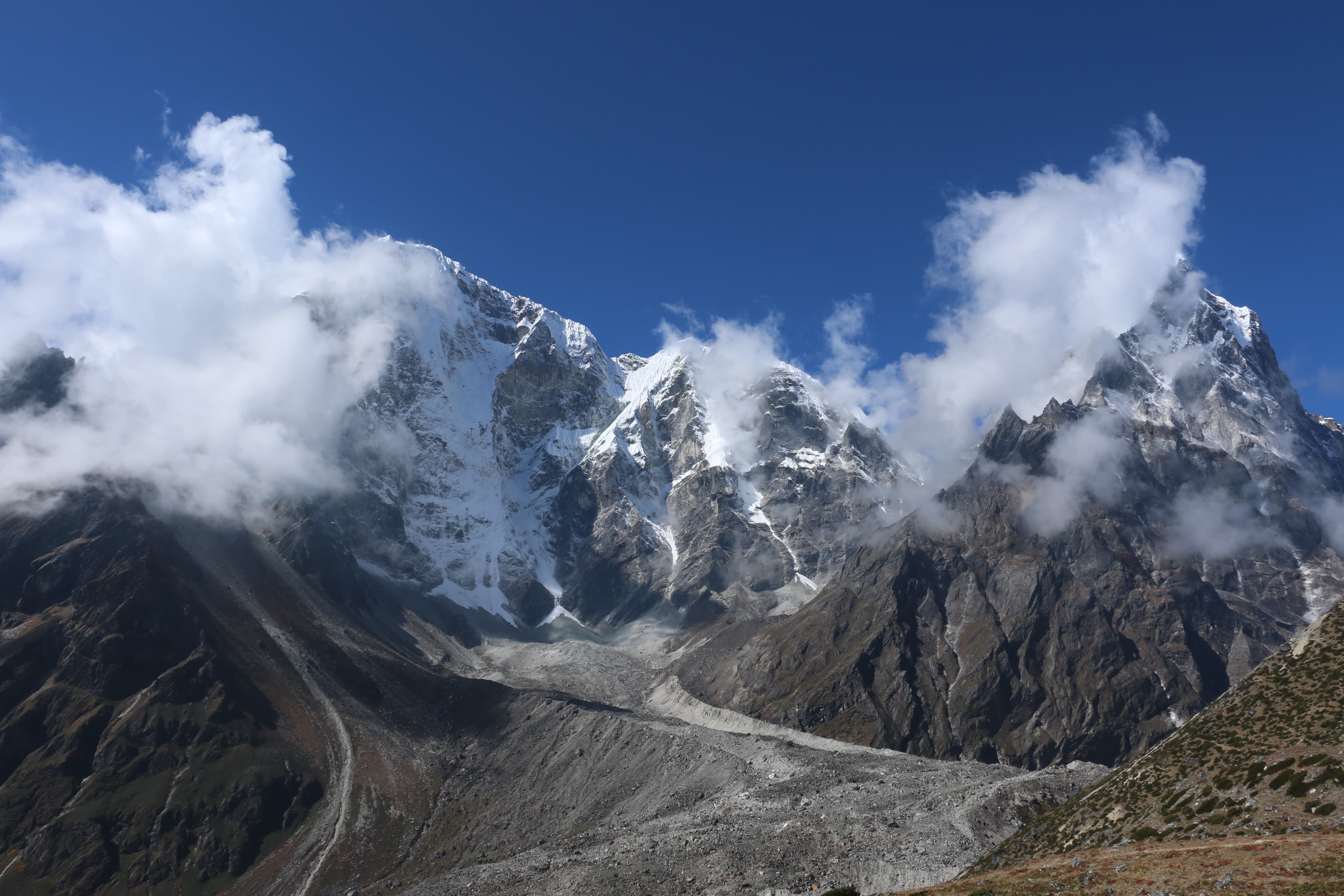
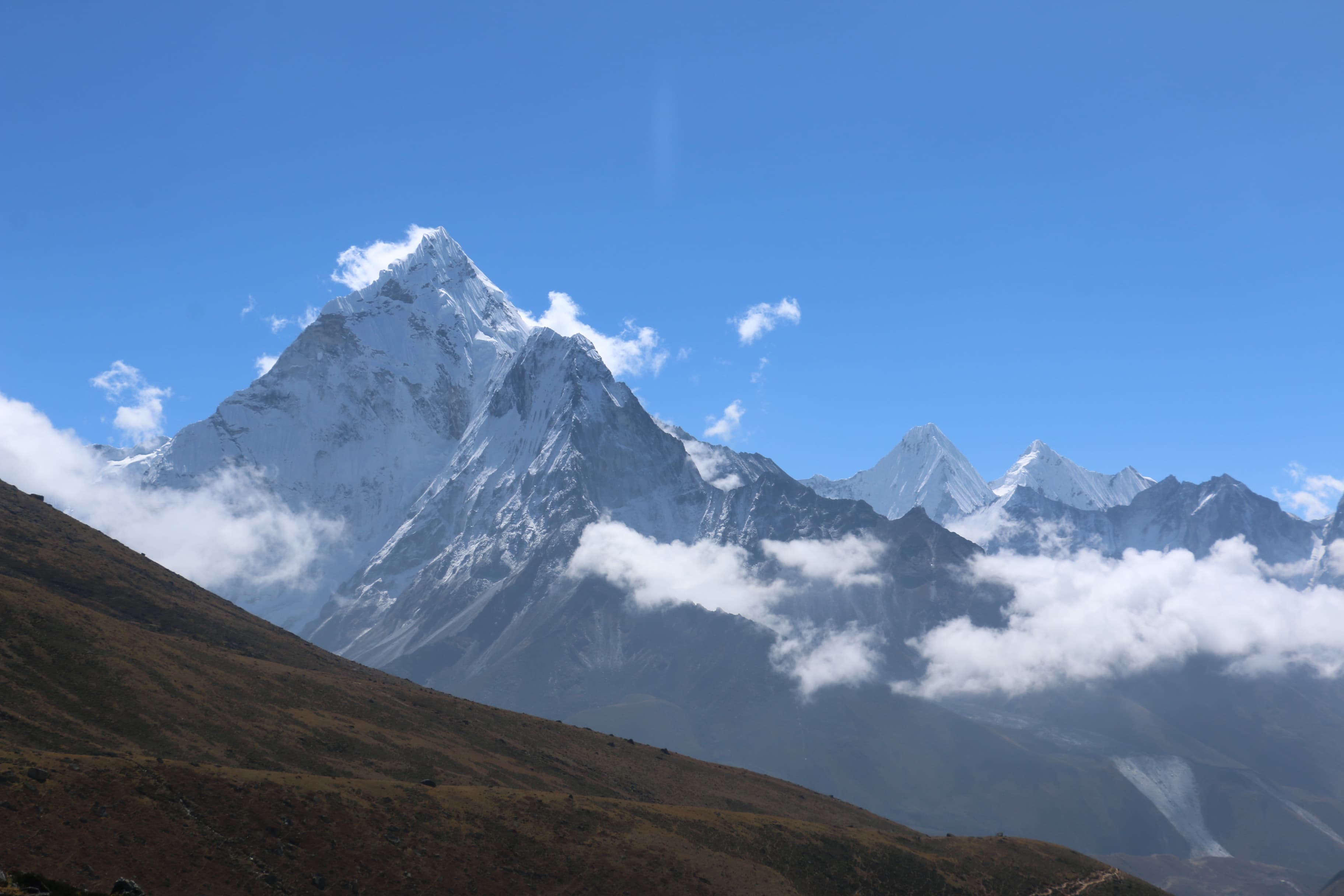
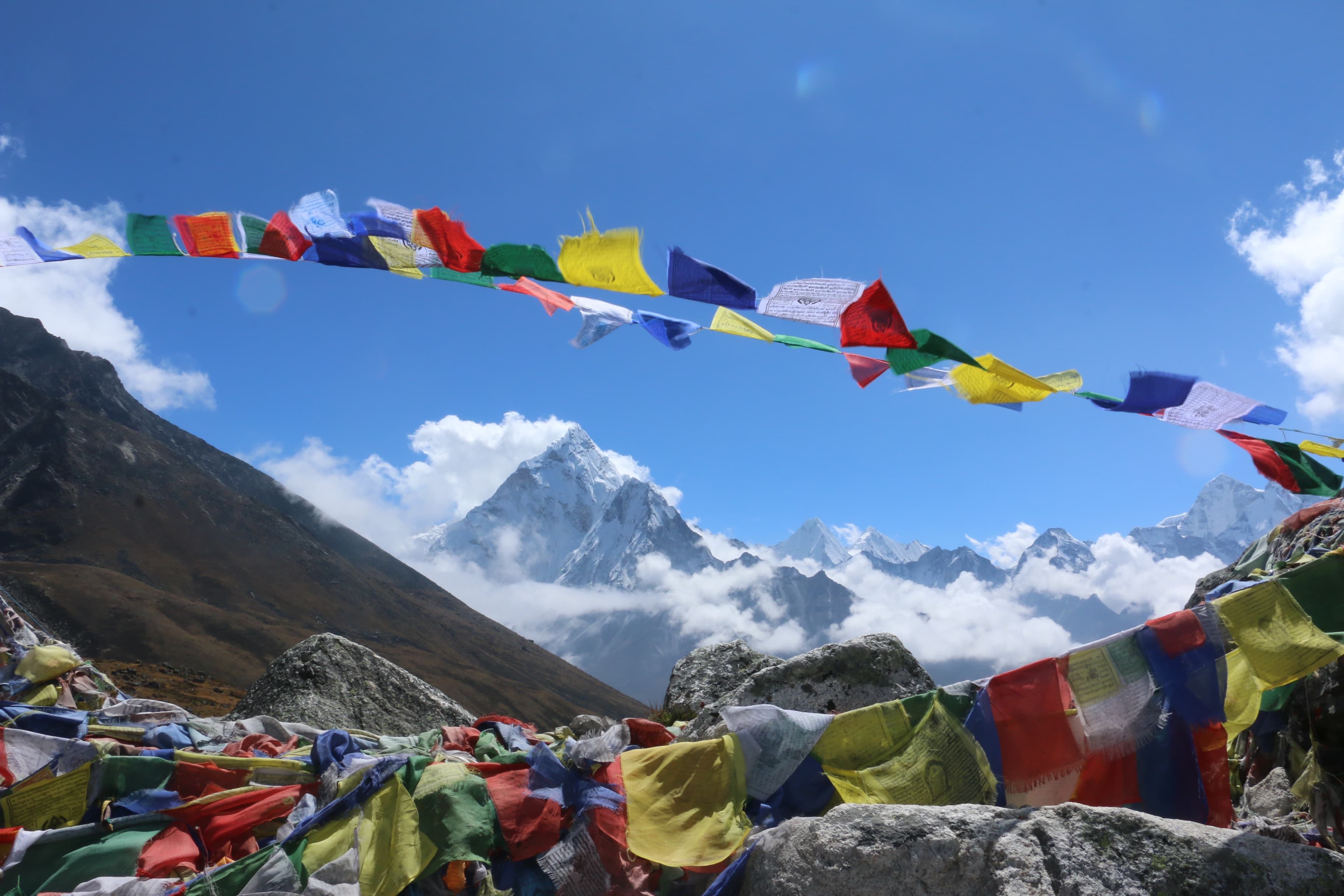
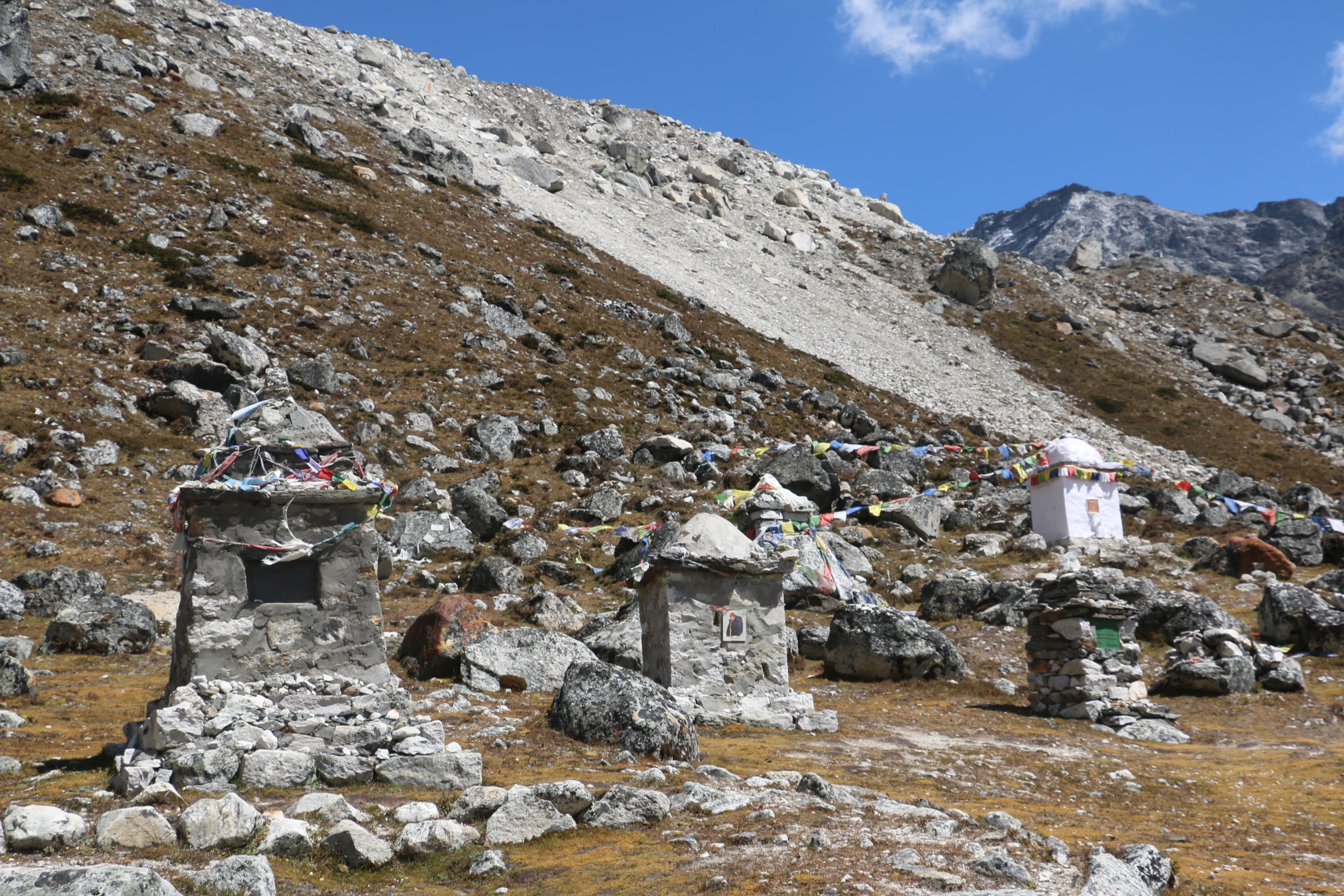
Included/Excluded
- Domestic flights: Kathmandu (1,400m) – Lukla (2,860m) – Kathmandu.
- TIMS card and Sagarmatha National Park entry permits.
- Experienced English-speaking trekking guide and porter.
- Three meals per day during trekking: breakfast, lunch, dinner.
- Twin-sharing teahouse accommodation during the trek.
- Airport transfers and ground transportation in Kathmandu.
- Access to high-altitude villages and cultural sites.
- Safety briefings and route support by guides.
- International flight tickets to & from Nepal
- Travel and high-altitude medical insurance
- Personal trekking equipment & clothing
- Meals in Kathmandu & Lukla not included in itinerary
- Provide hot showers, power outlets, and Wi-Fi access on trek
- Tips for guides, porters, and other support staff
- Alcoholic drinks and bottled beverages
- Emergency evacuation/rescue costs
- Extra nights in Kathmandu because of flight delays
- Any costs incurred due to weather or natural occurrences or canceled flights
Amenities
Domestic flights: Kathmandu (1,400m) – Lukla (2,860m) – Kathmandu.
TIMS card and Sagarmatha National Park entry permits.
Experienced English-speaking trekking guide and porter.
Three meals per day during trekking: breakfast, lunch, dinner.
Twin-sharing teahouse accommodation during the trek.
Airport transfers and ground transportation in Kathmandu.
Tour Plan
14 DaysStart writing…
1
Day 1: Arrival in Kathmandu (1400m)
2
Day 2: Fly to Lukla (2840m) and Trek to Phakding (2610m)
Day 2 begins early and takes a short, scenic flight from Kathmandu to Lukla-from 1400m to 2840m altitude. Besides that, the 25-minute Himalayan flight along with glimpses of spectacular views of mountains like Langtang Lirung at 7227m and Gauri Shankar at 7134m presents a thrilling landing experience due to its short runway. Thus, the very flight adds excitement at the start of this trek. You meet your porter in Lukla and get ready for the first walking day. The trail then goes through Chaurikharka and then drops down to Cheplung gently at 2660m. You also get glimpses of Kusum Kanguru standing at 6367m as the path follows north. The easy nature of the terrain allows a comfortable start for the Everest Base Camp Trek. Continuing further, the trail reaches Phakding along the Dudh Koshi River, passing at 2610m. Likewise, pine forests, mani walls, and prayer wheels make the walking area tranquil. Further, several suspension bridges are crossed, introducing the iconic trekking experience of the region. This section offers both cultural and natural attractions. After that, you reach a teahouse at Phakding for your first meal of Himalayan food. Besides, the teahouse offers basic rooms with warm and friendly hospitality. You can also take an acclimatization walk to the local monastery or nearby riverside paths. Hence, Phakding becomes a gentle first stop before you head to higher altitudes. Apart from that, the day helps your body adapt gradually to the terrain of the Khumbu region. Similarly, your guide explains the next day's difficult ascent in Namche Bazaar at 3440m, hygiene topics during hydration, trekking pace, and safety matters in the altitude gain. The guidance, therefore, gets you ready for the important acclimatization process. Finally, you rest early to conserve energy for tomorrow’s long trekking hours. Moreover, the soothing sound of the Dudh Koshi River enhances the peaceful evening atmosphere. Additionally, the cool climate encourages warm meals and proper hydration. Thus, Day 2 concludes smoothly with comfortable rest in Phakding.
3
Day 3: Trek from Phakding (2610m) to Namche Bazaar (3440m)
First of all, Day 3 starts with an enjoyable forest walk beside the Dudh Koshi River. Further, the route goes to Toktok and Benkar while also providing an early morning sight of Thamserku at 6608m. Additionally, waterfalls, prayer wheels, and tiny Sherpa villages also beautify the route. The scenery keeps the trek lively and motivating. You go up further to reach Monjo at 2835 meters, where the entrance to Sagarmatha National Park is. Furthermore, your guide will register at the checking post at the national park entrance. Likewise, the trail descends briefly before climbing toward Jorsalle, the final village before Namche Bazaar (3440m). Hence, in this area you will get mixed easy and moderate terrain. Next, you start the steep climb towards Namche right after crossing the famous Hillary Suspension Bridge. Similarly, this high bridge offers dramatic views of the river that depict the rugged landscape of the Khumbu region. Also, the uphill trail gradually reveals distant views of Everest (8848.86m) on clear days. Thus, the climb demands effort yet rewards you with inspiring scenery. Later, you reach Namche Bazaar, which is the largest Sherpa town in the Everest region. Additionally, Namche offers bakeries, shops, trekking gear outlets, cafés, and panoramic viewpoints. On top of that, the horseshoe-shaped town provides comfortable lodges that feel welcoming after a long uphill climb. Therefore, Namche becomes the ideal location for acclimatization. Additionally, your guide advises going for a slow walk in the evening to aid in acclimatization. In addition, warm food like dal bhat, soups, and tea help keep the energy level up in the thin air. You are also briefed about the following day's acclimatization hike to the viewpoint for breathtaking views of Everest-8848.86m, Lhotse-8516m, and Ama Dablam-6812m. Therefore, Namche prepares you perfectly for higher altitudes. Finally, you rest in Namche Bazaar and enjoy a pleasant night in the cool mountain climate. Moreover, the excitement of seeing closer Himalayan views motivates you for the upcoming days. In addition, the vibrant Sherpa culture adds a memorable aspect to the stay. Therefore, Day 3 ends with both acclimatization and cultural immersion.
4
Day 4: Acclimatization Day at Namche Bazaar (3440m)
Day 4 is focused on acclimatization in Namche Bazaar (3440m); this is essential for the success of high-altitude climbing. The day starts with a leisurely breakfast and then commences with an acclimatization hike. Your guide will describe how important it is to climb high and sleep low. This approach serves to strengthen your body for the journey ahead. It winds its way uphill to the Everest View Hotel at 3880m, one of the highest luxury hotels in the world. The path then ascends gently to a ridge, which provides a spectacular view of Everest 8848.86m, Lhotse 8516m, and Ama Dablam 6812m. Similarly, the crisp air and wide landscapes create a perfect acclimatization atmosphere. Hence, the viewpoint becomes a highlight of the day. Continuing further, the trail leads to Khumjung Village, which is a major cultural village in the Khumbu region at 3780m. Similarly, Khumjung Monastery maintains a traditional Sherpa style and displays local spiritual life. One can also visit the Hillary School, built by Sir Edmund Hillary himself as part of his efforts to help develop Sherpa education. Thus, the visit includes altitude gain with cultural exploration. Then you go back down to Namche Bazaar for lunch and to rest in the afternoon. Moreover, Namche offers bakeries, cafés, museums, and gear shops that keep trekkers engaged. Besides this, the Sherpa Culture Museum provides insights into mountaineering history and Himalayan culture. Thus, you get both rest and activity of great significance. Moreover, your guide keeps reminding you of the importance of hydration and wholesome meals in acclimatization. Similarly, you check your body for altitude discomfort. Again, there is an assurance of safety from the available medical clinic in Namche for trekkers. Therefore, with regard to acclimatization, Namche has the most comfortable facilities along the route. Finally, you rest in the peaceful evening at the lodge, getting ready for the following day's trek to Tengboche (3860m). You get your backpack ready and adjust your layering for the colder climate ahead. The clear night sky often reveals countless stars above the mountains. Thus, you wrap up Day 4 full of confidence in the continued ascent.
5
Day 5: Trek from Namche Bazaar (3440m) to Tengboche (3860m)
First of all, the beginning of Day 5 is a pleasant walk along a scenic ridge with views of Ama Dablam at 6812m and Thamserku at 6608m. Additionally, the sunlit trail is giving expansive mountain views that energize trekkers early in the day. Moreover, the path remains gentle for the first two hours. Thus, this initial section can be considered an enjoyable warm-up. The route slowly drops down to the riverside village, Phunki Tenga (3250m), which is perfect for a brief rest. Then, you cross a suspension bridge over the Dudh Koshi River and begin the uphill climb. Similarly, the ascent through pine and rhododendron forests requires steady pacing; thus, the gradual slope prepares you for the final push to Tengboche (3860 meters). Next comes Tengboche, one of the most spiritual destinations in the Everest region. In the same way, the Tengboche Monastery (3860m) is surrounded by panoramic views of the peaks such as Everest (8848.86m), Lhotse (8516m), Nuptse (7861m), and Ama Dablam (6812m). Furthermore, the peaceful environment here makes it appropriate for reflection. Thus, you will get a rare natural and cultural combination in Tengboche. Afterwards, you visit the impressive courtyard of the monastery, where you can witness monks performing their daily rituals. Furthermore, this area is a photographer's dream-the mountain peaks, above a rainbow of prayer flags, make for outstanding photographic opportunities. The cool breeze and wide-open scenery add to an unforgettable afternoon. Thus, Tengboche becomes an important milestone in the Everest Base Camp Trek. Further, you head to a nearby teahouse for rest and food. In fact, hot dishes like dal bhat, soups, and noodles keep your energy going at this altitude. Also, your guide discusses the next day's trek toward Dingboche at 4410m. Hence, the evening offers both comfort and preparation. Finally, the night in Tengboche is very peaceful because of the quiet surroundings and starry night sky. Moreover, early rest supports altitude adaptation. Besides, the temperature cools down drastically at night, which encourages appropriate layering. Hence, Day 5 ends with cultural immersion and natural beauty.
6
Day 6: Trek from Tengboche (3860m) to Dingboche (4410m)
It begins on Day 6 with a gentle drop through forests of birch, rhododendron, and juniper trees. Early sunlight gracing Ama Dablam (6812m) presents an amazing morning view. Later, the route climbs up to Deboche (3820m), a quiet settlement below Tengboche. Hence, from the start, day 6 begins smoothly while walking. Then you cross the Imja Khola River on a suspension bridge with prayer flags. Up ahead, the trail gains a gradual ascend towards Pangboche, at 3985m, one of the oldest Sherpa villages. Similarly, the Pangboche Monastery hosts both cultural understanding and traditional Himalayan architecture. Thus, this section provides both altitude gain and unique heritage. Soon, the trail opens into wider landscapes as you go deeper into the Imja Valley. Similarly, views of Lhotse (8516m), Island Peak (6189m), and Ama Dablam (6812m) become more dramatic. Also, the terrain becomes more arid and alpine with increasing elevation. Thus, the environment shifts noticeably compared to previous days. Later, you arrive at Shomare (4040m) and proceed toward Dingboche (4410m), following a gradually ascending path. Additionally, the stone-walled fields and yak pastures begin to emerge on one side of the valley. Furthermore, powerful winds and cooler temperatures indicate high elevations. As such, keep a steady pace and make sure not to get dehydrated. Moreover, you reach the important acclimatization village of Dingboche, surrounded by some incredible mountain scenery. Similarly, this settlement offers good teahouses and hot meals that will keep you fit for high altitude. Additionally, the village has nearby ridges suitable for the following day's acclimatization hike. Consequently, Dingboche is a vital stop for acclimatization. You finally reach your teahouse, get ready for the rest day ahead, and have an early dinner to conserve energy in the cold evening climate. In addition, sunset lights up the surrounding peaks-just a stunning Himalayan moment. Thus, Day 6 concludes with successful progress and strong acclimatization.
7
Day 7: Dingboche Rest/Acclimatization Day - 4410m
Day 7 completely includes acclimatization in Dingboche, 4410m, as an important stage for safe altitude gain. Then, in the morning, the guide serves breakfast at a slow pace in order to save your energy for the acclimatization hike. Meanwhile, your guide explains the importance of gradual ascent over 4000 meters. So, today's plan strengthens your body for higher terrain. You start hiking towards Nangkartsang Peak, a popular viewpoint above Dingboche at 5083m. Furthermore, the trail winds up steadily through rocky paths and opens early views of Ama Dablam at 6812m and Lhotse at 8516m. Similarly, the higher you climb, the wider the Himalayan panorama becomes. Hence, this hike provides altitude gain with scenic rewards. You will then arrive at the ridge section below Nangkartsang, which offers spectacular views of the distant Makalu at 8485 meters above sea level. Similarly, the Imja Valley spreads beautifully down below you with Island Peak (6189 meters) springing up abruptly. Besides, cold winds along with thin air make this place an excellent high-altitude landscape. Thus, this viewpoint offers the perfect setting for acclimatization. You then make a gradual descent to Dingboche to take your lunch and rest in the afternoon. Additionally, going downhill helps to stabilize oxygen levels after the morning climb. Teahouses in Dingboche provide warm meals like dal bhat, soups, or fried rice. Thus, healthy nutrition helps to acclimatize you to the altitude level. The afternoon allows for relaxed exploration around the village. The high-altitude atmosphere is further accentuated by stone-walled fields, grazing yaks, and distant glaciers. Your guide discusses the next day's trail toward Lobuche (4910m). Consequently, the whole day has a good balance between activity and rest. Finally, the evening is spent reviewing gear, layering plans, and hydration needs for higher altitudes. Additionally, the chilly night air makes you get inside the warmth of your sleeping bag early. Furthermore, the clear sky of Dingboche often reveals amazing stars above the mountains. Thus, Day 7 concluded in successful acclimatization and preparedness for further ascent.
8
Day 8: Trek from Dingboche (4410m) to Lobuche (4910m)
First of all, the beginning of Day 8 starts with a gentle rise toward the northern ridge of Dingboche at 4410m. Meanwhile, the route continues deeper into the alpine zone, becoming increasingly rugged. Distant views of Taboche at 6367m and Cholatse at 6440m complete the scenery. As a result, the morning part feels both scenic and steady. From here, the trail continues to Thukla 4620m, a small settlement which provides an ideal stopover. After that, you cross by a small bridge over glacial streams and then start your climb to the memorial hill. Similarly, this steep climb has to be made very slowly because of the decrease in oxygen level. Therefore, patience and hydration become mandatory. Further ahead is the Thukla Pass Memorials at 4800 meters, which pay their tribute to climbers who lost their lives on Everest. The viewpoint similarly offers powerful scenery with views of Pumori-7161m and Lingtren-6749m. Besides that, below appears the Khumbu Glacier showing the immensity of Everest's topography. Thus, it gets emotional and inspiring at this memorial site. From here, the path continues to ascend gradually to Lobuche at 4910m. The cold winds and rocky terrain give a real high-altitude feel. It also offers finer views of Nuptse-7861m and Lobuche East 6119m. Thus, this part of the journey brings trekkers really close to the core of the Khumbu. Further up, you reach Lobuche, which is a high-altitude settlement that offers basic yet warm teahouse facilities. Similarly, the surrounding mountains create dramatic evening views from the lodge windows. Also, your guide discusses the next day's important trek to Gorak Shep (5140m) and Everest Base Camp (5364m); hence, the evening becomes a crucial preparation period. Finally, you go to bed early to save energy for the biggest trekking day that is in store for you. Second, extremely cold air calls for hot drinks and heavy layers. Thirdly, quiet Lobuche amplifies the adventurous feeling. Thus, Day 8 concludes with excitement and preparation for Everest Base Camp.
9
Day 9: Gorak Shep (5140m) and Everest Base Camp (5364m) Trek
First of all, Day 9 starts with a gradual walk from Lobuche, 4910m, to Gorak Shep, 5140m. In addition, the trail from here winds alongside the lateral edge of the Khumbu Glacier through rocky headings. Besides, the morning horizon is dominated by views of Pumori, 7161m, and Nuptse, 7861m. Patience and controlled breathing become vital. You finally arrive at Gorak Shep, which is the last settlement before Everest Base Camp. Moreover, teahouses here serve warm meals that are appropriate for high altitudes. Similarly, your guide checks on the condition of everyone for further continuance of the journey. Thus, proper rest ensures safety for the climb ahead. Next, you start the hike to Everest Base Camp (5364m) on glacial trails dotted with rocks and ice. Similarly, the trail offers spectacular views of the Khumbu Icefall, which is one of the most stunning features of Everest. Also, the path rises very gradually but feels demanding because of thin air. Thus, determination has to turn out to be your best friend. Further down the trail, you arrive at Everest Base Camp-the mythical kickoff point for Everest expeditions. In addition, vibrant prayer flags and stone markings commemorate this historic site. Further, spectacular close-up views of the Khumbu Icefall create memories to be cherished. Hence, standing on Everest Base Camp becomes the high point of the trek. Moreover, you click pictures and soak in the view of the highest mountain in the world. Similarly, your guide points out the surrounding peaks: Nuptse-7861m, Lingtren-6749m, and Pumori-7161m. Also, this area gives you an idea about how hard it must be to climb the mighty Everest-8848.86m. Therefore, this moment is both inspiring and humble. Finally, you will be returning to Gorak Shep for an overnight rest after a long and rewarding day. Moreover, the cold evening encourages you towards warm meals and early sleep. In addition, tomorrow's sunrise hike to Kala Patthar views at 5644m is said to be the best. Hence, Day 9 concludes with achievement and anticipation.
10
Day 10: Lobuche (4,940m) to Gorakshep (5,164m) and Everest Base Camp (5,364m)
The trail from Lobuche (4,940m) to Gorakshep (5,164m) follows a constant gain along the lateral moraine of the Khumbu Glacier via a rocky path with increasingly spectacular views of Nuptse (7,861m), Pumori (7,161m), and Lingtren (6,749m). The air becomes thinner as the trekkers draw closer to the historical village of Gorakshep. The climb also gets the trekkers better prepared for the breathtaking walk to Everest Base Camp (5,364m). Further ahead, Gorakshep presents the trekker with a surreal topography mapped by the actions of ice and wind. The village lies right at the foot of towering peaks, presenting surreal contrasts between glaciers and sand dunes. A short rest here prepares trekkers to rehydrate, refuel, and manage the final ascent. The preparation ensures a smooth journey on the rugged route toward Everest Base Camp. The hike from Gorakshep to Everest Base Camp winds its way along the edge of the Khumbu Glacier, through a dramatic setting of rocky moraine, scattered boulders, and shifting ice. The trail consists of uneven surfaces and occasional icy patches, where cautious steps are required. This slow pace allows trekkers to manage their altitude and preserve energy for the emotional arrival. Later, the iconic Everest Base Camp (5,364m) emerges below the enormous Khumbu Icefall. During the climbing season, the site pulsates with energy from mountaineering expeditions. The towering blocks of ice, deep crevasses, and multicolored prayer flags further enhance the spiritual and natural force of the place. For many trekkers who reach here after days of constant upward grind, the feeling of accomplishment is overwhelming. Moreover, trekkers are presented with unobstructed views of Nuptse (7,861m), Changtse (7,543m), and the Everest Icefall. The absence of Everest's summit becomes insignificant due to the dramatic surroundings. Groaning ice of the glacier and whirling winds add to the remarkable atmosphere of this place. The time spent here etches a lifelong memory of the Everest region. Finally, the trekkers trace their way back to Gorakshep for the night. The downhill is a lot easier, though altitude requires constant awareness. Evening brings warmth, rest, and shared stories among fellow trekkers. The long, rewarding day is among the most remarkable moments of the Everest Base Camp Trek itinerary.
11
Day 11: Gorakshep (5,164m) to Kala Patthar (5,545m) and Down to Pheriche (4,371m)
The early morning climb from Gorakshep (5,164m) to Kala Patthar (5,545m) starts before sunrise. It ascends steeply on a ridge leading toward Pumori (7,161m). One will surely need all those layered clothes and steady pacing, as it can get cold in the morning. This ascent offers the finest panoramic view in the Everest region. Then, the summit of Kala Patthar reveals the mighty Everest at 8,848.86m in full clarity. The light of sunrise casts gold on Lhotse at 8,516m, Nuptse at 7,861m, and Ama Dablam at 6,812m. The Khumbu Glacier glitters as morning winds sweep through the valley. This breathtaking scenery is a highlight of the entire Everest Base Camp Trek itinerary. Then, trekkers descend back to Gorakshep for a warm breakfast. The return feels easier as the sunlight warms the trail. The descent restores energy after the demanding summit push. The meal prepares trekkers for the long descent toward Pheriche at 4,371m. Afterward, the trail heads south along the familiar path through the Lobuche valley. Gradual descent eases breathing and reduces altitude stress. The views of Thamserku 6,623m, Taboche 6,495m, and Cholatse 6,440m enrich the journey. The landscape shifts from stark glacial terrain to gentler alpine slopes. The walk further up to Pheriche crosses the windy valley near Duglha, at 4,620m. The terrain feels wider, and the air grows thicker. Trekkers appreciate the softer trail after several nights at high altitude. Eventually, the path leads into Pheriche’s open valley. Finally, Pheriche at 4,371 meters above sea level is a place that receives trekkers with warm lodges and peaceful surroundings. The village contains medical facilities and experienced staff who give advice on altitude. Nighttime brings deep rest after a demanding day of ascent and descent. The milestone marks a balanced transition toward lower Himalayan elevations.
12
Day 12: Pheriche (4,371m) to Namche Bazaar (3,440m)
First, from Pheriche, at 4,371m, to Namche Bazaar, at 3,440m, the trail descends through wide meadows. It follows yak pastures and stone-walled fields that Sherpa heritage has shaped. The valley widens as trekkers follow the Imja Khola downstream. Fresh air comforts trekkers after days at extreme altitude. Next, the track reaches Pangboche, one of the oldest Sherpa villages at 3,985m. The village is spiritually significant due to the presence of the historic Pangboche Monastery. Ama Dablam, at 6,812m, provides outstanding scenic symmetry in this walk. Cultural richness heightens the journey down towards the lower terrain. From here, the trekkers proceed further down to Tengboche at 3,867m. The village hosts Tengboche Monastery, the region’s most sacred Buddhist center. This panoramic view would include Everest (8,848.86m), Lhotse (8,516m), and Kwangde (6,187m). The peaceful atmosphere would call for short breaks before continued walks. It then drops down precipitously to Phunki Tenga at 3,250 meters. Rhododendron, pine, and juniper trees surround the forest trail, while the suspension bridge crossings add some adventure in the descent. Warmer temperature brings renewed energy. Moreover, the route gains a little altitude up to Kyangjuma at 3,570 above sea level, with appealing tea houses. It is also from this trail that one gets great views of Thamserku at 6,623 meters above sea level and Ama Dablam. This is a contour path, making the walk quite scenic and pleasant. The approach signals the return towards Namche. Finally, the colorful rooftops and lively streets of Namche Bazaar appear at 3,440 meters. There are bakeries, shops, and comfortable lodges available in this town. Trekkers will find lower altitude and refreshing comfort. The day concludes a beautiful part of the Everest Base Camp Trek itinerary.
13
Day 13: Namche Bazaar (3,440m) to Lukla (2,860m)
First of all, the descent from Namche Bazaar (3,440m) to Lukla (2,860m) begins with a steep trail toward the Dudh Koshi River. The path moves through pine forests, terraced slopes, and clustered settlements shaped by Sherpa life. The crisp morning air creates ideal trekking conditions across the high ridges. The gradual loss of elevation eases breathing and increases comfort. Further ahead, the track reaches the long suspension bridge at Larja Dobhan. This iconic bridge offers great views of the deep river gorge below. Next, the trail winds up through forested parts filled with rhododendron and oak trees. The descending terrain makes the journey smooth and rhythmic. Then, trekkers head towards Monjo (2,835m), which is the entrance of Sagarmatha National Park. The exit formalities here mark the return from the world’s highest trekking region. This village gives a brief rest before moving further along the riverbank. The familiar surroundings give way to warm memories from the earlier days of the Everest Base Camp Trek itinerary. After that, the track continues to Jorsalle (2,740m), crosses numerous bridges over Dudh Koshi. The river churns furiously down the valley, at times being quite soothing in its background noise. The trail is continuously marked and comfortable. Gradual downhill brings trekkers to Phakding (2,610m). Besides this, Phakding receives trekkers with open fields, carved stones, and prayer wheels. The settlement feels refreshing as it is pretty low in height. Beyond Phakding, the trail comprises gentle ascents and rolling paths. The route passes Ghat at 2,530m where traditional houses line up the trail. Finally, the last section ascends gradually to Lukla at 2,860m. It is a livelier trail since trekkers and porters move towards their destination. The arrival in Lukla brings a deep sense of completion and relief. Celebration, gratitude, and recollection of the successful Everest Base Camp Trek can be done during this night.
14
Day 14: Lukla (2,860m) to Kathmandu (1,400m) by Flight
It is early on the last morning at Lukla Airport (2,860m), with its short runway and mountain views. The trekkers check in with hot tea in warm surroundings. The busy but organized atmosphere of this airport shows its importance as the gateway to Everest. The excitement rises as flights prepare for their departure towards Kathmandu. It then cuts through a narrow corridor between forested ridges to take off. The aircraft climbs rapidly, offering extensive views of the Himalayan range. The peaks glow under the morning light, including distant sights of Everest-8,848.86m and Lhotse-8,516m. This breathtaking scenery perfectly concludes the trekking experience. Continuing onwards, the plane flies over terraced hillsides and winding rivers to approach Kathmandu Valley at 1,400 meters. Landscapes change from alpine to mid-hills. Greener slopes highlight Nepal’s natural diversity. The approach to Kathmandu brings familiar city views. The plane then lands smoothly at Tribhuvan International Airport. Trekkers collect their bags and meet their team outside the terminal. The warm weather feels soothing after two weeks in thin air. The transportation process then leads travelers toward their hotels in the city center. In addition, Kathmandu offers relaxation, cultural sightseeing, and shopping after the Everest Base Camp Trek itinerary. The cafés, handicraft stores, and bakeries line the streets of ThamTrekkers take the opportunity to enjoy a hot shower, comfortable bed, and warm meals. Going back to comfort makes for a rewarding transition. The day finally ends with gratitude for the successful journey through the Everest region. Many of the trekkers celebrate with Nepali cuisine and share memories with fellow travelers. The whole experience becomes a story of endurance, beauty, and achievement. This is how one can conclude the unforgettable Everest Base Camp Trek adventure in Kathmandu. The Everest Base Camp Trek will lead you to Everest Base Camp at 5,364m, offering breathtaking Himalayan scenery. The trail reveals panoramic views of Everest 8,848.86m, Lhotse 8,516m, Nuptse 7,861m, and Ama Dablam 6,812m. These dramatic landscapes are seen by the trekkers every day of the journey. Thus, the trek offers unmatched visual beauty throughout the Khumbu region. The trek showcases the unique Sherpa culture in villages like Namche Bazaar (3,440m) and Khumjung (3,780m), featuring lifestyles as traditional as those shaped by the influence of Buddhism and living at high altitude. This richness is enhanced by monasteries, prayer wheels, and mani walls. Thus, trekkers learn about one of the most resilient mountain cultures in the world. The following day's climb to Tengboche Monastery (3,860m) presents one of the most tranquil and spiritual moments for trekkers on the Everest Base Camp Trek. The monastery sits on a ridge facing Everest (8,848.86m) and Ama Dablam (6,812m). Monks carrying out daily rituals add to the experience. Tengboche thus blends culture, spirituality, and mountain scenery. The trail later provides excellent opportunities for acclimatization at Dingboche (4,410m) and Lobuche (4,910m). These stops reduce altitude sickness risk and improve comfort while trekking. Day-to-day hikes from villages help the body adapt naturally. Hence, this itinerary supports safe and gradual elevation gain. Furthermore, the hike to Kala Patthar (5,644m) provides the best sunrise view of Mount Everest at 8,848.86m. It provides a vantage point that offers 360-degree Himalayan views. The golden light enhances the peaks’ clarity and brilliance. Thus, Kala Patthar becomes an unforgettable highlight for photographers and trekkers. Then, a scenic flight from Kathmandu (1,400m) to Lukla (2,860m) begins the trek. The short journey takes in sensational aerial views of terraced hills, river valleys, and distant peaks. Adding to the excitement is landing at Lukla Airport. Thus, the flight creates a memorable start and finish. In addition, there is warm hospitality for trekkers in teahouses spread over the Everest region. These accommodations offer hearty meals, hot drinks, and comfortable rooms. The shared dining areas help foster conversations with fellow trekkers. Thus, teahouse stays enhance cultural and social experiences of the trek. Finally, the Everest Base Camp Trek is an outstanding value given the experience, scenery, and cultural richness. These packages generally lie in the range from USD 1300-1800, depending on the services. The cost covers permits, flights, meals, guides, and accommodation. Thus, the trip offers a well-supported, rewarding Himalayan adventure.
Trip Information
Everest Base Camp Trek Communication FAQs
The high-altitude terrain on the Everest Base Camp Trek limits the communications with remote villages. Mobile networks are available in major settlements at Lukla (2860m), Namche Bazaar (3440m), Dingboche (4410m), and Gorak Shep (5140m). Most major Nepali SIM cards work along the route, including Ncell and Nepal Telecom. However, coverage is intermittent, especially above Dingboche (4410m).
Besides, connectivity to the internet is slow and mostly unreliable. The teahouses also provide Wi-Fi at an extra cost, around USD 2–5 per hour. Video calls are demanding, but messaging apps such as WhatsApp and Telegram work at lower bandwidths. Trekkers must adjust their expectations with regard to online communication.
Additionally, for emergency purposes, satellite phones are advised. In areas above Gorak Shep (5140m) or during poor weather, mobile networks fail to work. Satellite devices guarantee safety and enable communication with guides, agencies, or rescue teams. Satellite phone rental costs about USD 8–12 per day.
Hence, it is important that trekkers inform their family and friends about the limitations in connectivity. Thus, plans for check-in schedules can be made at either Namche Bazaar (3440m) or Lukla (2860m) to keep people updated. A person needs to intimate the plan for emergencies and the contact numbers before leaving. In this way, awareness of communication gaps leads to safety and peace of mind.
Besides that, offline maps and trekking applications become very crucial. The GPS-enabled applications like Maps.me or AllTrails would help in navigating through remote trails without any internet service. This also shows elevation, distance, and route guidance. Digital preparation compensates for the limited network availability.
Teahouses in the larger villages may also have payphones. These are very rare, but available for local calls. Trekkers are recommended to carry local currency in such situations. Using teahouse communication supports both convenience and local economy.
Carrying several options is wise, as weather can disrupt signals. Mobile, internet, and satellite options help cover for different scenarios. In this way, trekkers can avoid the stress of emergencies or delays. Redundancy keeps them safe in unpredictable conditions.
Ultimately, understanding communication on the Everest Base Camp Trek helps trekkers prepare effectively. Mobile networks, Wi-Fi, and satellite phones provide varying levels of connectivity. Offline apps, messaging plans, and emergency contacts keep trekkers in constant communication. With proper planning, a safe and enjoyable trekking experience is ensured.
Everest Base Camp Trek Electricity
Electricity can be found in most major teahouses along villages like Lukla (2860m), Namche Bazaar (3440m), Dingboche (4410m), and Gorak Shep (5140m). Most outlets have 220V, 50Hz. Plug types C and D are common; however, some require specific adapters. Charging fees range from 2 to 5 USD per device.
Besides, power availability is not satisfactory at higher altitudes. Villages above Dingboche (4410m) depend either on solar or generator sources, which may also not work on cloudy days. Similarly, trekkers are advised to bring portable power banks and spare batteries for any emergency. Energy-efficient equipment allows the batteries to last longer during the trek.
Apart from that, electricity is shared among trekkers, so charging requires queuing. The best time to charge while teahouses have electricity is during morning or evening hours. Recharging several times supports keeping devices such as a camera, GPS, and phone working. Planning for electricity use ensures essential electronics stay functional.
Solar chargers, therefore, are popular alternatives. They make trekking possible in areas where power is not always available, especially above Gorak Shep (5140m). Compact models of solar panels weigh less than 1kg and can charge small devices during the day. Renewable energy options support sustainable trekking practices.
Furthermore, it is recommended that trekkers should not overload the circuits. High demand can blow fuses or damage equipment. Sharing power responsibly and minimizing unnecessary device use reduces stress on teahouse electricity systems. Awareness preserves both equipment and local resources.
Because cold temperatures at higher elevations drain batteries faster, it is helpful to carry insulated battery pouches. Warm batteries last longer in tents and backpacks. Keeping devices powered means that communication, navigation, and photography can remain reliable throughout the trek.
Furthermore, guides and porters often help locate available outlets. Some teahouses allow group charging with some possible supervision. In this regard, coordination reduces waiting time and sustains trekking efficiency. Collaboration enhances convenience at these remote locations.
In the end, understanding electricity availability along the Everest Base Camp Trek means smooth device management: charging costs, very few outlets, and alternative solar solutions help trekkers stay powered. Proper preparation keeps communication, navigation, and photography uninterrupted while high-altitude trekking.
Everest Base Camp Trek Trail Conditions
Trail conditions range from forested lower valleys to glacial highlands during the Everest Base Camp Trek. Starting from Lukla (2860m), the route goes via Phakding (2610m), Namche Bazaar (3440m), and Dingboche (4410m), before going to Gorak Shep (5140m). The trails are rocky, bumpy, and sometimes slippery, hence proper trekking boots and poles are highly recommended for safety reasons.
Moreover, seasonal weather influences trail conditions. Spring-summer (March to May) has clear paths with moderate temperatures. Autumn-early winter (September to November) has dry trails and spectacular visibility. Monsoon season introduces mud, landslides, and river crossings. Seasonal risk awareness ensures a safe trekking plan.
Besides, the high-altitude parts consist of moraine tracks, glaciers, and narrow ridges around Lobuche at 4910 meters above sea level and Everest Base Camp at 5364 meters above sea level. Expect a lot of snow and ice during early spring or late autumn seasons. Trekkers have to be really aware, keep their balance, and adhere to guides for safety. Familiarity with the trails enhances safety and builds confidence.
Consequently, trail markings are scarce. It relies on trekking maps and GPS apps for navigation. Suspension bridges, steep ascents, and rocky sections require focus. Local guides and porters provided critical support during difficult or unmarked segments. Moreover, the conditions of the trail vary considerably: from well-trodden, popular parts like Namche Bazaar-3440m and Tengboche-3860 m, to less maintained, remote paths to Gorak Shep-5140m, possible erosion, and obstacles. Both challenges are mitigated by trekking expertise and preparation. Due to rapidly changing trail conditions because of weather or landslides, trekkers must check updates daily. Guides monitor trail safety and recommend alternative routes if necessary. Awareness prevents delays, injuries, or hazards, while flexibility ensures smooth trekking progress. Furthermore, the altitude affects physical effort on the trails. Going uphill from Dingboche to Lobuche requires rest stops and controlled pace from 4410 to 4910 meters and upwards. Above 4000m, the acclimatization that is followed by careful walking avoids exhaustion and altitude sickness. Ultimately, understanding Everest Base Camp Trek trail conditions readies trekkers with the terrain, seasonal changes, and high altitude challenges. Proper footwear, trekking poles, maps, and guides ensure safety. Increased awareness of trail difficulties enhances safety as well as one's experience of trekking.
Everest Base Camp Trek Foods & Drinks
Foods and drinks on the Everest Base Camp Trek are a source of energy, warmth, and hydration during high-altitude trekking. Most current teahouse delicacies are dal bhat, noodles, pasta, momos, and soups. Villages along the route, such as Lukla 2860m, Namche Bazaar 3440m, and Dingboche 4410m, offer local and Western dishes. Proper nutrition is considered essential to guarantee efficiency, stamina, and acclimatization during trekking.
More importantly, hydration is key. Water intake shall be between 3–4 liters a day to avoid dehydration. Water purification tablets, filters, or boiling is recommended as water from the rivers or tap may contain some pathogens. The teahouses sell bottled water at USD 1–2 per liter, while hydration packs save time and energy.
Moreover, high-calorie snacks maintain energy in the case of long hikes. The following foods are easily portable: trekking bars, chocolate, nuts, and biscuits that support the maintenance of blood sugar. Trekkers often eat small meals every 2-3 hours, balancing exertion with caloric intake. This strategy prevents fatigue during ascents to Lobuche (4910m) and Gorak Shep (5140m).
Thus, meal planning has to be pre-analyzed concerning altitude effects. Above 4000m, the appetite is reduced and digestion is slower. Light meals that are easily digested, like soup or porridge, are best at Dingboche, 4410m or Gorak Shep, 5140m. Regular snacking and hydration offset reduced appetite.
In addition, almost all the teahouses have tea, coffee, and hot chocolate. These hot drinks help to keep your body warm and boost morale during cold nights. Another energy-rich option is traditional Sherpa butter tea. Prices vary from USD 2–4 per cup, depending on elevation and location.
Since electricity and gas are limited, some of the teahouses will not provide hot meals at times of high demand. Trekkers should always carry instant noodles or energy bars just in case. Flexibility ensures sustained nutrition despite high-altitude challenges.
In addition, most of the lodges can accommodate dietary restrictions. Vegetarian and vegan options are readily available, though gluten-free meals are provided only upon request. Guides help in ensuring dietary requirements are met.
Ultimately, on the Everest Base Camp Trek, food and drinks are vital for performance, energy, and acclimatization. Proper planning, hydration, and high-calorie snacking help with trekking in remote, high-altitude villages. Awareness of food availability and options, along with knowing costs, ensures safety and enjoyment.
Everest Base Camp Trek Hot Shower
Hot showers on the Everest Base Camp Trek are limited, with availability and temperature variable based on both altitude and teahouse facilities. The villages of Lukla at 2860m, Phakding at 2610m, and Namche Bazaar at 3440m normally have hot water. In higher settlements like Dingboche at 4410m, Lobuche at 4910m, and Gorak Shep at 5140m, showers may be solar-heated, and unavailable in cold weather.
Additionally, hot showers are usually provided as an extra service, often for USD 3–5 per shower. The availability can be compromised due to the supply of electricity or gas, and sometimes hot water is only available in the evening in some teahouses. Generally speaking, spring and autumn have better conditions concerning shower facilities since the weather conditions and daylight may be more stable.
Additionally, water is the most vital thing to conserve. Many teahouses have scarce water for multiple trekkers; conserving your shower time will save resources and ensure enough is available for all guests. At high altitudes, shorter showers are preferred to retain body heat and energy.
Consequently, personal hygiene practices complement teahouse facilities. Wet wipes, hand sanitizers, and dry shampoo are useful alternatives above elevation at Gorak Shep (5140m). Maintaining hygiene supports the health and morale of extended days of trekking.
Moreover, the shower temperature at higher altitudes may be lower. Trekkers should also be prepared for cold showers during the winter or on overcast days. Apparel in layers and warm towels help minimize post-shower discomfort. Proper planning upgrades the overall experience of trekking.
Because hot water sources are sometimes shared, queues are common. Morning or late afternoon showers avoid peak times. Coordinating this with other trekkers keeps the routine running smoothly, reducing waiting.
Moreover, the guides and lodge staff aid in the management of water availability. They help in ensuring showers operate and are safe, especially on high-altitude locations where freezing may be possible. Support promotes comfort in remote spots.
Concluding, hot showers on the Everest Base Camp Trek are a high-altitude luxury. They are more reliable in lower villages such as Namche Bazaar at 3440 meters and become less consistent above Dingboche at 4410 meters. Awareness, planning, and alternative hygiene solutions ensure cleanliness, health, and morale on the trek.
Everest Base Camp Trek Currency
The widely used currency on the Everest Base Camp Trek is Nepalese Rupees (NPR). All teahouses, shops, and lodges along the way, including Lukla (2860m), Namche Bazaar (3440m), and Dingboche (4410m), accept only cash. Very few places allow the use of credit cards, and there are ATMs in major villages such as Lukla (2860m) and Namche Bazaar (3440m).
Furthermore, trekkers should have enough cash with them before leaving. The usual expenses of trekking are meals: US$ 5-10 per meal, tea/coffee: US$ 2-4, hot showers: US$ 3-5, and tips for guide and porters. Budgeting in advance saves financial stress in remote areas.
Additionally, currency exchange is best done in Kathmandu (1400m) or Lukla (2860m). Very few teahouses on the trail offer exchange services. Trekkers should have small denominations of NPR for their daily transactions. Properly managing cash makes daily transactions easier and helps the local economy as well.
Therefore, having an emergency USD is helpful for unexpected expenses. Also, some of the lodges and guides accept small denominations of USD 10-20. However, exchange rates vary, and cash transactions in NPR remain standard. Flexibility ensures that trekking logistics go smoothly. Besides, there are tips for guides and porters. The standard is USD 5-10 per guide per day and USD 3-5 per porter per day. Cash-based tipping methods incentivize services and maintain trekking etiquette. Tips need to be budgeted for in planning total trip costs. Because electronic payments have proved unreliable in remote villages, there is a heavy reliance on cash. However, trekkers are advised to avoid carrying too much in order to minimize risks. Organized money management can ensure both safety and convenience for these long treks. Moreover, travel cards and international ATMs are ineffective along the route. All major transactions must be in NPR or cash USD. Proper preparation prevents inconvenience at high-altitude locations like Gorak Shep (5140m). Therefore, familiarity with the usage of currency on the Everest Base Camp Trek smoothes financial transactions. Carrying sufficient Nepalese Rupees, planning expenses, and budgeting for tips and emergencies are essential. Proper cash preparation enhances trekking convenience, safety, and enjoyment.
Everest Base Camp Trek Safety & Security
The Everest Base Camp Trek requires safety and security pertaining to high-altitude problems, remote areas, and unpredictable weather conditions. Major villages include Lukla, 2860m; Namche Bazaar, 3440m; Dingboche, 4410m; and Gorak Shep, 5140m. Safety planning would include preparation, acclimatization, equipment, and knowledge of risks. Awareness will reduce the chances of accidents, altitude sickness, and emergencies.
The most common health concern, however, is altitude sickness. Symptoms one can expect to experience include headache, nausea, dizziness, and fatigue. Complications can be avoided by ascending gradually, resting on acclimatization days at Namche Bazaar (3440m) and Dingboche (4410m), and maintaining proper hydration of the body. Guides will monitor trekkers for early signs to allow for timely intervention.
Moreover, it is far more secure to go on a trek with a licensed guide. The guides will be able to update you about routes, weather conditions, and any other hazards that may arise. Porters will help carry your luggage, minimizing fatigue and the risk of falling. Professional guidance ensures safer trekking in high-altitude and remote sections.
Consequently, weather hazards must be considered. Weather conditions like heavy snowfall, rain, and strong winds may impact the condition of the trails, especially above Lobuche-4910m and Gorak Shep-5140m. It is recommended to follow weather forecasts regularly, dress properly according to the weather, and not venture into areas that guides advise against. Flexibility in scheduling enhances safety in poor conditions.
Besides that, personal security generally does not present many problems, since the region is culturally open, friendly, and tranquil. Thefts and violent acts rarely occur; however, valuables should be secured. Using a money belt and limiting cash lowers risk. Awareness accompanies personal and environmental safety.
As there are very few medical facilities in villages, trekkers must carry first aid kits and medication with them. High-altitude medications such as Diamox and oxygen cylinders may be helpful during an emergency. It is necessary to acquire high-altitude trekking and evacuation insurance for secure travel.
Besides that, there are helicopter or road emergency evacuation options available from some villages. The costs are very high-USD 500–1500-so insurance cover ensures financial protection. Guides organize emergency responses and increase confidence, thus enhancing safety.
Preparation, awareness, proper pacing, and guides ultimately ensure safety and security on the Everest Base Camp Trek. Acclimatization, monitoring of weather conditions, and health precautions help reduce risks. Safety protocols guarantee a trekking experience both unforgettable and safe.
Everest Base Camp Trek Accommodations
Accommodations for the Everest Base Camp Trek are basically provided along the way in teahouses. Villages that provide accommodations include Lukla (2860m), Namche Bazaar (3440m), Tengboche (3860m), and Dingboche (4410m). Accommodations consist of shared or private rooms with basic bedding, blankets, and shared bathrooms. Comfort will reduce at higher altitudes, and trekkers should, therefore, adjust their expectations.
Furthermore, not all rooms are always available, and seasonal changes affect occupancy. Peak months for trekking are during spring- March to May-and autumn- September to November. It is advisable to book a private room in advance. Group travel or travel agencies can easily secure accommodation in key stops, hence one is assured of predictable comfort on the trail.
Besides, the villages at the higher altitude, like Lobuche-4910m or Gorak Shep-5140m, have very few amenities. Hot water, electricity, and Wi-Fi are limited or charged extra. Travelers would do well to bring sleeping bags, warm clothing, and portable lights to supplement personal comfort. Preparation enhances comfort on trekking.
Hence, accommodation costs often include meals. Teahouses will provide simple and local breakfasts, lunches, and dinners. Meal prices vary depending on the elevation: from USD 5 to 10 per meal. Booking rooms with included meals would facilitate logistics and ensure healthy nutrition at high altitudes.
In addition, sanitation facilities are basic at higher elevations. Shared bathrooms and limited running water are common. Trekkers should carry hand sanitizer, toilet paper, and wet wipes. Hygiene awareness prevents illness and discomfort during the trek.
As not all lodges have electricity-some are solar-powered-you may not have access to hot showers. Plan accordingly for device charging and personal hygiene to keep daily routines smoothly. Portable chargers and backup solutions come highly recommended.
Moreover, the hosts at teahouses are mostly friendly and helpful. They help with advice, meal preferences, and minor emergencies. Positive interactions support trekking comfort and cultural immersion.
Ultimately, accommodation on the Everest Base Camp Trek combines simplicity with a rich cultural experience and high-altitude challenge. Pre-booking, preparation, and awareness of the facilities ensure comfort, safety, and a fulfilling trekking journey.
Everest Base Camp Trek Permits
All the trekkers in this region must have permits for the Everest Base Camp Trek. Key permits involve the TIMS Card (Trekkers' Information Management System) and Sagarmatha National Park Permit. TIMS costs for independent trekkers are USD 10, while it is USD 20 for those who come in groups. The Sagarmatha National Park Permit is USD 30. Both are issued either in Kathmandu (1400 m) or Lukla (2860 m), before trekking.
Besides, permits ensure trekking safety, environmental protection, and legal compliance. Rangers patrol routes and confirm registration at checkpoints. Trekking without carrying permits invites fines or restrictions to trekking parts along the trail, particularly around Namche Bazaar at 3440m and Dingboche at 4410 meters.
Furthermore, permits require personal details: passport, photo, and emergency contacts. TIMS registration assists the authorities in rescue operations, medical emergencies, and monitoring altitude ailments. Getting permits done before departing reduces stress and allows smooth access to trekking.
Thus, permit costs go toward conservation and local infrastructure. Park fees cover the cost of wildlife preservation, trail maintenance, and teahouse development. Trekkers contribute to sustainable tourism in the Everest region while enjoying protected natural landscapes. Also, permits must be presented at various checkpoints along the route: rangers are on duty to check documentation in Namche Bazaar (3440m), Tengboche (3860m), and Dingboche (4410m). This brings compliance with the law and supports regional safety protocols. Because independent trekkers may navigate permit acquisition differently, guides or agencies ease the process by streamlining it. Agencies often include permits in overall package costs; hence, saving time and paperwork. Guides provide either assistance or verification at checkpoints. Furthermore, permits are non-transferable. They can only be used by the registered trekker. In the event of a loss, permits need to be reported to the relevant authorities immediately for replacements to be issued to prevent delays in trekking. Fundamentally, Everest Base Camp Trek permits are about legal, safe, and responsible treks. TIMS and Sagarmatha National Park permits ensure entry, conservation, and safety. Knowing the cost, regulations, and how to acquire them assures a hassle-free Himalayan adventure.
Everest Base Camp Trek Transportation
Everest Base Camp Trek transportation begins with a flight from Kathmandu, which is 1400 meters above sea level, to Lukla at 2860 meters. This scenic flight takes 35-40 minutes, where one catches glimpses of the Himalayas, including Ama Dablam, 6812 meters, and Thamserku, 6623 meters. Small aircraft fly in strict weather conditions and thus often get delayed. Proper planning thus ensures timely arrival at the trailhead.
Additionally, road transportation is restricted to Sankhuwasabha and its surroundings. The trek is conducted on foot from Lukla (2860m onward), for which all villages on the trail are reached by walking: Phakding at 2610m and Namche Bazaar at 3440m. To minimize fatigue, luggage can be carried either by porters or pack animals. In this way, the pedestrian access also saves the Himalayan environment.
There are also helicopter services for evacuation or sightseeing flights. Helicopter rides from Lukla (2860m) or Namche Bazaar (3440m) to Everest Base Camp at 5364m cost from USD 500 to 1500 depending on duration. Pre-booking and insurance cover against contingency events at high altitude are recommended.
Consequently, trekking should be a process of careful coordination between flight schedules and walking days. Delays caused by bad weather might affect onward travel. Flexibility and contingency planning are much safer and avoid any logical complications. Local agencies help with coordinating flights, porters, and guides.
Public buses also link Kathmandu, 1400m, with Sankhuwasabha or Jiri, but the journeys are long, taking up to 8–12 hours, and less reliable than flights. A majority of trekkers fly to Lukla at 2860m to preserve time and energy. Combining the flight with trekking optimizes the overall experience.
Because trekking is on foot, proper footwear, trekking poles, and load distribution are important. Good movement on trails minimizes fatigue and mishap. Guides will advise on distances to be traveled each day, trail difficulties, and rest stops.
Furthermore, coordination with guides, agencies, and lodges develops smooth logistics. The transportation plan includes arrival and departure options, luggage handling, and emergency alternatives. Organized travel maximizes trekking efficiency and comfort.
Ultimately, transportation for the Everest Base Camp Trek incorporates flights and trekking, while sometimes helicopter services could be arranged. Thus, planning for bad weather Delays, porters, and alternative transports ensure safety, efficiency, and enjoyment. Proper logistics allow trekkers to concentrate on high-altitude adventure and Himalayan scenery.
Everest Base Camp Trek Water
On the Everest Base Camp Trek, water can become vital for hydration, acclimatization, and general health. Villages along the way-places like Lukla, 2860m; Namche Bazaar, 3440m; Dingboche, 4410m; and Gorak Shep, 5140m-offer bottled water and some tap water. Fluid intake is higher when trekking at altitude; the suggested amount is 3-4 liters per day.
Moreover, untreated water carries pathogens and risks illness. Purification tablets, filters, or boiling becomes necessary. Trekking agencies at times provide guidance pertaining to safe water practices. In this way, treating water will prevent diarrhea, dehydration, and other high-altitude complications.
Moreover, the amount required for bottled water costs varies from USD 1–2 per liter in lower villages, and this price increases at higher settlements like Lobuche (4910m) and Gorak Shep (5140m). The trekkers would be able to cut their expenses and reduce plastic waste if they carry a refillable bottle or hydration pack with them. People should be more aware of the use of the environment in protected areas.
This means, consequently, that snow can be melted for water higher up, but it needs to be either boiled or chemically treated; this is a useful approach when remote areas are visited without teahouse accommodations; guides provide assistance in safe collection and preparation.
Besides, electrolyte drinks and soups complement hydration. Minerals lost through sweat at high altitude must be replaced to avoid fatigue. Homemade or teahouse-provided broths are valuable during strenuous sections like the climb from Dingboche (4410m) to Lobuche (4910m).
Planning is essential because water sources may freeze during winter or cold nights. Insulated bottles or sleeves prevent freezing, and allow access all day. The trekkers should monitor the available water along the route as they walk to maintain energy.
Moreover, environmental considerations call for minimizing single-use plastics. Many trekking agencies provide reusable bottles. Proper waste disposal and awareness preserve fragile Himalayan ecosystems.
In the final analysis, water management on the Everest Base Camp Trek involves careful planning, purification, hydration, and environmental responsibility. It has to include thinking about availability, cost, and methods of treatment. Good preparation ensures a healthy and enjoyable trek at altitude.
Everest Base Camp Trek Connectivity
The Everest Base Camp Trek has limited connectivity because of its remote villages and high altitude. Mobile networks are accessible in Lukla (2860m), Namche Bazaar (3440m), and Dingboche (4410m); beyond that, it will be sparser and almost non-existent at Gorak Shep (5140m). A trekker should thus have plans for minimal online interaction.
Wi-Fi is also widely offered in teahouses, typically at a cost of USD 2–5 per hour. Speeds are slow, especially at higher elevations, allowing basic messaging but not high-bandwidth activities like video calls. Reliability varies with weather and electricity availability.
Furthermore, it offers a satellite phone or GPS device in case of an emergency. It can be rented by trekkers from above Gorak Shep (5140m). Satellite communication ensures safety during unforeseen circumstances or medical emergencies.
The trekkers should, therefore, schedule their check-ins at villages with reliable networks. Namche Bazaar (3440m) and Lukla (2860m) will be ideal for updates to family and agencies. This is how planning prevents anxiety due to poor connectivity along the trail. It also helps navigate with offline maps and GPS applications. For example, Maps.me or AllTrails give indications of route, distance, and elevation. Offline preparation compensates for limited connectivity while maintaining safety. Inconsistent connectivity means that trekkers must set expectations. Messaging apps come and go, with only occasional access to email or the posting of social media updates. Awareness allows focus on trekking experience and scenic enjoyment. In addition, payphones for emergency calls may be available from local teahouses. These services will require cash. Combining mobile, Wi-Fi, and satellite options means variable communication in different scenarios. Ultimately, connectivity on the Everest Base Camp Trek is limited but manageable with planning. Mobile networks, Wi-Fi, satellite phones, and offline apps provide varying levels of access. Proper preparation ensures safety, communication, and effective planning for high-altitude trekking.
Everest Base Camp Trek Health & Hygiene
Health and hygiene on the Everest Base Camp Trek are of extreme importance because one is living in remote conditions at high altitudes. Villages lining the route, including Lukla (2860m), Namche Bazaar (3440m), and Dingboche (4410m), offer basic facilities in sanitation. Sharing bathrooms with others and having limited water resources make personal hygiene very important. Reduced sickness is possible if one regularly washes their hands, uses hand sanitizers, or consumes safe water.
Besides, altitude influences digestion and immunity. Light meals, plenty of fluids, and rest stops on heavy ascents, like from Dingboche (4410m) to Lobuche (4910m), will prevent any gastrointestinal illnesses. It would be worth mentioning that trekkers should avoid untreated water and raw foods at high altitudes if they want to keep healthy.
Besides, personal protective items are needed. Wet wipes, tissue paper, and dry shampoo are carried for situations when there is no access to hot showers; maintaining hygiene helps sustain energy and morale during multi-day trekking.
Accordingly, sleeping arrangements affect health. Clean sleeping bags, liner sheets, and disinfected mats reduce the chances of infection. Sharing rooms in teahouses requires awareness of cross-contamination and personal hygiene.
Apart from that, proper clothing protects against cold and moisture. The layering, waterproof jackets, gloves, and thermal socks avoid hypothermia and frostbite on higher elevations like Gorak Shep 5140m or Kala Patthar 5545m. Clean dry clothes support comfort and prevent skin infections.
Trekking, by its very nature, is a non-stop process; hence, foot care becomes an utmost priority. Blisters, fungal infections, and injuries are common. Proper footwear, moisture-wicking socks, and regular inspection of feet prevent long-term issues. Guides offer first-aid assistance in case of minor injuries.
Rest and acclimatization are also included in health awareness. Days at Namche Bazaar (3440m) or Dingboche (4410m) give your body time to acclimatize to the altitude. Lack of acclimatization raises risks associated with AMS, fatigue, and dehydration. Planned rest preserves health and safety.
Ultimately, health and hygiene on the Everest Base Camp Trek are concerns that call for vigilance, preparation, and awareness. Personal hygiene, safe water, proper clothing, foot care, and acclimatization help prevent illness and enhance trekking experience. By following such practices, a safe, enjoyable high-altitude adventure is guaranteed.
Everest Base Camp Trek Medical Facilities
Medical facilities are limited to very basic services in most villages along the Everest Base Camp Trek. Main villages with clinics are Lukla, at 2860m; Namche Bazaar, at 3440m; and Dingboche, at 4410m. Higher settlements, like Lobuche at 4910m and Gorak Shep at 5140m, have rudimentary facilities, offering basic first-aid support. Trekkers are advised to carry basic medicines, first-aid kits, and altitude medication.
Besides that, the main issue is altitude sickness. Oxygen, Diamox, and symptomatic treatment can be provided by clinics. Trekkers should be aware of early symptoms like headache, nausea, and dizziness during ascents such as from Dingboche (4410m) to Lobuche (4910m). Early medical consultation prevents complications.
Teahouse clinics treat minor injuries like cuts and blisters, sprains, etc. Guides support simple wound treatments or respond to emergencies. Also, keeping personal first-aid supplies, including antiseptics and bandages, will help in getting ready for minor issues.
Evacuation options thus exist for serious medical emergencies. Helicopter services from Namche Bazaar (3440m) or Lukla (2860m) take patients to hospitals in Kathmandu, which is at an altitude of 1400m. Helicopter evacuations cost from USD 500–1500. It is mandatory to have travel insurance that covers high-altitude trekking for financial protection.
Additionally, trekking agencies organize medical support and insurance claims. Guides keep track of the health status and advise rest or descent if symptoms deteriorate. This organized support enhances safety and minimizes risks in remote areas.
As high altitude lowers physical performance, preventive measures are of utmost importance. Medical incidents are reduced by staying hydrated, following acclimatization schedules, and avoiding overexertion above Dingboche (4410m). Every trekker should respect their physical limits and follow expert advice.
Besides, vaccinations and health checks before the trek are advised. Vaccinations can be against tetanus, hepatitis A/B, and typhoid. Consultation with a physician ensures that one is fit for high-altitude trekking. Health preparation minimizes illness risk and increases confidence on the trail.
Ultimately, knowing the medical facilities of the Everest Base Camp Trek is key to safe trekking. Clinics, emergency support, first-aid measures, and options for evacuations add layers of protection. Preparation combined with insurance and support from guides guarantees health and safety during this great high-altitude adventure.
Everest Base Camp Trek Packing & Gear
Packing and gear for the Everest Base Camp Trek are of prime importance for comfort, safety, and effectiveness. Core items include trekking boots, layered clothes, gloves, thermal wear, hats, and sunglasses. Villages along the trail, like Lukla (2860m), Namche Bazaar (3440m), and Dingboche (4410m), have limited shopping available, so bringing proper gear is vital.
Also, sleeping bags rated for -15°C to -20°C should be preferred for high-altitude lodges, especially above Lobuche (4910m) and Gorak Shep (5140m). Trekking poles reduce the strain on knees and improve balance on trails that are either rocky or icy. In all ways, proper equipment prevents injury and enhances trekking performance.
Headlamp, portable charger, camera, GPS, and smartphones are some of the essential electronics. The availability of electricity decreases at high altitudes; therefore, using a power bank or solar charger is recommended. Equipment ensures communication, navigation, and documentation of the trek.
Because of this, one needs hydration packs, water bottles, and purification tablets. High-altitude treks require 3 to 4 liters of water a day, and portable solutions reduce dependence on teahouse supplies and support personal health. Besides, first-aid kits, sunscreen, lip balm, and any personal medications are crucial. The preventive care reduces injuries, sunburn, and illness. Guides often carry supplemental medical supplies, but personal readiness ensures safety in remote locations. Due to the unpredictable weather, waterproof jackets, gaiters, and layered clothing are highly recommended. Proper gear will protect against cold, wind, and rain-especially during the ascents to Dingboche at 4410m and Gorak Shep at 5140m. Weather preparedness ensures safety and comfort. Besides, packing lightly yet efficiently enhances trekking endurance. The combination of essentials with multi-purpose clothes minimizes the backpack's weight. Organized packing helps energy conservation during multi-day high-altitude trekking. In the end, packing and gear for the Everest Base Camp Trek is of essence in terms of safety, comfort, and achieving success. Proper clothing, footwear, electronics, hydration, and first-aid preparations ensure a rewarding Himalayan adventure. Adequate preparation enhances health, morale, and overall trekking experience.
Everest Base Camp Trek Clothing
The clothes for the Everest Base Camp Trek are meant for protection, warmth, and comfort. The major strategy is layering: base layer, insulating mid-layers, and outer shell. These villages on the trail include Lukla (2860m), Namche Bazaar (3440m), and Dingboche (4410m); large temperature fluctuations are found within them, and thus they require versatile clothes for day and night.
Further, thermal tops and bottoms maintain body warmth during early morning treks. Insulated jackets and fleece layers are critical above Lobuche (4910m) and Gorak Shep (5140m). Layered clothes allow changes according to exertion and weather, hence reducing risks of hypothermia.
Windproof and waterproof jackets allow the protection of rain, snow, or strong Himalayan winds. Gloves, hats, and gaiters will help prevent frostbite and cold injuries. The proper clothing ensures comfort and prevents loss of energy in a high-altitude environment.
The materials therefore include trekking pants and moisture-wicking shirts that reduce sweating and discomfort. Quick-dry fabrics maintain hygiene and prevent chafing on long hikes. Footwear includes tough, waterproof boots with ankle support on rocky or icy trails.
Moreover, it is very important to consider sun protection at high altitudes. Sunglasses that have UV protection, sunscreen, and wide-brimmed hats reduce risks of snow blindness and sunburn above Kala Patthar (5545m). Clothing with layers complements sun protection and high-altitude safety.
Due to extreme drops in temperature at night, sleeping clothes such as thermal pajamas and insulated socks are highly recommended. Keeping warm during sleep facilitates acclimatization and saves energy. Good preparation guarantees comfort, avoiding the threat of illness.
Finally, the clothes for Everest Base Camp Trek combine layering, insulation, windproofing, and sun protection. The proper equipment provides safety, warmth, and comfort from Lukla at 2860m to Gorak Shep at 5140m. Layered, versatile clothes will enhance the performance of trekking, health, and enjoyment.
Everest Base Camp Trek Weather
Weather conditions for the Everest Base Camp Trek greatly vary by season and elevation. Spring-March to May-and autumn-September to November-offer clear skies and moderate temperatures. Villages such as Lukla (2860m), Namche Bazaar (3440m), and Dingboche (4410m) enjoy daytime temperatures from 10°C to 20°C with freezing nights, especially above Lobuche (4910m).
Besides that, monsoon time also means heavy rain, slippery trails, and clouds during the June to August time. According to that, trekking may be difficult, risks of landslides, and leeches. Guides counsel against trekking in the monsoon due to safety perils.
Apart from that, winter provides clear skies with extreme cold, especially above Gorak Shep (5140m). Daytime temperatures can fall as low as -10°C, and might drop to -20°C at night or lower. Proper clothing, gear, and experience are needed for trekking in winter.
As a consequence, the weather at high altitude is generally unpredictable. Even in spring and autumn, snowfalls, windstorms, and extreme temperature fluctuations can occur anytime. Monitoring of forecasts with regard to such events and changing the trekking schedules will definitely enhance safety. Trekkers should always carry waterproof jackets and insulation at all times.
Acclimatization days also help the body get accustomed to changing weather conditions. Planned rest in Namche Bazaar (3440m) and Dingboche (4410m) reduces risks related to altitude and helps recover from cold exposure. Weather awareness supports health and efficiency in trekking.
Because sunlight is intense at high altitude, UV protection is paramount. Sunglasses, sunscreen, and hats reduce sunburn and snow blindness, especially near glaciers and Kala Patthar (5545m). Weather preparedness combines sun, wind, and temperature protection.
Besides, trail conditions are weather-dependent. Rain, snow, or ice may slow progress or require rerouting. Guides assess the impact of weather every day, recommending safe and manageable distances for trekking. Proper planning ensures a smooth and secure journey.
Ultimately, weather on the Everest Base Camp Trek is highly variable by season and elevation. The best conditions are found in spring and autumn, while monsoon and winter present challenges. Awareness, proper clothing, and flexibility allow for safe, enjoyable trekking from Lukla (2860m) to Everest Base Camp (5364m).
Everest Base Camp Trek Acclimatization
Acclimatization is important to health and safety on the high altitude of the Everest Base Camp Trek. Rest days are scheduled among villages at higher altitudes, such as Namche Bazaar (3440m), Dingboche (4410m), and Lobuche (4910m). Rest stops become common, giving your body time to acclimate to the thinner air, reducing risks associated with AMS.
Also, it is necessary to ascend gradually. Sleeping low and trekking high ensures proper acclimatization. For instance, ascending to Tengboche at 3860m and returning back to Namche Bazaar at 3440m strengthens adaptation. Slow, measured progress supports energy management and reduces fatigue.
Besides that, hydration and nutrition are highly important. Drinking 3–4 liters of water every day and consuming high-calorie meals are believed to maintain strength levels. Snacks and soup in between sessions of trekking sustain the energy levels and also help them acclimatize to the altitude.
It is therefore very important to recognize the symptoms of AMS. Headache, nausea, dizziness, and shortness of breath require immediate rest or descent. Guides monitor trekkers for signs of altitude sickness and recommend oxygen supplementation or evacuation when needed.
Also, the rest days at Dingboche (4410m) and additional acclimatization hikes to Nangkartshang Peak (5000m) contribute to an increase in oxygen tolerance. Light physical activities on rest days enhance adaptation without excessive overexertion. Proper scheduling ensures successful high-altitude trekking.
Because individual reactions to acclimatization are different, flexibility in the itinerary is essential. Additional rest days may be needed depending upon the individual's reaction to the altitude. Ignoring acclimatization increases the risks of severe AMS or frostbite.
Medical support and first-aid supplies are highly essential. Oxygen cylinders, Diamox, and portable pulse oximeters enable the campers to cope with high-altitude risks. The guides assist in observing and reinforcing health precautions during acclimatization.
Ultimately, acclimatization on the Everest Base Camp Trek makes sure of safe, healthy, and enjoyable trekking. Gradual ascent, rest days, hydration, nutrition, and monitoring support high-altitude adaptation from Lukla to Everest Base Camp. Proper planning prevents altitude sickness and enables success.
Everest Base Camp Trek Fitness & Training
Fitness and training for the Everest Base Camp Trek are indispensable as there are long daily hikes with high-altitude conditions. A few villages along the route include Lukla (2860m), Namche Bazaar (3440m), and Dingboche (4410m); it requires 5-8 hours of walking per day over steep, uneven trails. Cardiovascular fitness and lower-body strength improve endurance and boost trekking performance.
Furthermore, hiking with a loaded backpack simulates trekking conditions. Training on local hills or mountains with 8 to 12 kgs builds muscles, joints, and balance. Stair climbing training further develops lung capacity and core strength, increasing stamina for ascents to Lobuche (4910m) and Gorak Shep (5140m).
Besides, flexibility and injury prevention exercises reduce the chances of sprains or strains. Exercises such as yoga, stretching, and balance drills maintain mobility and core stability. Conditioning improves safety on rocky, slippery, or icy sections.
Cardio, strength, and endurance training will combine to prepare trekkers for altitude and trail demands. Regular training in the 8–12 weeks leading up to the trek will build resilience, stamina, and confidence. Gradual progression can prevent overexertion and injury. Besides, mental preparation is no less important than physical fitness. Perseverance, focus, and positive mindset are required for high-altitude trekking. Visualization and setting goals strengthen motivation and adaptability during difficult days. Lower oxygen availability at higher elevations or treadmill incline simulates the conditions of high-altitude, aerobic training. This will not only improve cardiovascular efficiency but also reduce fatigue above Dingboche at 4410m and Lobuche at 4910m. Additionally, proper techniques of walking and pacing minimize stress on the knees and joints. Trekking poles also enhance stability and energy efficiency. Guides offer advice on safe, efficient trek mechanics. Ultimately, fitness and training for the Everest Base Camp Trek involve cardiovascular conditioning, building strength, flexibility, and mental preparation. Proper training ensures the safe, efficient, and enjoyable trek from Lukla, 2860 meters above sea level, up to 5364 meters at Everest Base Camp. Physical readiness ensures maximum health, endurance, and overall trekking experience.
Everest Base Camp Trek Emergency Preparedness
Emergency preparedness is vital throughout the Everest Base Camp Trek due to challenges with high altitude and traversing remote areas. Small villages at Lukla (2860m), Namche Bazaar (3440m), and Dingboche (4410m) will have very limited medical facilities. Trekkers should carry first-aid kits, oxygen cylinders, and essential medications for altitude sickness, injuries, or illness.
Besides, it is important to recognize the early signs of AMS. These include headache, nausea, fatigue, and dizziness. Immediate rest, descent to lower elevation, or oxygen therapy from Dingboche (4410m) to Namche Bazaar (3440m) averts severe complications. Guides assist in symptom identification and the management of emergencies.
Evacuation procedures are required. In the event of a serious illness, helicopter services from Namche Bazaar (3440m) or Lukla (2860m) transfer trekkers to Kathmandu hospitals at 1400m. Costs range between USD 500-1500. This has emphasized the importance of insurance coverage for high-altitude trekking emergencies.
Thus, communication devices like satellite phones or GPS trackers are important for safety. There is no mobile network above Dingboche at 4410m, and thus other methods ensure contact with guides, agencies, or emergency services. Preparation minimizes response times during urgent situations.
Moreover, tour operators also give access to emergency procedures and guides who have been trained properly. Safe trekking distances, daily schedules, and guidance on risk management avert many mishaps. There is great awareness of hazards linked to trekking, such as avalanches, rockfall, and crevasses.
Because of rapid weather changes, forecasts must be checked daily by trekkers. Now, snowstorms, heavy rain, or strong winds can be hazardous on the trail to either Lobuche at 4910 meters or Gorak Shep at 5140 meters. Flexible itineraries allow for safe adjustments according to conditions.
Besides, personal preparedness entails proper dressing, hydration, nutrition, and rest. Maintaining energy and health levels decreases vulnerability to crises. In addition to guided support, it creates awareness and enables the individuals to take precautionary measures.
In the end, emergency preparedness on the Everest Base Camp Trek results in safe, informed, and responsive trekking. First-aid, oxygen, evacuation plans, communication devices, and guide support lessen risks. With proper planning, trekkers can experience the high-altitude adventure with confidence.
Everest Base Camp Trek Insurance
It is highly recommended that you have insurance covering high-altitude risks for the Everest Base Camp Trek. Standard travel insurance does not cover trekking above 4000m. Your policy needs to include coverage up to Everest Base Camp-5364m for helicopter evacuation, medical emergencies, and trip cancellations.
Besides that, trekking at high altitudes involves risks of Acute Mountain Sickness, injuries, and weather-related incidents. Only basic medical support is available in villages such as Namche Bazaar (3440m) and Dingboche (4410m). Insurance will provide professional care and financial protection in an emergency.
Besides, the cost of evacuation is also quite high. Helicopter evacuation from Lobuche (4910m) or Gorak Shep (5140m) may be charged anywhere between USD 500–1500. Insurance coverage prevents significant financial burden in case of urgent medical evacuation or treatment in Kathmandu (1400m).
Thus, policies must be purchased before leaving. The personal details, intended itinerary, and trekking altitude given ensure its validity. Lost baggage, delayed flights, and other unfortunate events should also be covered in the policies.
Insurance companies also demand fitness declarations. A trekker is supposed to disclose their pre-existing medical condition, such as heart or respiratory problems. This avoids claim rejection and allows reliable support.
Since trekking involves independent and guided travel, policies should cover both scenarios. The inclusion of porter and guide assistance in coverage enhances overall safety. Agencies often recommend appropriate high-altitude insurance for participants.
Furthermore, insurance gives trekkers peace of mind and allows them to focus on adventure. Knowledge about policy terms, limits of coverage, and the claims process helps in smooth trekking experiences.
Ultimately, the insurance coverage for the Everest Base Camp Trek provides protection against high-altitude risks, medical emergencies, and the costs incurred during evacuation. Comprehensive coverage ensures safety, financial security, and confidence from Lukla (2860m) to Everest Base Camp (5364m). Proper planning is critical for a worry-free trekking experience.
Everest Base Camp Trek Packing Checklist
Packing for the Everest Base Camp Trek requires great preparation to ensure the trekkers' safety, comfort, and efficiency. Essential items generally include trekking boots, layered wear, gloves, hats, thermal wear, and waterproof jackets. Villages like Lukla (2860m), Namche Bazaar (3440m), and Dingboche (4410m) along the trail have very limited shopping, so pre-trip preparation is key.
Apart from that, sleeping bags rated for -15°C to -20°C are needed for high-altitude lodges above Lobuche (4910m) and Gorak Shep (5140m). Trekking poles, gaiters, and hydration packs further promote energy efficiency and stability on either rocky or icy trails. Proper gear ensures safety and endurance.
Other necessary electronics include headlamps, portable chargers, GPS devices, and cameras. Electricity is very limited at an altitude, so power banks and solar chargers are advisable. In essence, communication and navigation, as well as the preservation of memories, depend on functional electronics.
Thus, water purification tablets, first-aid kits, sunscreen, and lip balm are crucial in terms of health. Hydration, sunburn prevention, and care for small injuries enable trekking. Guides monitor your health, but personal preparedness ensures safety.
Personal stuff would include a trekking hat, sunglasses, toiletries, and medication. Hygiene, sun protection, and altitude medicines contribute to feeling well from Namche Bazaar at 3440m to Everest Base Camp at 5364m.
Because weather can change so rapidly, layering options, waterproofed clothes, and insulated gear are extremely important. Light yet versatile packing ensures the conservation of energy and comfort. Efficient organization reduces strain while multi-day trekking.
In the end, a packing list for the Everest Base Camp Trek consists of clothing, electronics, hydration, first-aid, and high-altitude items. Proper preparation enhances safety, comfort, and success on the trek from Lukla (2860m) to Everest Base Camp (5364m).
Everest Base Camp Trek Trekking Etiquette
Trekking etiquette on the Everest Base Camp Trek seeks to respect local culture, the environment, and other trekkers alike. Places like Namche Bazaar (3440m), Tengboche (3860m), and Dingboche (4410m) have Sherpa communities with unique traditions. This involves respect for customs, taking off your shoes inside homes, and greeting people respectfully.
Besides, environmental awareness is expected. Litter should not be left behind; as far as possible, the use of single-use plastics should be avoided, and it is preferable to carry the litter all the way back to villages for disposal. The protected areas, such as Sagarmatha National Park (3440m–8848m), require the compliance of visitors in order to preserve it. Responsible trekking preserves natural beauty for future adventurers.
Moreover, teahouses require shared spaces that demand patience and courtesy: waiting for meals, not being too loud, or not invading the personal space of others. Cooperation and mindfulness make the difference in joint trekking experiences.
Consequently, trail etiquette calls for yielding to uphill hikers, walking single file on narrow paths, and avoiding loud conversations. Giving respect to the other trekkers and porters enhances both safety and enjoyment along routes to Lobuche 4910m and Gorak Shep 5140m. Also, cultural sensitivity covers the realm of photography. Ask for permission before photographing locals or places of religious significance, such as monasteries in Tengboche (3860m). Showing respect results in goodwill and enhances one's cultural experience. Since trekking is a physical effort, personal hygiene and environmental care should be considered. It is important to conserve water, use biodegradable soap, and properly dispose of waste for protection of health and the ecosystem. Guides brief on environmental safety measures. Additionally, respectful support of local business guarantees sustainability in tourism. Meals, lodging, and souvenirs bought from local shops support the community while nurturing positive relationships with them. Trekkers have an important part to play both in economic and cultural sustainability. Ultimately, the etiquette for trekking on the Everest Base Camp Trek incorporates cultural respect, care for the environment, and consideration of others. Following guidelines ensures a safe, responsible, and enriching high-altitude adventure from Lukla (2860m) to Everest Base Camp (5364m). Proper etiquette enhances both personal experience and community welfare.
Everest Base Camp Trek Teahouse Experience
Teahouses along the Everest Base Camp Trekking route provide necessary accommodation, food, and socializing points. Villages such as Namche Bazaar (3440m), Tengboche (3860m), and Dingboche (4410m) have lodges with shared rooms, blankets, and hot meals. Staying in teahouses allows acclimatization and cultural immersion.
Amenities also change according to the place. The lower villages provide for electricity, Wi-Fi, and hot showers, whereas higher settlements such as Lobuche (4910m) or Gorak Shep (5140m) have basic facilities. Planning expectations and carrying personal essentials like sleeping liners help in being comfortable.
In addition, teahouses act as meeting areas for the trekkers and their guides. Sharing experiences, tips, and networking develop morale and knowledge. Cultural interaction with Sherpa hosts enriches trekking experience.
There should, therefore, be etiquette in sharing a room. Respecting each other's privacy, minimizing noise, and managing one's belongings maintain harmony. Cooperating trekkers increase comfort in shared rooms.
Also, food and drinks are not left behind in the teahouse experience. Hot soups, dal bhat, and teas replenish energy after long treks. Eating is also a social opportunity, for commensal dining areas promote conviviality.
Because there is limited electricity and internet in higher altitudes, teahouses may rely on generators or solar panels. Charging devices may incur a fee, so planning with power banks is recommended. Awareness of limitations makes travelers prepared for the real scenario.
Beyond this, teahouses contribute to environmental sustainability: proper waste disposal, conservation of water, and respectful behavior preserve fragile Himalayan ecosystems. As trekkers enjoy lodging services, they are also playing a role in responsible tourism.
The teahouse experience, after all, on the Everest Base Camp Trek is an amalgamation of accommodation, meal, cultural interaction, and basic amenities. Proper preparation ensures comfort, safety, and social engagement from Lukla (2860m) to Everest Base Camp (5364m). Teahouses improve overall trekking experience while supporting acclimatization.
Everest Base Camp Trek Solo Trekking
Moreover, independent trekking in the Everest Base Camp Trek demands serious consideration of planning, self-sufficiency, and safety awareness. Villages that offer teahouse accommodation along the route include Lukla (2860m), Namche Bazaar (3440m), and Dingboche (4410m). Agency or guide-registered itineraries should be made for solo trekkers.
Besides, navigation and trail awareness are vital. The trails are well-marked, but weather, landslides, or snow might obscure the paths near Lobuche (4910m) and Gorak Shep (5140m). Maps, GPS devices, and offline apps help with orientation and safety.
It also provides autonomy by carrying enough cash, water, and snacks. Not all villages will have teahouses, and high-altitude villages have limited resources. Solo trekkers must manage meals, hydration, and energy to prevent fatigue.
Communication devices are therefore extremely essential. There is mobile coverage in Namche Bazaar (3440m) and Lukla (2860m), but it is very patchy above Dingboche (4410m). Satellite phones, an emergency contact, and trekking insurance add to the safety of solo travel.
Moreover, it promotes safety and interaction with other trekkers. Knowledge shared about the pace and eating meals together builds morale among fellow trekkers. Even solo trekkers benefit from local guidance, cultural awareness, and group interactions.
Because solo trekking is risky, it is better for inexperienced trekkers to use guides. Guides can monitor acclimatization, navigate, and provide emergency support. Their knowledge decreases the number of accidents and altitude complications.
Besides, mental preparation and self-discipline are required. Solo trekkers must manage fatigue, weather, and high-altitude stress on their own. Planning, organization, and proactive decision-making improve the safety and enjoyment of trekking.
It is possible to solo trek the Everest Base Camp Trek with preparation, communication, and proper resource management. Appropriate planning offers independence, safety, and success in high altitude from Lukla at 2860m to Everest Base Camp at 5364m. Solo trekking nurtures confidence, resilience, and personal achievement.
Everest Base Camp Trek Female Trekking Safety
Safety for Female Trekkers on the Everest Base Camp Trek is possible with preparation, awareness, and guidance. Places like Namche Bazaar (3440m), Tengboche (3860m), and Dingboche (4410m) offer teahouse lodges with private rooms for comfort and safety. Choosing good agencies and guides with experience will further enhance the security aspects.
Furthermore, cultural sensitivity is paramount: though Sherpa communities are very friendly, respecting local customs, dress, and behavior ensures good relations; awareness of gender-specific considerations underpins smooth trekking experiences.
Additionally, travel with guides or groups enhances safety. Guides monitor health, route conditions, and altitude acclimatization, providing assistance in case of emergencies above Lobuche (4910m) and Gorak Shep (5140m). Support means less risk of isolation and injury.
Therefore, health management becomes very important. The female trekkers should not forget to take with them personal hygiene items, sanitary materials for menstruation, and some medicines. This way, one will be adequately prepared to feel comfortable, maintain sanitation, and keep confidence throughout the trek. Moreover, the choice of accommodation affects safety: a private room or a female-only option in teahouses reduces discomfort and boosts security. A plan for an overnight stay in a reliable lodge promotes well-being. Because trekking involves great physical demands, proper training and a general condition are also highly important: cardiovascular exercises and strength exercises prepare females for long ascents like Dingboche (4410m)-Everest Base Camp (5364m). Proper preparation develops endurance, confidence, and safety. Additionally, communication and connectivity are crucial. There is mobile coverage at Namche Bazaar (3440m) and Lukla (2860m), but the backup is provided by satellite phones or GPS devices. Being in contact with your family or guides enhances security and peace of mind. Ultimately, female trekking safety on the Everest Base Camp Trek involves cultural awareness, guides, fitness, accommodation, health, and communication. With preparation, women can enjoy a safe, empowering, and high-altitude adventure from Lukla 2860m to Everest Base Camp 5364m.
Everest Base Camp Trek Altitude Sickness
Altitude sickness above 3000m is very common during the Everest Base Camp Trek. Since oxygen would be much less, proper acclimatization is very necessary, especially in villages such as Namche Bazaar (3440m), Dingboche (4410m), and Lobuche (4910m). Symptoms may include headache, nausea, dizziness, fatigue, and shortness of breath.
Gradual ascent also prevents Acute Mountain Sickness. Rest days on schedule at Namche Bazaar (3440m) and Dingboche (4410m) enable the body to acclimatize. It is also recommended to trek only 300–500m elevation gain per day above 3000m.
Hydration and nutrition help acclimatize a person. Drinking 3–4 liters of water per day and consuming carbohydrate-rich meals keep the energy and oxygen efficiency at par. Snacks between sessions of trekking support stamina and reduce AMS effects.
Thus, symptom monitoring is crucial. Guides carry oxygen, medicines like Diamox, and a first-aid kit to manage early signs and symptoms. Immediate and rapid descent or rest recommended for severe AMS, which may prevent life-threatening complications.
Also, light activity on acclimatization days strengthens adaptation. Hikes to Nangkartshang Peak (5000m) or nearby hills while returning to lower altitude promote oxygen tolerance without overexertion.
Trekkers should monitor temperature, snow, and wind conditions because weather can affect altitude stress. Cold, windy, or snowy days increase fatigue and susceptibility to AMS, especially above Gorak Shep (5140m). Risk will be minimized with adequate clothing and rest.
Also, everyone's susceptibility is different. It depends on age, fitness, hydration, and health conditions. Monitoring oneself and pacing, along with guide advice, should enable safe progression to Everest Base Camp at 5364m.
In summary, altitude sickness on the Everest Base Camp Trek requires careful planning, acclimatization, hydration, monitoring, and preparedness for emergencies. Safety and preventive measures allow for enjoyable trekking above Lukla at 2860m to Everest Base Camp at 5364m. Proper adaptation maximizes health, safety, and trekking success.
Everest Base Camp Trek Weather Tips
Weather tips for the Everest Base Camp Trek are very essential for safety, comfort, and success. The spring- March to May-and autumn- September to November-offers clear skies, moderate temperatures, and stable trekking conditions. Places like Lukla (2860m), Namche Bazaar (3440m), and Dingboche (4410m) have 10°C to 20°C during the day and below freezing at night.
In addition, layering clothes helps in maintaining adaptability. A base layer, fleece, and windproof jacket shield against variable conditions above Lobuche 4910m and Gorak Shep 5140m. Waterproof outer layers are essential in instances of periodic rain or snow.
In addition, observe daily forecasts. Even during spring and autumn, there can be sudden storms, snowfall, or strong winds. Safety on trails leading up to Everest Base Camp at 5364m may be enhanced by flexible itineraries and guides’ advice.
Consequently, protection against the sun is very important. Sunglasses with UV protection, sunscreen, and hats prevent snow blindness and sunburn at high altitude. Snow reflects sunlight, increasing exposure above Kala Patthar (5545m).
Also, it is not recommended to trek during monsoon because of heavy rainfall, slippery trails, and covering of clouds. Winter is also difficult due to extreme cold and icy conditions. This would ensure planned trips could minimize accidents and provide better views.
Because nighttime temperatures drastically drop, insulated sleeping bags and warm clothes are indispensable. Keeping warm promotes acclimatization and helps to eliminate fatigue. The right equipment keeps you comfortable while avoiding hypothermia.
Moreover, hydration and nutrition interact with the weather. Cold, dry air increases fluid loss, and higher altitudes require energy-dense meals. Efficiency in trekking while monitoring the weather safeguards health and energy.
Weather tips for the Everest Base Camp Trek ultimately involve seasonal awareness, layering, sun protection, hydration, and flexible scheduling. By following such guidance, one can ensure safety, comfort, and the best conditions while trekking from Lukla (2860m) to Everest Base Camp (5364m); the well-prepared trekker enjoys stunning Himalayan views with minimum risk.
Everest Base Camp Trek Photography Tips
Photography on the Everest Base Camp Trek allows capture of some breathtaking Himalayan landscapes: picturesque villages like Namche Bazaar at 3440 meters, monasteries in Tengboche at 3860 meters, and high passes like Lobuche at 4910 meters. Golden hours during sunrise and sunset highlight mountains such as Ama Dablam at 6812 meters and Everest at 8848 meters beautifully.
Furthermore, selection of camera gear is very important. Light DSLR or mirrorless cameras, wide-angle lenses, and extra batteries are highly recommended. Above Dingboche (4410m) and Gorak Shep (5140m), power availability is limited, so it is best to carry portable chargers.
In addition, high-altitude landscape shooting requires attention to light and exposure: snow is a reflective surface and creates contrast; the use of filters and modification of ISO improves image quality. Patience guarantees clear, sharp shots despite changeable weather.
Photography, therefore, is enhanced through the composition techniques of leading lines, foreground interest, and symmetry. Trails, villages, and prayer flags add context to mountain vistas. Angles from ridges like Kala Patthar at 5545m produce famous shots of Everest at 8848m and surrounding peaks.
Of course, environmental responsibility pertains also to photography: avoid disturbing wildlife, off-trail walking, or causing damage to flora. Respect local culture: ask for permission before photographing people, monasteries, or religious ceremonies. Lightweight gear and organized storage simplify photography on long days with altitude fatigue while trekking. Backup memory cards, lens cleaning kits, and protective cases maintain equipment in harsh conditions. Besides, morning and late afternoon light enhances colors, shadows, and depth in photographs. Clouds and fog provide other dramatic results dependent on the weather for creative shots. Flexibility improves the quality of images. Ultimately, photography tips for the Everest Base Camp Trek cover gear preparation, lighting awareness, composition, environmental respect, and adaptability. Following guidance yields stunning visual memories from Lukla at 2860 meters to Everest Base Camp at 5364 meters. Responsible capture of the Himalayas preserves natural beauty for all trekkers.
Everest Base Camp Trek Packing Tips
Packing for the Everest Base Camp Trek needs some forethought to balance weight, comfort, and safety. Villages along the route (like Lukla, 2860m; Namche Bazaar, 3440m; Dingboche, 4410m) have very limited shopping, so pre-trip preparation is important. A must in your packing list includes thermal layers, water-proof jackets, trekking boots, and gloves.
High-altitude teahouses above Lobuche (4910m) and Gorak Shep (5140m) must be equipped with sleeping bags rated for -15°C to -20°C. Trekking poles, gaiters, and hydration packs enhance stability and energy efficiency on uneven or icy trails.
Moreover, headlamps, cameras, GPS devices, and portable chargers are crucial pieces of electronics. The generation of electricity at higher altitudes is limited, so power banks and solar chargers become essential for keeping devices functional for communication, navigation, and documentation.
That is why health and hygiene items, including a first-aid kit, water purification tablets, sunscreen, and lip balm, are crucial. These protect against altitude sickness, dehydration, sunburn, and minor injuries throughout the trek.
Further, personal items of hats, sunglasses, toiletries, and medications make one very comfortable and add to well-being. Management of these essentials keeps one safe from Namche Bazaar (3440m) to Everest Base Camp (5364m).
Because weather rapidly changes, layering options and waterproofing are a necessity. Versatile clothes pack minimally yet offer multiple combinations for different temperatures and rainfall along the trail.
Besides, organized packing enhances trekking efficiency. It is important to use compression bags, light backpacks, and apportion gear between day-packs and main bags to optimize weight distribution and convenience.
In the end, packing tips for the Everest Base Camp Trek include clothing, gear, electronics, hydration, and hygiene. Proper preparation increases safety, comfort, and successful trekking from Lukla (2860m) to Everest Base Camp (5364m), creating a smooth high-altitude adventure.
Everest Base Camp Trek Duration Tips
Taking into consideration pace and acclimatization, trek duration varies between 12 to 16 days for the Everest Base Camp Trek. Some usual routes incorporate flying to Lukla (2860m), then trekking to Namche Bazaar at 3440m, Dingboche at 4410m, and Gorak Shep at 5140m, then finally reaching Everest Base Camp at 5364m. Proper planning prevents fatigue and altitude sickness.
Besides, acclimatization days at Namche Bazaar (3440m) and Dingboche (4410m) minimize the chances of Acute Mountain Sickness. Gradual ascent of 300–500m per day above 3000m supports oxygen adaptation and energy management.
Besides, daily hiking duration averages 4 to 7 hours. Scheduling rest breaks, meals, and photography provides great returns in energy and enjoyment. Long days can be physically demanding above Lobuche (4910m) and Gorak Shep (5140m).
Thus, flexibility in schedule allows for adjustments due to weather, trail conditions, or health concerns. Inclement weather, snow, or fatigue may require spending extra days at intermediate villages. Modification of an itinerary increases both safety and satisfaction during a trek.
Besides, the descending routes can be faster, but they need to include adequate rest. Rapid descent after reaching Everest Base Camp (5364m) can reduce AMS risk but requires pacing to prevent injuries. Proper duration management balances achievement and safety.
Because trekking generally involves high-altitude stress, shorter itineraries are suitable only for experienced trekkers. Beginners have to be content with 14-16-day plans to maximize acclimatization and health, along with enjoyment. Guides give valuable input on duration.
Furthermore, overnight rest at teahouses such as Tengboche at 3860m, Dingboche at 4410m, and Lobuche at 4910m enhances comfort and recovery. Planning rest judiciously ensures energy is conserved for summit or viewpoint hikes like Kala Patthar at 5545 meters.
Duration tips for Everest Base Camp Trek incorporate planning 12–16 days, including acclimatization and rest with flexible schedules. Proper pacing ensures safety, health, and enjoyment from Lukla, 2860m to Everest Base Camp at 5364m while maximizing the trekking experience.
Everest Base Camp Trek Cost Management
Cost estimates for the Everest Base Camp Trek involve preparation and planning regarding permits, accommodation, meals, guides, and transport. Permits: Sagarmatha National Park Fee-$30-40 USD and TIMS Card-$20. The flights to Lukla go up to an altitude of 2860m and cost $150-200 USD one way.
Also, meals in the teahouse cost between USD 4–12, depending on the altitude. Accommodations range from USD 5–10 at the lower villages to USD 10–15 above Dingboche (4410m). Budgeting ensures that trekkers can meet their elementary needs without financial stress.
Besides, guide and porter services add USD 25–35 per day. Guides perform the services of navigation, acclimatization advice, and emergency assistance, while porters carry the luggage to lessen fatigue. Choosing agencies that are reliable will ensure value for money.
Thus, optional expenses include internet, charging devices, hot showers, and snacks. Electricity fees range from USD 1–3 at high-altitude teahouses above Lobuche (4910m). Knowledge of costs avoids surprises during the trek.
Besides that, health, insurance, and emergency funds are very important. Travel insurance that covers high-altitude trekking, helicopter evacuation, and medical emergencies costs between USD 100–200 for 14–16 days. Financial preparation enhances the safety and peace of mind of trekkers.
Because shopping facilities are not well developed above Namche Bazaar (3440m), carrying personal things saves money. Snacks, water purification tablets, and minor gear also avoid high prices at higher altitudes. Budget-minded planning saves time.
Apart from that, group trekking allows you to share guides, porters, and accommodation, thus reducing the overall cost. Group trekking arrangements provide social interaction at less individual cost. Economies of scale make longer treks affordable.
Ultimately, cost management for the Everest Base Camp Trek involves permits, flights, accommodation, meals, guides, insurance, and other miscellaneous charges. Proper budgeting ensures a safe, comfortable, and financially manageable trek from Lukla (2860m) to Everest Base Camp at 5364 meters.
Everest Base Camp Trek Group Trekking Tips
Group trekking on the Everest Base Camp Trek enhances safety, social interaction, and support for each other. There are villages that offer teahouses for group lodging, such as Namche Bazaar (3440m), Tengboche (3860m), and Dingboche (4410m). A well-coordinated schedule, mealtime, and trek pace maintains harmony and efficiency.
The responsibility shared while carrying communal gear or arranging guides decreases the load carried by an individual. Porters may carry the luggage of groups, allowing trekkers to focus on trekking performance and safety above Lobuche (4910m).
Besides, group trekking keeps motivation and morale high. Encouragement, sharing experiences, and teamwork boost confidence on long ascents to Gorak Shep (5140m) and Everest Base Camp (5364m). The company minimizes psychological fatigue and stress.
Thus, communication cannot be overlooked. Agree on daily pace, rest breaks, and contingency plans. Guides assist in managing group dynamics while assuring acclimatization and safety. Thirdly, respect individual capabilities: all members cannot walk at the same pace. Flexibility in the schedule allows slower trekkers to acclimatize without pressure. Meeting the team needs with considerations for personal limitations is all about safety. Since group trekking involves much interaction between people, etiquette in the shared teahouses is important. Noise control, cleanliness, and politeness make the experience worthwhile for all participants. Besides, emergency preparedness is enhanced in groups. Several people support one another with shared medical kits and communication backups, increasing their level of safety above Kala Patthar (5545m) and Everest Base Camp (5364m). Finally, group trekking tips for the Everest Base Camp Trek cover coordination, shared responsibilities, pacing, morale, etiquette, and safety. Good teamwork means a safe, enjoyable, and successful trek from Lukla (2860m) to Everest Base Camp (5364m).
Everest Base Camp Trek Hot Shower Availability
Hot showers on the Everest Base Camp Trek are available in most of the major villages; the conditions may vary depending on the altitude. Starting from the lower villages of Phakding (2610m) and Namche Bazaar (3440m), hot water services are consistently available with reasonable costs. These facilities start to be limited and become quite expensive as trekkers ascend toward Dingboche (4410m) and Gorak Shep (5140m). Thus, planning by shower availability helps to maintain comfort during high-altitude trekking.
Besides, the hot showers are usually available for between USD 3 and USD 10 at different villages. In line with the heating provided by operators through solar power, gas, or firewood, prices fluctuate depending on the season. Trekkers should expect higher charges at villages above Lobuche (4910m) due to energy scarcity. Consequently, carrying cash ensures access when needed since digital payments rarely work at altitude.
Moreover, the types of showers vary along the route. The lodges in Namche Bazaar (3440m) and Tengboche (3860m) usually provide an attached bathroom with hot running water. However, higher lodges adopt bucket showers as the temperatures are freezing and water is supplied in very limited quantities. Thus, trekkers should be flexible in shower quality and timing.
Furthermore, cold weather makes one susceptible to catching chills after showers. Trekkers should always heat up their rooms with solar blankets or wear warm clothing right after showering. Quick-drying towels are a great help in higher elevations where humidity levels drop sharply. Hence, personal preparation enhances hygiene and health.
Since water freezes really fast at high altitude, most shower schedules are restricted to daytime hours. Lodge owners try to avoid night showers to prevent pipes from bursting and to conserve precious water. Therefore, trekkers need to plan showering early in the afternoon. Planning ensures comfort and prevents unnecessary delays.
Hygiene alternatives also come in handy when showers are not available. Wet wipes, sanitizers, and dry shampoo are remarkable replacements for chilly days. Trekkers often use these methods above Lobuche (4910m) and Gorak Shep (5140m) where showering becomes impractical. Therefore, carrying hygiene supplies remains essential for multi-day trekking.
Consequently, it is an environmental concern that should guide showering. Excessive use of hot water burdens already scarce local resources, particularly in remote high-altitude villages. Trekkers should minimize water consumption and support lodges using eco-friendly heating systems. Responsible behavior protects fragile mountain ecosystems.
After all, hot showers in the Everest Base Camp Trek are comfortable but need tactical planning. The cost increases with altitude, availability drops, and environmental impact will have to be taken into consideration. With proper preparation, trekkers maintain hygiene while respecting local limitations. Safe shower practices enhance overall trekking experiences from Lukla at 2860m to Everest Base Camp at 5364m.
36. Everest Base Camp Trek Currency and Payments
Managing currency on the Everest Base Camp Trek is quite important for smooth travel. This area mainly requires Nepalese Rupees, especially in places like Phakding (2610m), Namche Bazaar (3440m), and Dingboche (4410m); beyond Lukla (2860m), very few places accept foreign currencies. So trekkers have to manage adequate NPR before commencing the trek.
Besides, ATMs work only in Lukla (2860m) and Namche Bazaar (3440m); reliability varies a lot: often, machines run out of cash or have some other issues with power. Charges range between USD 4 and USD 6 per withdrawal, and there is a limit to how much you can draw. Consequently, withdrawing enough money in Kathmandu remains the safest option.
Moreover, the daily expenses also grow with the altitude. Meals, hot water, Wi-Fi, charging, and accommodation become much more expensive in villages like Lobuche (4910m) and Gorak Shep (5140m). In general, trekkers usually spend about $25-$45 USD daily for basic needs only, not considering luxurious amenities. Therefore, having enough cash provides flexibility and comfort.
Besides, very few places at high altitude accept mobile payments like eSewa or digital wallets. Internet speed remains slow or unavailable above Tengboche (3860m). The lodge owners prefer cash in hand because electronic payments are never reliable. Hence, cash is the most dependable method.
Early preparation saves money because exchanging currency in Lukla and Namche is expensive. In Kathmandu, there are better exchange rates and even no commission policies in some outlets. Therefore, trekkers will have the benefit of converting enough funds before flying to Lukla. Good preparation prevents financial stress during trekking.
It also aids in cost management. The Trekkers must budget for food, accommodation, snacks, showers, charging, and the odd treats that will creep up. Unexpected costs are likely to occur for medicines or gear replacement. It is hence good to have at least NPR 40,000–60,000 for a trek of 12–14 days.
However, safety with money remains a priority. Cash is safer if kept in a waterproof pouch or neck wallet. Divide cash into various compartments of the trekker's backpack and jacket compartments. Proper handling means security on long days of trekking.
In the end, planning currencies on the Everest Base Camp Trek means making early preparations by withdrawing sufficient cash and comprehending the increasing costs with altitude gain. Cash is crucial from Lukla (2860m) to Everest Base Camp (5364m). With clear budgeting and safe handling, trekkers will have a hassle-free journey.
Everest Base Camp Trek Safety and Security
Safety and security on the Everest Base Camp Trek remain top priorities for all trekkers. Trails pass through villages, such as Phakding (2610m), Namche Bazaar (3440m), Dingboche (4410m), and Lobuche (4910m), before reaching Everest Base Camp at 5364 meters. As conditions change with altitude, the majority of risks can be prevented by proper preparation and awareness. Trekkers must follow the guides' advice and be alert on ever-changing terrain.
Furthermore, the risk of altitude sickness is highest above 3000m. Early recognition of symptoms prevents severe complications. Similarly, acclimatization days at Namche Bazaar (3440m) and Dingboche (4410m) support safe altitude adaptation. In this way, slow and steady trekking reduces emergency situations.
In addition, trail safety entails paying attention to weather changes. Snow, wind, and icy paths increase risks around Lobuche (4910m) and Gorak Shep (5140m). For stability, trekkers are required to use trekking poles and proper footwear. This helps them stay ahead with forecasts for informed decisions. Besides this, the area still remains safe from crimes. The cases of theft are infrequent because locals respect trekkers and tourism. Generally, security at lodges is reliable, although keeping valuables safe is a must. Hence, basic precautions will protect personal belongings. Evacuation insurance is so essential because of the limited amount of emergency services. Severe AMS or injuries require helicopter evacuation. Guides may keep in contact with the rescue team using satellite phones or local networks. Good insurance means fast and safe assistance. Again, solitary trekking carries more risks in very isolated areas. Hiring licensed guides grants safety, navigation assistance, altitude considerations, and cultural interpretation. Experienced guides offer decision-making and emergency response. Consequently, guided treks ensure more security. Accordingly, weather-appropriate gear provides safety. Warm layers, waterproof jackets, gloves, and UV protection prevent hypothermia and frostbite. Proper clothing reduces health risks in extreme mountain weather. Prepared trekkers handle all conditions confidently. Ultimately, safety and security on the Everest Base Camp Trek depend on preparation, awareness, gear, altitude management, and professional guidance. Following safety guidelines ensures rewarding and secure trekking from Lukla (2860m) to Everest Base Camp (5364m).
Everest Base Camp Trek Food Quality and Meal Options
The food quality on the Everest Base Camp Trek is consistent throughout most villages. Nutritious meals prepared for trekkers are available at lodges in Phakding (2610m), Namche Bazaar (3440m), and Dingboche (4410m). Menus emphasize energy-rich dishes for long days of trekking. Therefore, at high altitude, trekkers will remain well-fueled.
The staple meal remains dal bhat, consisting of rice, lentils, curry, vegetables, and pickles. Dal bhat provides unlimited refills and gives a strong nutritional value. For trekkers, its balanced carbohydrates and proteins prove beneficial. Thus, dal bhat is the most advisable meal to be taken during trekking.
Moreover, variety in the choice of breakfast options persists along this trail: porridge, oats, boiled eggs, pancakes, Tibetan bread, and tea. These will provide sustained energy throughout morning climbs. Due to these facts, breakfast will be critical for a day's trekking performance.
In addition, dinner menus include pasta, noodles, fried rice, potatoes, soups, and momos. Although the variety diminishes above Lobuche (4910m), the meals are sufficient in energy. The lodge kitchens use fresh ingredients whenever possible. Therefore, normal levels of nutrition can be sustained by trekkers.
Because altitude affects digestion, simple foods become easier to process. Heavy meals, meat dishes, and fried items cause discomfort above 4000m. Vegetables, soups, and light carbohydrate meals are best for trekkers to choose. Wise choices improve comfort at higher villages like Gorak Shep (5140m).
Additionally, meat items are available in lower sections but not recommended above Namche Bazaar (3440m). Meat that is transported for long distances without refrigeration poses serious health risks. Trekkers must avoid meat beyond Namche to avoid stomach problems. Thus, vegetarian meals remain safer and healthier.
Besides this, hydration is necessary for altitude acclimatization. Acclimatization is supported by various foods like garlic soup, ginger tea, and herbal drinks. These drinks reduce headache symptoms and keep the blood circulation normal. As a result, hot drinks become more common during the entire trek.
Food is more expensive at higher altitudes since all the supplies have to be carried up by porters or animals. Typically, Breakfast costs USD 5–8, lunch is USD 6–10, and dinner is USD 7–12. Hot drinks are usually USD 2–5 depending on location. Therefore, trekkers need to budget based on these prices for several days.
Besides, the hygiene standards stay standardized within the established lodges. Kitchens function with clean utensils, stable cooking areas, and filtered sources of water. Trekkers should avoid raw salads or dairy products even then, as it causes stomach issues. Safe choices reduce digestion problems at altitude.
Ultimately, food quality on the Everest Base Camp Trek remains dependable throughout all the major villages. Nutritious meals support trekkers from Lukla to Everest Base Camp, respectively at 2860 and 5364 meters above sea level. During the journey, with wise food choices, trekkers enjoy comfort, safety, and strong energy levels.
Everest Base Camp Trek Hygiene and Sanitation
Hygiene and sanitation on the Everest Base Camp Trek matter greatly for health and comfort. Most of the lodges in Phakding (2610m), Namche Bazaar (3440m), and Tengboche (3860m) have clean toilets and handwashing facilities. However, these conditions change with the rise in altitude. Hence, trekkers need to be prepared for this change in facilities.
Besides, lower lodges have Western style toilets with flushing systems. Cleanliness remains good because these places have better water supply. As people ascend higher, water scarcity makes sanitation substandard. Toilets above Dingboche (4410m) might be basic or shared.
Moreover, villages such as Lobuche (4910m) and Gorak Shep (5140m) have common dry toilets. Instead of using water, these toilets use pits. Their usage has to be done with care. For trekking, personal toilet paper and sanitizer are carried by trekkers. Preparedness improves hygiene during challenging conditions.
Moreover, high altitude makes hand hygiene paramount. Washing hands before meals can prevent stomach problems. When water is not available, trekkers must use sanitizer to clean their hands. Routine hygiene minimizes the risks of gastric infections.
As cold temperatures limit bathing, personal hygiene requires creative solutions. Wet wipes, sanitizers, and dry shampoo support cleanliness. One can avoid taking unnecessary showers at a higher altitude. Because of which, a simple hygiene routine will turn out to be effective and safe.
Besides this, eating habits count for health. Trekkers should avoid raw vegetables and unboiled water. Hot meals and boiled drinks remain safest for high-altitude travel. Safe choices prevent digestive problems.
Dining areas in lodges generally maintain good standards of cleanliness. The kitchens also follow basic hygiene rules, such as using filtered water for cooking. However, trekkers need to remain conscious of the quality of the food being served and choose lodges that are popular. Awareness of this fact ensures safer meals.
Ultimately, hygiene and sanitation on the Everest Base Camp Trek call for proactive preparation. Simple habits protect trekkers from illness above 3000m. With proper routines, they will enjoy a safe and comfortable journey toward Everest Base Camp-5364m.
Everest Base Camp Trek Porter Safety and Welfare
Porter safety on the Everest Base Camp Trek remains a major responsibility for all trekkers. Porters support journeys from Lukla, 2860m, to Everest Base Camp, 5364m, by carrying luggage across rugged trails. Their welfare means smooth, fair trekking experiences. Therefore, travelers should adhere to the following ethical guidelines in their treatment of porters:
In addition, the agencies follow weight limits for porter loads. The recommended maximum remains 20–25 kg per porter. Heavy loads increase injury risks on steep terrain near Dingboche (4410m) and Lobuche (4910m). Thus, trekkers should pack their gear wisely to reduce strain.
Besides, giving appropriate equipment is very important. The porters need warm clothes, gloves, shoes, and rainproof covering. The agencies should provide these accessories before the trekking. Consequently, the porters stay safe in the fluctuating mountain climatic conditions.
Additionally, rest days and food all support porter wellbeing. On active days of trekking, porters need proper hydration and nutritious food. According to agencies, trekkers should check if they include porter meals in the packages. Fair treatment means healthy working conditions.
Because altitude affects everyone, porters also face altitude-related risks. Porters can develop AMS above Namche Bazaar (3440m) if overloaded or under-rested. Trekkers should monitor porter health and encourage slow, steady pacing. Responsible trekking reduces emergencies.
Additionally, insurance is still required for porters. Agencies are supposed to provide accident insurance and rescue support. Trekkers should check for insurance coverage before making a booking. Proper coverage ensures protection during times of unexpected situations.
Ultimately, porter safety means ethical trekking and smoother journeys. Respectful treatment supports the Himalayan community and strengthens responsible travel. Trekkers who look after the welfare of porters will have a safer and fairer experience on the Everest Base Camp Trek.
Everest Base Camp Trek Environmental Responsibility
Environmental responsibility remains important during the Everest Base Camp Trek, as the region currently faces rising pressure on tourism. The trails leading from Lukla (2860m) to Everest Base Camp (5364m) will pass through fragile ecosystems and protected areas; it is crucial that trekkers minimize their impact to preserve natural beauty. Therefore, responsible trekking practices matter. Besides this, waste management is a major environmental concern. Trekkers should pack reusable bottles, containers, and bags to reduce plastic use. All waste must be carried back to proper disposal sites. Sustainable habits reduce pollution in high-altitude villages. Water conservation is also important. Places such as Pheriche 4371m and Gorak Shep 5140m have acute water shortages. Trekkers should minimize the quantity of water used while showering or having laundry done. It protects the local water sources. Besides, protection of wildlife ensures ecological balance. Musk deer, Himalayan monal, and snow leopards can be found in this region. Feeding or disturbing habitats should be avoided by trekkers. Respect is necessary for biodiversity. Energy sources are limited; hence, trekkers are advised to use lodges utilizing solar power. Firewood utilization is detrimental to forests around Tengboche (3860m) and Pangboche (3985m). It pays to stay in eco-lodges to support ecotourism. Responsible choices guard the forests of these mountains. Ultimately, environmental responsibility ensures the long-term preservation of the region of Everest. Sustainable trekking helps in protecting the trails, wildlife, and local resources. Mindful behavior helps trekkers ensure that the beauty of the Khumbu remains for generations to come.
Accommodation & Meals
Start writing…
Accommodation
The EBC trail offers a surprisingly wide spectrum of comfort.
Luxury Lodges: Properties like Yeti Mountain Home (Lukla, Phakding, Namche) and Everest Summit Lodges offer heated rooms, electric blankets, en-suite bathrooms, and hot showers. The Hotel Everest View (3,880m) offers the world's highest luxury stay with a direct view of Everest from your balcony.
Standard Teahouses: These are cozy, family-run inns. You’ll have a private twin-sharing room, but bathrooms are often shared. At higher altitudes (Lobuche and Gorakshep), even "luxury" packages often use the best available local teahouses due to the extreme environment.
Meals
Dining: Expect a "Dal Bhat" power-up alongside international options like pasta, pizza, and even bakeries in Namche Bazaar.
Booking Policy
Frequently Asked Questions
Reviews
0.0
Location4.7
0
Amenities4.6
0
Tour4.2
0
Services4.5
0
Price4.4
0
Add a review
Share your experience at this trip
0 comments
No reviews yet. Be the first to share your experience!
Starting from
$1,500$1,700